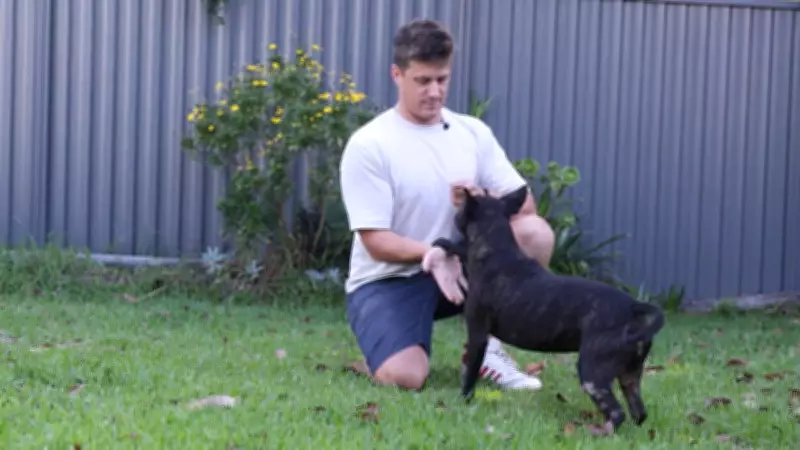
Tech Executive Turns to AI in Desperate Bid to Save His Dog from Cancer
When Rosie, an eight-year-old rescue dog, was diagnosed with an aggressive form of cancer, her owner, Sydney technology entrepreneur Paul Conyngham, faced a grim prognosis. Despite undergoing surgery and chemotherapy, the tumors continued to grow, leaving little hope. Determined to explore every possible avenue, Conyngham embarked on an unconventional journey, harnessing the power of artificial intelligence and modern genomics to design a personalized experimental cancer vaccine for his beloved pet.
A Race Against Time: Rosie's Diagnosis and Initial Treatments
Rosie, a Staffordshire terrier–Shar Pei mix adopted from a shelter in 2019, was diagnosed with mast cell cancer in 2024, one of the most common and aggressive cancers in dogs. The initial treatments, including surgery and chemotherapy, managed to slow the disease but failed to eliminate it entirely. As tumors persisted and the outlook remained dire, Conyngham refused to surrender to despair. Drawing on his extensive background in data science and machine learning, he began investigating whether the tumor's genetic code might hold hidden clues that traditional medical approaches had overlooked.
Leveraging AI and Genomics to Decode the Cancer
The first critical step involved a deep genetic analysis of Rosie's cancer. Conyngham collaborated with researchers at the Ramaciotti Centre for Genomics at the University of New South Wales, where scientists sequenced DNA from both Rosie's healthy blood cells and the tumor itself. By comparing these two genetic datasets, they identified specific mutations driving the cancer's growth. The sequencing process generated vast amounts of genomic data, which Conyngham then analyzed using advanced bioinformatics tools and AI-assisted methods to understand how the tumor was evolving.

To interpret the complex genetic information, Conyngham utilized computational pipelines designed to detect cancer-driving mutations. He also employed AlphaFold, a tool developed by DeepMind, to study the structure of proteins produced by mutated genes. This approach helped pinpoint targets that the immune system could potentially attack. Associate professor Martin Smith, director of the Ramaciotti Centre for Genomics, expressed admiration for Conyngham's dedication, noting, "Paul was relentless. He analyzed the data and kept refining his ideas."
Developing a Personalized mRNA Cancer Vaccine
When attempts to secure an existing immunotherapy drug proved unsuccessful, the team shifted focus to creating a personalized mRNA cancer vaccine. With assistance from Páll Thordarson at the UNSW RNA Institute, they developed a vaccine that works by instructing cells to produce proteins associated with the tumor. These proteins alert the immune system, enabling it to recognize and attack cancer cells carrying the specific mutations. This technology gained widespread recognition during the COVID-19 pandemic and is now being explored for personalized cancer treatments in humans.
Ethical Approval and Veterinary Oversight for Experimental Therapy
Even with a vaccine design in place, the treatment required rigorous ethical approval and veterinary supervision. Experimental therapies cannot be administered without proper oversight. The vaccine was eventually delivered through a research program led by Rachel Allavena at the University of Queensland, which studies experimental immunotherapies in dogs and already had approval for similar treatments. Rosie received her first injection in December 2025, followed by booster doses in early 2026.
Encouraging Early Results and Future Implications
The initial outcomes have been promising, though researchers emphasize that the therapy remains experimental. A large tumor on Rosie's leg shrank significantly after treatment, her energy levels improved, and she appeared more comfortable. Professor Allavena observed, "The tumor has reduced considerably and Rosie looks much happier and healthier." While the cancer has not completely disappeared, the treatment has seemingly enhanced the dog's quality of life.

Scientists involved in the project highlight that this case underscores the growing convergence of artificial intelligence, genomics, and personalized medicine. According to David Thomas, it also demonstrates how individuals with strong technical skills can contribute to scientific research. Globally, researchers are investigating personalized mRNA vaccines for human cancers like melanoma and pancreatic cancer. Rosie's treatment, though a single experimental case, offers a glimpse into the potential future of cancer therapies. For Conyngham, however, the motivation was never about technological breakthroughs; it was simply about granting his best friend more precious time.