Tesla's Technical Patent Sparks Unexpected Political Firestorm
A routine Tesla patent filing unexpectedly ignited a major political and cultural debate on social media platform X this week. The controversy did not center on artificial intelligence technology itself, but rather on the engineers listed as inventors.
Elon Musk Praises Groundbreaking Work
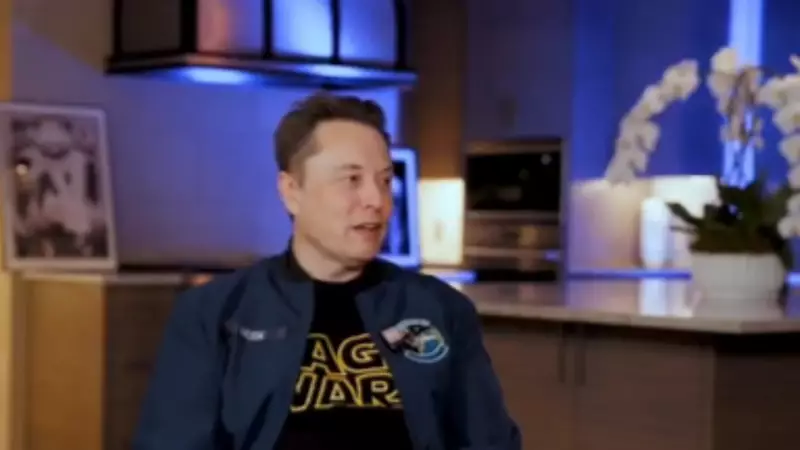
Elon Musk publicly praised the Tesla AI team for their groundbreaking work, specifically highlighting their mathematical breakthrough. The Tesla CEO reposted a thread about the patent with his trademark enthusiasm.
"Necessity is the mother of invention," Musk wrote. "The @Tesla_AI team is epicly hardcore. No one can match Tesla's real-world AI."

His endorsement immediately pushed the discussion into the spotlight, where it quickly took a sharp political turn.
Patent Reveals Four Indian-Origin Engineers
The original post that started the controversy declared in bold terms that Tesla had patented a mathematical breakthrough enabling cheaper chips to run advanced AI models. The user shared detailed patent information along with screenshots showing the listed inventors.
Out of five names on the patent, four appeared to be of Indian origin:
- Ritvik Rawat
- Rohan Dhesikan
- Srihari Sadhu Sampathkumar
- Alex Nihal Singh
Conversation Takes Political Turn
One user immediately focused on the names listed on the patent, reposting the screenshot with a pointed comment about "cheap labor." This remark directly called out critics who routinely dismiss immigrant engineers, particularly those on H-1B visas, as expendable or as undercutting American workers.
The implication became clear. The same people celebrating AI breakthroughs often devalue the engineers behind those innovations when immigration enters the conversation.
Timing Coincides with Immigration Debate
This exchange landed at a particularly tense moment in the ongoing US immigration debate. Indian engineers represent a significant portion of H-1B visa holders, especially in technology and artificial intelligence fields. These are the exact fields driving patents like Tesla's Full Self-Driving software.
Despite working on some of Silicon Valley's most advanced systems, these engineers frequently face political rhetoric labeling them as "cheap labor." Critics accuse them of depressing wages or replacing domestic workers.
Social media users highlighted this contradiction. They pointed out how cutting-edge innovation receives celebration at the highest levels, while the people building that innovation get reduced to political talking points.
Background of Renewed Immigration Restrictions
The posts gained significant traction against the backdrop of renewed restrictions on legal immigration. Under the current administration's latest plans, new H-1B visa petitions face a proposed $100,000 fee. Many observers see this move as limiting employers' ability to hire foreign workers.
The administration has also announced plans to reduce legal immigration, increase deportations, and further restrict H-1B visa hiring in 2026. These announcements have reignited anxieties among immigrant tech workers across the United States.
Meet the Engineers Behind the Patent
Ritik Rawat works as a software engineer with Tesla Autopilot. His expertise lies at the intersection of neural network inference, compilers, systems, and hardware-software co-design.
Rohan Dhesikan served as a machine learning engineer at Tesla until approximately six months ago. He currently helps technology companies and startups with AI strategy and technical execution.
Srihari Sadhu Sampathkumar appears as an engineer associated with Tesla's AI-related work on company patent filings and his professional profile.
Alex Nihal Singh specializes in hardware-software co-design within Tesla's AI division.
The debate continues to unfold online, highlighting the complex relationship between technological innovation, immigration policy, and public perception in today's political climate.