Tesla's Strategic Pivot to Humanoid Robots Amidst EV Market Challenges
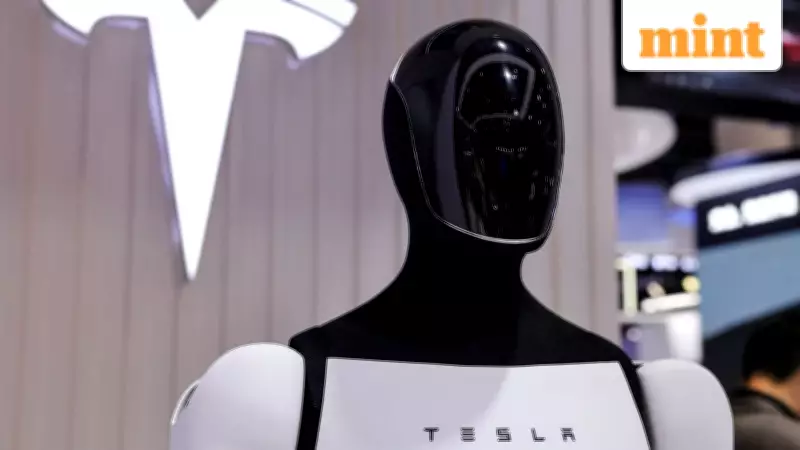
In a significant strategic shift, Tesla is repurposing its electric vehicle factories to mass-produce humanoid robots named Optimus, following the company's first-ever annual revenue decline. This move comes as Chinese competitors like BYD intensify pressure on the global EV market, prompting Tesla to reconsider its product lineup and future direction.
Elon Musk's Vision for Humanoid Robotics
Elon Musk's ambitious Optimus project aims to transform science fiction into reality by developing bipedal machines capable of human-like movement and functionality. The ultimate goal is to deploy these AI-powered robots across various sectors, from domestic assistance to industrial manufacturing, with Musk targeting an initial production capacity of one million units annually.
This technological leap represents more than just corporate diversification—it signals a fundamental reimagining of how artificial intelligence might reshape labor markets and economic structures worldwide.

The Chinese EV Challenge and Tesla's Response
Tesla's strategic pivot follows a challenging year where the company reported a 3% revenue drop to $94.8 billion in 2025, largely attributed to fierce competition from Chinese electric vehicle manufacturers. In response, Tesla has decided to discontinue its premium S and X models, which accounted for only 3% of the 1.6 million vehicles delivered last year, while focusing resources on its more affordable Y and 3 models and the new Optimus initiative.
The decision to phase out the S and X models, despite Musk's well-documented affinity for the letter 'X', demonstrates how business imperatives can override personal preferences in competitive markets.
India's Economic Survey and the AI Labor Puzzle
As Tesla ventures into humanoid robotics, India's Economic Survey provides crucial context for understanding the broader implications of such technological advancements. The survey specifically addresses what it terms "the puzzle" of artificial intelligence's impact on employment, emphasizing the need to carefully monitor and manage trade-offs between capital investment in automation and human labor preservation.
The Optimus project's potential success or failure could significantly influence:
- Global manufacturing and service sector employment patterns
- Investment priorities in automation versus human workforce development
- Policy frameworks for managing technological disruption in labor markets
- International competitive dynamics in both robotics and electric vehicles
Broader Implications for Technology and Employment
While China's emergence as an EV powerhouse currently dominates automotive industry narratives, Tesla's robotics venture raises longer-term questions about how societies will adapt to increasingly capable artificial intelligence systems. The practical utility—or limitations—of Optimus robots will not only determine Tesla's corporate trajectory but could also establish precedents for how businesses integrate humanoid automation into their operations.
India's Economic Survey offers valuable guidance for navigating this transition, suggesting that policymakers and business leaders must develop nuanced approaches that balance technological advancement with employment stability. As countries worldwide grapple with similar challenges, the Tesla case study provides concrete examples of how corporate decisions about automation can have far-reaching consequences for labor markets and economic planning.
The intersection of Tesla's robotics ambitions and India's economic analysis creates a compelling framework for understanding one of the most significant technological transitions of our era—one that will require careful management to maximize benefits while minimizing disruption to workers and communities.