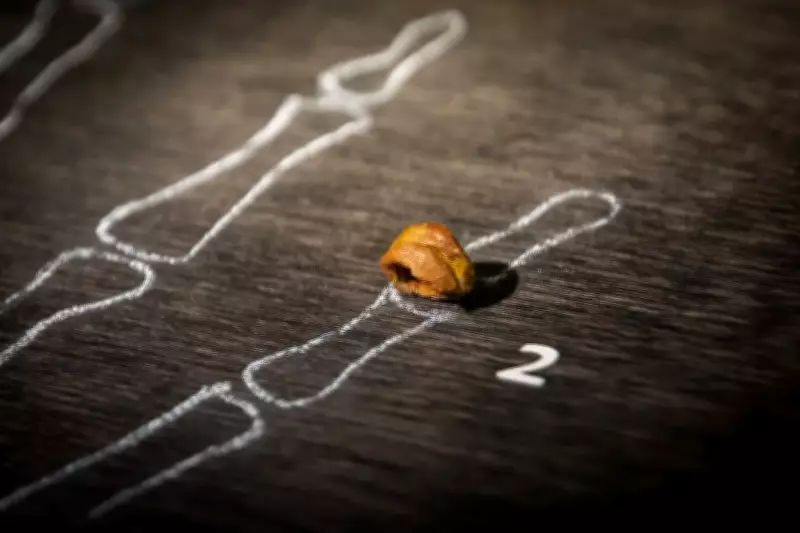
Occasionally, the most significant secrets regarding our evolutionary past are concealed within minute specimens that could easily be discarded along with common dirt. In the summer of 2008, a group of diligent archaeologists was excavating the interior of Denisova Cave, situated in the cold Altai Mountains of southern Siberia. The specimen in question was found when they removed centuries' worth of accumulated dirt and animal remains from the cave's floor. The fragment was nothing more than the tip of a pinky finger belonging to a young girl who lived tens of thousands of years ago.
On its own, the bone was quite unremarkable. It lacked the clear-cut anatomical characteristics associated with a whole skull or near-complete skeletal structures, which usually create a buzz in museums. Not knowing where it precisely fit into the tree of prehistory, the team entrusted the piece to molecular biologists to determine whether any microscopic information about the bone was preserved despite the harsh climate of Siberia. What unfolded after that decision would revolutionize our understanding of prehistory.
How genetic findings revealed a new human cousin
What made the accidental discovery all the more remarkable was that it created a precedent in the study of evolution around the world because it showed that one does not necessarily require an entire skeleton puzzle to reveal extinct species. As revealed by the study 'Genetic history of an archaic hominin group from Denisova Cave in Siberia,' published in the journal Nature, the microscopic structure of the pinky bone belonged to none other than an unknown hominid species. When researchers mapped the ancient mitochondrial DNA, they realized the code belonged neither to a standard Neanderthal nor to a modern Homo sapiens. Instead, the small piece was from a totally different kind of ancient human, which scientists referred to as the Denisovans.

According to previous beliefs, scientists had been operating on the assumption that the ice age period of Eurasia involved nothing but an evolutionary struggle between early humans and Neanderthals. The small piece of bone discovered indicated that the early world was a rather exciting environment, characterized by different kinds of intelligent humans living and moving around together. A small finger bone found in Siberia's Denisova Cave led to a major discovery. Scientists identified it as belonging to a new human species, the Denisovans. This finding shows ancient humans coexisted and interbred with modern humans.
The braided nature of our modern genetics
By mapping the whole nuclear DNA of the Denisovan individual, scientists made another remarkable finding about our modern-day ancestry. Denisovan ancestry later appeared across parts of Asia and Oceania. In a report issued by the Broad Institute under the title 'From a tiny bone, clues to a new human,' it was shown that Denisovans met and bred with migrating modern humans. To date, remnants of Denisovans exist in the genomes of many humans today, especially those in Southeast Asia and Oceania. This one discovery completely changed the way we see our ancestral family tree, taking us out of the realm of a simplistic theory revolving around replacement and into a more complex tapestry of coexistence.
Groundbreaking scientific discoveries do not necessarily need massive archaeological finds. At times, all it needs is simply a fresh perspective, cutting-edge technology, and a piece as small as a pebble. What is absolutely astonishing and disorienting is the idea that even though scientists have searched for generations for great skeletons to solve the mystery of the history of mankind, the solution actually lay quietly waiting to be discovered in one small bone of a young girl buried beneath the mountain.

About the Author
TOI Science Desk
The TOI Science Desk stands as an inquisitive team of journalists, ceaselessly delving into the realms of discovery to curate a captivating collection of news, features, and articles from the vast and ever-evolving world of science for the readers of The Times of India. Consider us your scientific companion, delivering a daily dose of wonder and enlightenment. Whether it's the intricacies of genetic engineering, the marvels of space exploration, or the latest in artificial intelligence, the TOI Science Desk ensures you stay connected to the pulse of the scientific world. At the TOI Science Desk, we are not just reporters; we are storytellers of scientific narratives. We are committed to demystifying the intricacies of science, making it accessible and engaging for readers of all backgrounds. Join us as we craft knowledge with precision and passion, bringing you on a journey where the mysteries of the universe unfold with every word.