From Royal Courts to AI: Tripura's Journey to Reinvent Its Musical Instruments
In the northeastern state of Tripura, a fascinating fusion of history and technology is unfolding as innovators harness artificial intelligence to revive the region's rich musical legacy. This initiative has ignited a spirited debate on whether advanced technology can harmoniously coexist with the timeless acoustics of classical music.
A Legacy Rooted in Royalty
Tripura's connection to Indian classical music spans over 1,500 years, deeply embedded in its royal history. The kingdom's 'Durbar' or royal court actively supported talented musicians, while the nachmahal, or dance hall, hosted renowned artists and dancers from across the nation.
Under the Manikya rulers, notably Maharaj Birchandra Kishore Manikya, Maharaj Radhakishore Manikya, and Maharaj Bir Bikram Kishore Manikya, the state flourished as a vibrant hub for Hindustani classical music, Manipuri music, Bengali folk forms, and kirtans. However, after Tripura merged with the Indian Union in 1949, the musical culture underwent a significant shift.

This land, which produced legends like Ustad Alauddin Khan—a mentor to Bharat Ratna Pandit Ravi Shankar and other luminaries—began focusing more on popular and people's music by the early 1980s. This transition aligned with political changes, including the rise of the Left Front government in 1978, which emphasized socially rooted cultural forms.
While figures like Rabindranath Tagore gained popularity during this period, classical music initially saw limited mass engagement. In later years, under former chief minister Manik Sarkar, a tabla student himself, the government provided more structured support to classical arts.
The AI-Driven Revival
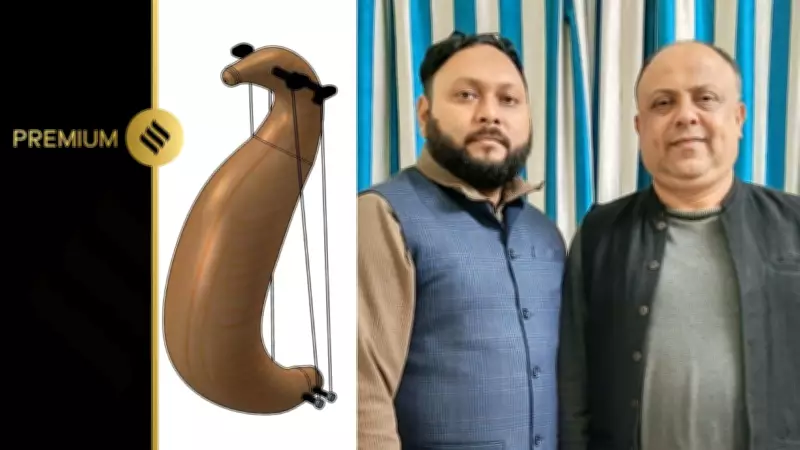
Leading this modern revival are Prof. Dr. Rabindra Bharali of Tripura University, his former student Dr. Joyanta Sarkar, and Prof. Anil Rai of BITS Pilani. Utilizing Tripura's abundant bamboo resources and synthetic materials, they are redesigning musical instruments with artificial intelligence.
Prof. Bharali explains, "The advent of AI has profoundly impacted numerous industries, including music. It is reshaping how music is created and influencing the development of modern musical instruments." The team has developed an AI-based string instrument, patented with the Indian Patent Office, that interacts with musicians in real-time.
This innovative instrument adjusts sound, tone, and playing style based on the musician's actions, creating an immersive experience. It also monitors environmental factors like temperature and humidity, predicting issues before they affect tuning. During live performances, it analyzes the guitarist's playing to provide responsive accompaniment.
Additionally, the instrument supports music therapy by generating dynamic sounds tailored to the needs of autistic patients, offering calming tunes and interactive settings for therapeutic purposes.
Preserving Heritage with Technology
Dr. Joyanta Sarkar attributes this innovation to Tripura's cultural ecology, leveraging technology and natural resources to create a new generation of instruments. These include enhanced versions of traditional tools like the Tipperah flute, rosem, and chongpreng, aiming to expand their range beyond folk music.
Sarkar defends the use of AI, noting that instruments like the sitar and shehnai have evolved over time. "Musical instruments have always evolved. We are trying to do the same but with AI," he says, emphasizing that AI serves as a tool to extend tonal capabilities without compromising authenticity.
Critics and Supporters Weigh In
The innovations have received mixed responses. Violin maestro Pandit Subal Biswas welcomes the potential of augmented instruments but cautions that their success depends on public performance and teaching. In contrast, sitar maestro Pandit Subhankar Ghosh remains skeptical, arguing that traditional instruments offer an impact that technology-driven ones may lack.
Despite the debate, the innovators remain committed to their research, designing over 10 instruments using bamboo, gourd, and wood, many awaiting patent approval. They aim to create instruments that carry Tripura's sound while appealing to tech-savvy listeners, blending heritage with innovation for a harmonious future.