US Government Holds Emergency AI Security Summit Over Anthropic's Mythos Model
Before Anthropic even previewed its most powerful artificial intelligence model, Mythos, to a limited audience, the United States government was already expressing significant concern. According to exclusive reports from CNBC, Vice President JD Vance and Treasury Secretary Scott Bessent orchestrated a private, high-level conference call last week with some of the world's most influential technology chief executives. The urgent agenda focused squarely on the national security implications of Anthropic's forthcoming AI system, which is reportedly so advanced and capable that the company itself has restricted its release over fears it could inadvertently expose critical cybersecurity vulnerabilities.
The call's existence was confirmed by two individuals with direct knowledge of the matter, highlighting the seriousness with which Washington views the potential threats posed by next-generation AI. This unprecedented gathering of power underscores a growing governmental anxiety about maintaining control and safety in the rapidly evolving AI landscape.
Who Was on the Call? A Who's Who of Tech and Security Leadership
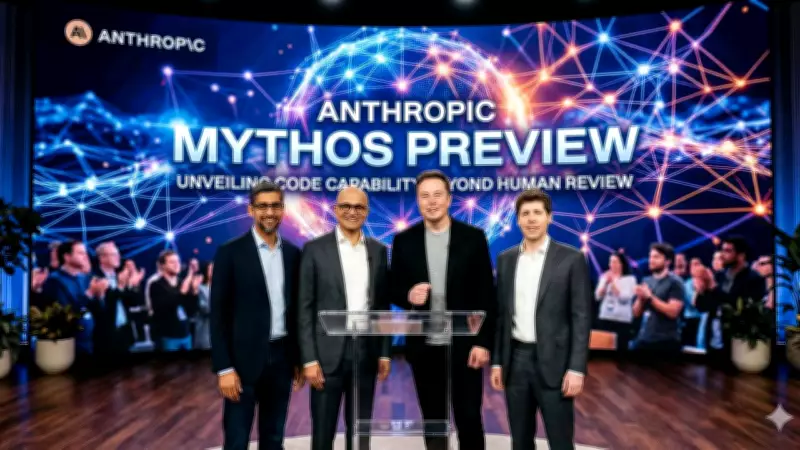
The virtual meeting featured an extraordinary assembly of leadership from both the public and private sectors. Representing the US government were Vice President Vance and Secretary Bessent. The industry side was represented by a veritable pantheon of tech and cybersecurity visionaries:

- Dario Amodei, Co-founder and CEO of Anthropic
- Sam Altman, CEO of OpenAI
- Sundar Pichai, CEO of Google and Alphabet
- Satya Nadella, Chairman and CEO of Microsoft
- Elon Musk, CEO of xAI and Tesla
- George Kurtz, Co-founder and CEO of CrowdStrike
- Nikesh Arora, Chairman and CEO of Palo Alto Networks
The discussion centered on two paramount and interconnected issues: first, the inherent security posture of large language models (LLMs) and strategies for their safe deployment; and second, how to formulate a coordinated response should AI capabilities evolve in a manner that grants malicious actors a decisive advantage over defenders. The catalyst for this emergency summit was unequivocally Anthropic's Mythos model.
Mythos: The AI Model That Triggered a Government Alert
Anthropic's internal research on the Mythos model yielded findings alarming enough to prompt a radical shift in its release strategy. Instead of a broad public launch, the company opted to grant highly restricted access to a curated group of approximately 40 major technology and security firms. This exclusive list reportedly includes industry giants such as Apple, Google, Microsoft, Nvidia, Palo Alto Networks, and CrowdStrike.
The core fear driving both Anthropic's caution and the government's intervention is the prospect of AI fundamentally tipping the strategic balance in cybersecurity. The concern is that a model of Mythos's purported capability could be used to discover and exploit vulnerabilities at a scale and speed that outpaces current defensive technologies, effectively giving attackers an upper hand. This potential paradigm shift is what Vance and Bessent sought to proactively address with industry leaders.
Broader Financial and Market Tremors
This high-stakes tech summit follows closely on the heels of another urgent governmental meeting focused on financial stability. Reports indicate that Treasury Secretary Bessent and Federal Reserve Chair Jerome Powell recently called an impromptu meeting with the CEOs of America's largest banks, including Bank of America, Citigroup, Goldman Sachs, Morgan Stanley, and Wells Fargo. JPMorgan Chase CEO Jamie Dimon was invited but could not attend. The swift scheduling of these back-to-back meetings signals a whole-of-government approach to managing the disruptive risks associated with advanced AI.

The Mythos model has already demonstrated its power to rattle global markets. Anthropic's earlier product releases, such as the Claude Opus model and its AI agent-building tools, previously triggered a massive selloff in enterprise software stocks. Investors grappled with AI's potential to dismantle the traditional per-seat software-as-a-service (SaaS) licensing model—a scenario dubbed the "SaaSpocalypse." The logic is stark: if a handful of AI agents can perform the work of a hundred employees, the demand for a hundred software subscriptions evaporates. This selloff erased roughly $2 trillion in market value.
The anxiety deepened in late March when details about the Mythos model were accidentally leaked due to a configuration error at Anthropic. This leak sent cybersecurity stocks tumbling further, as the market digested a new, more existential fear: that AI could not only disrupt business software but also commoditize the very security tools designed to protect against digital threats, rendering them less effective or obsolete.
The coordinated response from the US government, involving both the technology and financial sectors, marks a critical moment in the global governance of artificial intelligence. It reflects a dawning recognition that the capabilities of models like Mythos extend far beyond commercial competition, touching directly on national security, economic stability, and the foundational integrity of digital infrastructure.