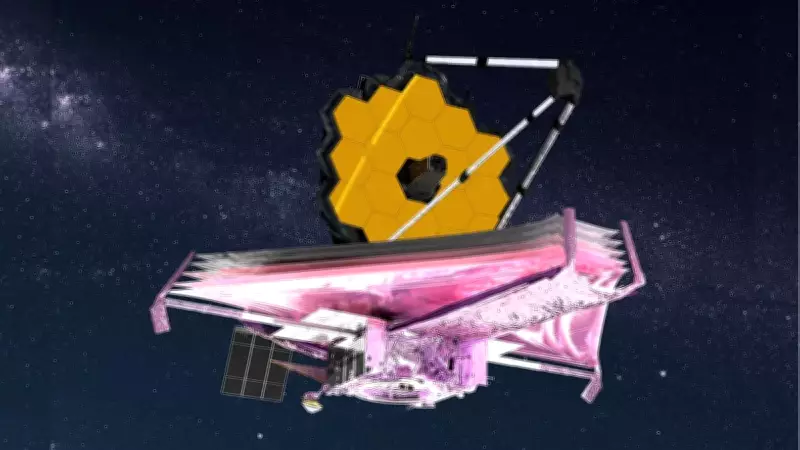
NASA's James Webb Space Telescope has for the first time unveiled the harsh atmospheric conditions of distant exoplanets, providing unprecedented insights into worlds beyond our solar system. The new study, published in a leading scientific journal, reveals extreme temperatures, violent winds, and powerful storms on these alien worlds.
Unprecedented Observations
The James Webb Space Telescope (JWST), with its advanced infrared capabilities, has allowed astronomers to peer into the atmospheres of exoplanets with remarkable detail. For the first time, researchers have directly observed the chemical composition and weather patterns of planets orbiting distant stars.
Key Findings
- Extreme Temperatures: Some exoplanets exhibit surface temperatures exceeding 2,000 degrees Celsius, hot enough to melt most metals.
- Violent Winds: Wind speeds on these planets can reach thousands of kilometers per hour, far surpassing any storms on Earth.
- Exotic Clouds: The atmospheres contain clouds made of minerals like silicates, similar to sand, creating a hazy, scorching environment.
These findings challenge previous models of exoplanet atmospheres and provide critical data for understanding planetary formation and evolution.

Implications for Habitability
While the conditions on these planets are far from hospitable, the study helps scientists identify which exoplanets might have more moderate climates. Understanding the extremes helps refine the search for potentially habitable worlds.
The JWST's ability to analyze the light passing through exoplanet atmospheres, known as transmission spectroscopy, has been key to these discoveries. This technique reveals the presence of molecules such as water vapor, carbon dioxide, and methane, as well as traces of clouds and hazes.
Future Studies
Astronomers plan to use JWST to study a wider range of exoplanets, from hot Jupiters to super-Earths, to build a comprehensive picture of planetary diversity. The telescope's sensitivity will also allow for the detection of biosignatures in the atmospheres of rocky planets in the habitable zone.
This breakthrough marks a new era in exoplanet science, bringing us closer to answering the age-old question: Are we alone in the universe?