

White House's AI-Altered Arrest Photo Ignites Firestorm Over Racial Bias and Digital Ethics
The White House has triggered widespread outrage by sharing a digitally manipulated arrest photograph of civil rights lawyer Nekima Levy Armstrong, raising serious alarms about artificial intelligence misuse, racial stereotyping, and the political weaponization of social media platforms. This incident has sparked a heated debate over the ethical boundaries of official government communication in the digital age.
From Calm Arrest to Distorted 'Meme': The Controversial Image Transformation
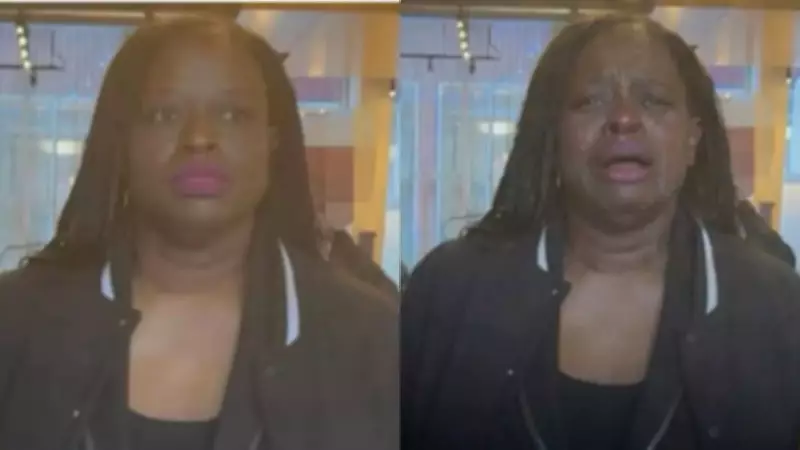
When Nekima Levy Armstrong was arrested following a church protest in Minnesota, she walked out of the courthouse shackled but composed. Her posture remained calm and her expression steady throughout the legal proceedings. However, this was not the version of events that the White House chose to present to the American public.
Instead, the official White House social media account shared a digitally altered image showing the civil rights lawyer appearing distraught, tearful, and hysterical. Levy Armstrong asserts this visual manipulation was deliberately designed to humiliate her and systematically undermine her professional credibility and public standing.

"They couldn't break me by arresting me," she revealed in an interview with The New York Times. "So they doctored an image to make me look weak and emotionally unstable."
Two Photographs, One Disturbing Narrative
The controversy centers on two nearly identical photographs with dramatically different implications. The original image, first posted by Homeland Security Secretary Kristi Noem, showed Levy Armstrong being escorted by officers while maintaining a neutral, composed facial expression.
Approximately thirty minutes later, the White House posted what appeared to be the same photograph, except her facial expression had been artificially altered to show tears streaming down her face, with her mouth open in apparent distress. The accompanying caption labeled her a "far-left agitator" with the word "ARRESTED" splashed across the image in bold, attention-grabbing letters.
This digitally altered photograph rapidly went viral across social media platforms, accumulating millions of views and triggering widespread accusations of state-sponsored disinformation and psychological manipulation.
'This Was Degrading': Levy Armstrong's Powerful Response
Nekima Levy Armstrong, a 49-year-old former president of the Minneapolis NAACP and mother of four children, first learned about the altered image while still incarcerated, during an emotional phone conversation with her husband. When she viewed the manipulated photograph herself after being released from custody, she described feeling profoundly "disgusted" by the government's actions.
"Reducing my image to some scared, crying woman was utterly degrading and dehumanizing," Levy Armstrong stated emphatically. "The presidency is supposed to represent the world's greatest superpower, not behave like a two-dollar tabloid engaged in character assassination."
She drew powerful parallels between the manipulated image and racist caricatures historically used to demean Black Americans, tracing this disturbing pattern from slavery-era propaganda through Jim Crow imagery to contemporary digital manipulation techniques.
White House Dismisses Criticism as Mere 'Meme' Creation
Rather than acknowledging or explaining the digital alteration, White House officials brushed off mounting criticism with surprising nonchalance. Deputy Communications Director Kaelan Dorr casually described the manipulated image as nothing more than a "meme," writing online: "Enforcement of the law will continue. The memes will continue."
This dismissive response has only intensified criticism from digital ethics experts and misinformation researchers, who warn that blurring the lines between official government communication and AI-manipulated imagery could severely erode public trust in democratic institutions.

"This wasn't obviously satire or parody," emphasized a prominent misinformation researcher. "It was a real photograph, subtly but significantly altered, without any disclosure or labeling. That deliberate ambiguity is precisely what makes this incident so dangerous and ethically problematic."
Protest Context and Growing Legal Implications
Levy Armstrong was among several activists arrested following a protest at Cities Church in St. Paul, where demonstrators interrupted a religious service to oppose immigration enforcement policies and demand justice for Renee Good, a 37-year-old American woman fatally shot by an ICE officer earlier this month.
Protesters chanted slogans inside the church sanctuary, prompting congregants to leave the premises. Justice Department officials subsequently accused participants of interfering with religious freedom protections. Several activists faced charges alongside journalists who entered the church to document the protest. Former CNN anchor Don Lemon was briefly detained, though a judge declined to approve charges against him, citing protected journalistic activity under the First Amendment.
Legal Experts Warn of Potential Backfire Effect
According to constitutional law experts, the White House's social media post may significantly complicate the government's legal case against Levy Armstrong. Her legal team has already formally flagged the manipulated image in court filings, accusing the administration of acting in "bad faith" and attempting to prejudice public opinion—and potential jurors—through a coordinated public smear campaign.
What the White House initially framed as a harmless viral "meme" may now become a substantial legal liability, potentially undermining the prosecution's credibility and raising serious questions about government overreach.
For Nekima Levy Armstrong, this disturbing episode has reinforced her conviction that political dissent is increasingly being punished not just in courtrooms, but through sophisticated digital manipulation and character assassination online.
"This wasn't just about me personally," she reflected. "It was a deliberate message to all activists about what happens when you dare to speak truth to power in contemporary America."
