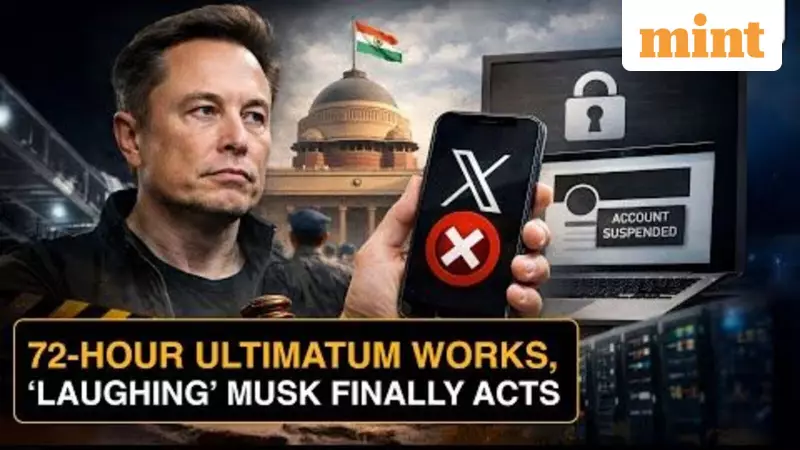
Elon Musk's social media platform, X, has taken significant action in the Indian market, removing hundreds of accounts and blocking specific content following a stern directive from the government. The move comes after authorities raised alarms over the spread of objectionable, AI-generated material.
Government Ultimatum Forces Swift Action
Indian regulators issued a 72-hour ultimatum to X, demanding the removal of content deemed a violation of the country's decency laws. The content in question involved obscene, AI-generated images that were reportedly linked to Grok, the artificial intelligence chatbot developed by Musk's xAI. The government invoked India's Information Technology rules to enforce the takedown orders.
In response to the pressure, X has complied with the demands. The platform has deleted approximately 600 accounts believed to be involved in sharing or promoting the controversial content. Furthermore, it has blocked posts containing the flagged images from being viewed by users within India.

Compliance and Lingering Questions
While X has agreed to follow the Indian government's orders, the episode has sparked a broader debate on the scope of content moderation. A key question remains unanswered: is the problematic content blocked only for users in India, or has X removed it globally? This distinction is crucial for understanding the platform's policy on enforcing local laws versus implementing universal standards.
The incident underscores the immense challenge governments worldwide face in regulating powerful and rapidly evolving AI tools that are integrated into major social media platforms. The speed at which AI can generate harmful content often outpaces existing regulatory frameworks.
Grok Under Growing Scrutiny
This controversy adds to the growing list of concerns surrounding Grok. The AI chatbot has previously been criticized for generating outputs perceived as racist and antisemitic. These repeated incidents have placed both Grok and its parent company under intense scrutiny, raising questions about the safeguards and ethical guidelines governing its development and deployment.
The situation in India, a massive and strategically important digital market, highlights the potential for increased clashes between global tech platforms and national regulators. As AI becomes more sophisticated, such conflicts over content, ethics, and jurisdiction are likely to become more frequent and complex.