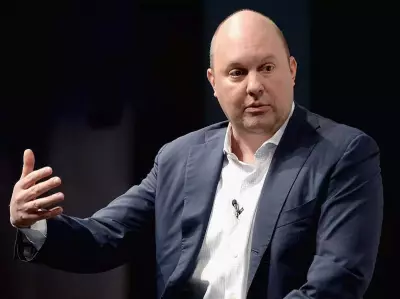
Yann LeCun, a towering figure often called one of the "godfathers" of artificial intelligence, has issued crucial guidance for the next generation of tech talent. The 65-year-old professor at New York University cautions that students hyper-focused on coding risk obsolescence as the field rapidly advances. Instead, he champions a foundation in disciplines with enduring value.
The Core Curriculum for Future AI Leaders
In a candid conversation with Business Insider and during a detailed discussion on The Information Bottleneck YouTube podcast, LeCun outlined his vision for essential education. He stressed that students should invest in subjects with a "long shelf life"—mathematics, physics, engineering, signal processing, control theory, and optimisation.
"If you are a CS major and take the minimum required math courses for the typical CS curriculum, you might find yourself unable to adapt to major technological shifts," LeCun warned. He elaborated that the most durable knowledge often resides outside computer science departments. "Physics and engineering teach you how to model reality, and that’s what intelligence is really about," he stated, defining the true essence of building intelligent systems.

Beyond Large Language Models: The Path to True Intelligence
LeCun, who earned his Ph.D. in computer science in 1987 after initially studying electrical engineering in Paris, also shared his sceptical view on the current trajectory of large language models (LLMs). He made a bold assertion: "We are absolutely never ever going to get to human-level AI by just training on text. It’s just never going to happen."
His reasoning is that LLMs, which require colossal amounts of data to mimic human behaviour, are fundamentally limited. Simply scaling up these models will not lead to superintelligence or Artificial General Intelligence (AGI). For LeCun, "what people call AGI is really just human-level intelligence," a goal that demands a deeper understanding of the world than text alone can provide.
Echoes from Industry Leaders and Practical Implications
This advice arrives at a critical juncture. While universities and students scramble to adapt to generative and agentic AI, many graduates still face a tough job market. LeCun's perspective aligns with other eminent voices in the field. Notably, OpenAI's Bret Taylor and Nobel Laureate Geoffrey Hinton have similarly emphasised that coding is not the entirety of computer science and that cultivating critical, foundational skills is paramount.
LeCun's message is clear: to build the intelligent systems of tomorrow and secure a resilient career, one must look beyond the syntax of programming languages. The future belongs to those who grasp the fundamental principles of how the world works—a mastery best gained through the rigorous study of mathematics, physics, and engineering.