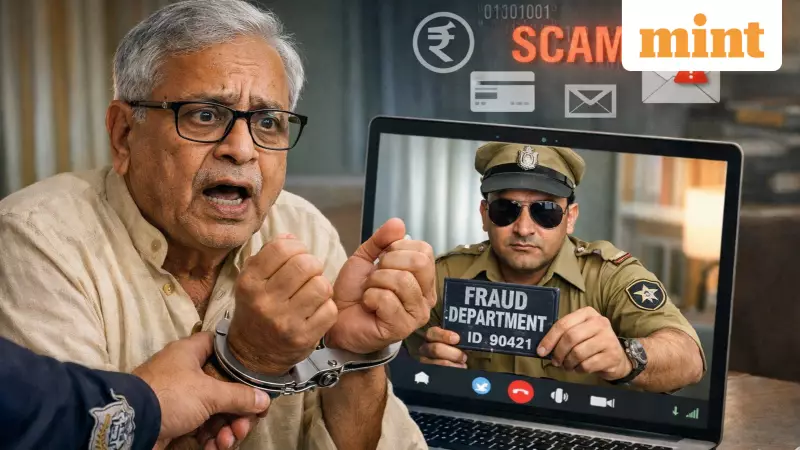
In a shocking incident highlighting the growing menace of cybercrime, a retired businessman from Hyderabad was swindled out of a staggering ₹7.12 crore after being subjected to a sophisticated 'digital arrest' scam. The elaborate fraud, which played on the victim's fear of fabricated criminal charges, underscores the urgent need for public awareness.
The Elaborate Con: From Courier Call to Fake Police Arrest
The ordeal began when the senior citizen received a WhatsApp call from an individual posing as Sunil Sharma from Blue Dart customer care. The fraudster informed him that a parcel sent in his name from Mumbai to Bangkok contained incriminating items: a laptop, five passports, 200 grams of MDMA, and other narcotic drugs. This initial contact set the stage for the scam.
Shortly after, the victim received another call, this time from a person claiming to be an officer from the Mumbai crime branch. The fake officer stated that based on the 'evidence' found in the parcel, the retiree faced serious criminal charges related to drug trafficking and passport fraud. The fraudster then proceeded to place the man under 'digital arrest,' a tactic where the victim is psychologically trapped and isolated through continuous online intimidation.

The Financial Bleed and Eventual Realisation
While under this virtual custody, the terrified victim was coerced into transferring his life savings. The scammers forced him to execute a series of RTGS transactions totaling ₹7.12 crore. The fraud did not stop there. Greedy for more, the criminals later demanded an additional ₹1.2 crore to officially close the fabricated case. It was this excessive demand that finally sparked suspicion in the victim's mind, leading him to approach the police and file a formal complaint.
This case is not isolated. In a similarly alarming incident in Bengaluru, a 57-year-old woman was defrauded of an astronomical ₹32 crore by criminals who kept her under digital arrest for nearly half a year.
Five Essential Shields Against Digital Arrest Fraud
1. The Red Flag of Money Transfer: No legitimate law enforcement agency in India will ever ask you to transfer your money to another account for investigation purposes. Even in money laundering probes, authorities can request banks to freeze accounts, but they will not instruct direct transfers. Any such demand is an immediate sign of fraud.
2. Question the Fear: Scammers rely on creating panic. If you are innocent and have committed no crime, there is no reason to fear threats from an unknown caller. Take a moment to logically assess the situation instead of reacting in fear.
3. Recognise the Pattern: The modus operandi is often identical: a call from a courier company about a suspicious parcel, followed by a video call with a 'police officer,' a digital arrest, demands for bank statements, and finally, instructions to transfer money. Knowing this pattern can help you identify and disconnect from fraudsters immediately.
4. Consult Trusted People: If you receive such threatening calls, the first step should be to discuss it with a family member, friend, or neighbour. Do not keep it secret out of fear. Genuine legal procedures always involve informing the family, who can then arrange for legal help.
5. Seek Expert Advice: When in doubt, seek legal counsel. Consulting a lawyer is your constitutional right, regardless of the alleged severity of the crime. A quick conversation with an expert can expose the scam and provide peace of mind.
As cybercriminals refine their tactics, vigilance and awareness remain the most powerful tools for citizens to protect their hard-earned money and mental peace from such digital predators.