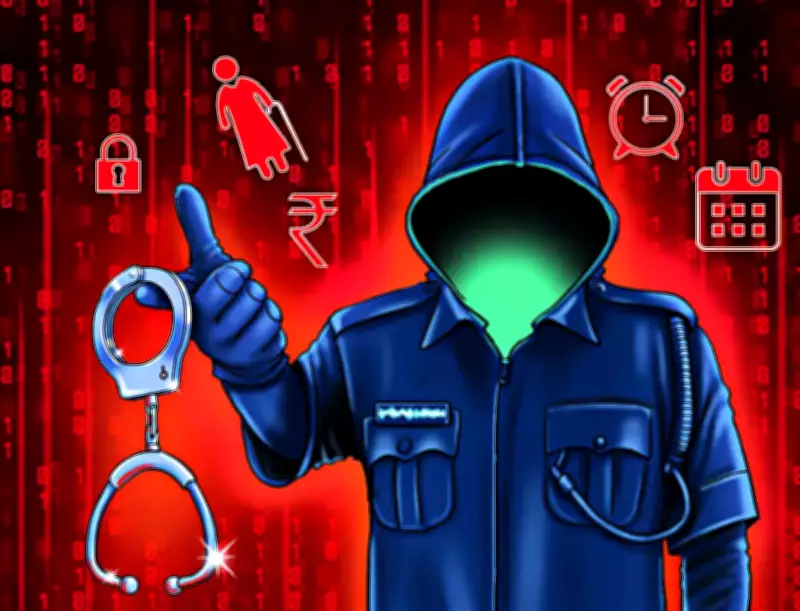
Delhi Literature Festival Confronts Rising Cybercrime and 'Digital Arrest' Scams
Moving beyond traditional literary themes, the 14th edition of the Delhi Literature Festival hosted a crucial awareness session addressing urgent contemporary concerns in India's digital landscape. The session focused on the alarming surge in cybercrime, particularly the rise of so-called 'digital arrest' scams and financial frauds, which are exploiting the nation's rapid digital transformation.
Understanding 'Digital Arrest' Scams
The session featured Nishant Kumar, Director of the Indian Cybercrime Coordination Centre (I4C), in conversation with RJ Purkhaa Tak. Kumar provided detailed insights into how fraudsters are increasingly impersonating police officers or officials from investigative agencies. These criminals falsely claim that individuals are under investigation or subject to 'digital arrest,' coercing victims into transferring money under pretexts such as legal verification, case settlement, or account clearance.
Kumar categorically clarified that no legitimate police officer or law enforcement authority conducts interrogations or demands financial settlements over phone calls or messages. He stated, "If someone claims over a call that you are under digital arrest or asks for money to settle a case, understand clearly that it is fraud. No police agency operates in this manner."

Targeting Educated Individuals and Professionals
Shri Nishant Kumar further observed that educated individuals and professionals in senior positions are frequently targeted by these scams. Cybercriminals deliberately exploit their reputational concerns and fear of legal consequences to manipulate victims. "Fraudsters create a sense of urgency. They say act immediately or face arrest, or that your accounts will be frozen. This fear overrides rational thinking. That is exactly what they rely upon," he explained.
Digital India and the Awareness Gap
Reflecting on India's digital transformation, Kumar noted that the Hon'ble Prime Minister's vision of building a Digital India has been a significant success. However, he cautioned that while digitalisation progressed rapidly, public awareness did not always grow at the same pace, creating vulnerabilities for cybercrime to thrive. "Digital India is a matter of pride for us. But with rapid digitalisation, understanding must grow equally fast. Wherever there is a gap in awareness, cybercrime finds space," he said.
Role of I4C and Coordination Efforts
To address these challenges, the Government of India established the Indian Cybercrime Coordination Centre (I4C) under the Ministry of Home Affairs in 2019. Kumar explained that policing is constitutionally a State subject, yet cybercrime does not recognise state or national boundaries. Offenders may operate from one state or even another country while targeting victims elsewhere, making effective response require coordination among states and collaboration across sectors such as banking, fintech, and telecommunications.
"I4C was created to build that coordination and shared understanding. Cybercrime cannot be tackled in isolation; it demands collective institutional effort," he added.
Cyber Dost Initiative and Reporting Mechanisms
The session also highlighted I4C's official cyber safety awareness initiative, Cyber Dost, which disseminates alerts, advisories, and educational videos on platforms including LinkedIn to educate citizens about phishing, financial fraud, and cyberbullying. Participants were advised to report cybercrimes immediately by dialling the national cybercrime helpline 1930 or by filing a complaint on the National Cyber Crime Reporting Portal (cybercrime.gov.in).
Conclusion: A Call for Vigilance and Collective Responsibility
By convening this critical discussion, the Delhi Literature Festival underscored that in an increasingly digital society, awareness and vigilance are indispensable. The session reinforced the message that technological progress must be accompanied by informed citizenship, institutional coordination, and collective responsibility to ensure a secure digital future for all Indians.