

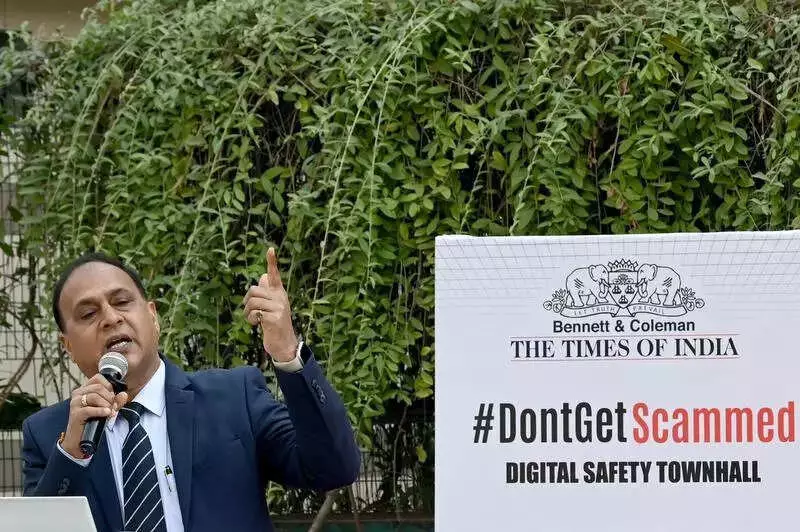
In a stark warning to citizens, a senior Delhi Police official highlighted the borderless and anonymous nature of modern cybercrime, where a scammer can pretend to operate from a local neighborhood while actually being based overseas.
The Psychology of the Scam: Greed, Fear, and Social Engineering
Special Commissioner of Police Devesh Chandra Srivastava, addressing a TOI Townhall titled 'Don't Get Scammed', outlined three key psychological triggers exploited by fraudsters: greed, fear, and a lack of caution. He revealed a startling paradox where highly educated individuals, including IIT graduates and MBAs, often fall victim to scams orchestrated by criminals with minimal formal education.
"This happens because scammers do not target a person's technical degrees, but rather their psychological triggers," Srivastava explained. This manipulation is rooted in social engineering, where criminals craft scenarios to provoke impulsive reactions. Examples include promises of unrealistic 200% profits in online groups or 'catfishing' in romance scams, where perpetrators use fake photos, perhaps claiming to be from Seelampur while operating from known cyber hubs like Jamtara or Mewat.

From Fake Emergencies to Deepfakes: The Evolving Threat
The officer debunked the concept of 'digital arrest' as entirely fake, clarifying that authorities like the CBI, ED, or police will issue formal summons or be physically present for any arrest. Scammers, however, use fear—such as false claims of involvement in 'national security' issues—to keep victims on prolonged video calls, sometimes to the extent that victims shoo away family members.
Srivastava also highlighted emerging threats like deepfakes and morphed images used for sextortion, where AI tools are employed to scare targets. His advice was straightforward: "if you receive such a call, just disconnect." He urged people to be vigilant if online acquaintances suddenly demand money for medical emergencies, noting that genuine urgent needs are addressed via phone or in person.
The session covered a wide spectrum of frauds, including OTP scams, fake utility bill messages, online gambling, work-from-home scams, and lottery frauds. Srivastava specifically warned that scanning a QR code can never result in receiving money and can instead lead to data breaches. He noted the resurgence of modified versions of the old 'Nigerian lottery' or '419 scams'.
The Golden Hour and the Human Firewall
Explaining a critical concept for victims, the 'golden hour' refers to the period immediately after money has been deducted. Raising an alarm during this window makes it easier to freeze funds before they reach the fraudsters' accounts. Srivastava mentioned that police are pursuing Memorandums of Understanding (MoUs) with foreign agencies to ensure offenders are brought back to face justice.
He also highlighted the success of Operations CyHawk 1 and 2, launched by Police Commissioner Satish Golchha, in targeting criminal networks and dismantling mule accounts and fake social media profiles.
The townhall concluded with a powerful reminder: cybercriminals master the art of preying on human vulnerabilities observed in the physical world and applying them online. From the case of a former Punjab Police IG who was cheated of Rs 8.1 crore to everyday online tricks, the ultimate defence remains personal awareness and a simple mantra: Stop, think, then act.






