

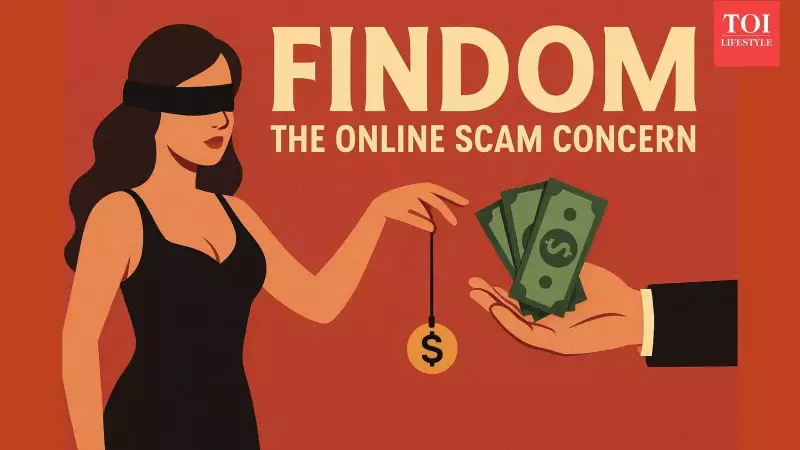
The Seductive Paradox of Financial Domination
At the heart of financial domination, commonly known as "findom," lies a compelling contradiction that attracts thousands of participants across India. This practice involves individuals surrendering control of their finances to find erotic or psychological satisfaction in that very loss of power. The submissive participant, often called a "paypig" or "finsub," provides gifts, cash payments, or tributes to a dominant figure known as the "findomme."
While some engage in this as a consensual kink between adults, a disturbing trend is rapidly emerging throughout digital India - sophisticated scams, catfishing operations, and outright financial exploitation cleverly disguised as fetish play. As one recent report bluntly stated, the financial domination community "has a scamming problem" that's growing at an alarming rate.
Understanding Findom: The Power Exchange Dynamic
According to The Smyth Fund, financial domination represents "a specialized kink where power, money, and submission collide." This practice extends far beyond simple monetary transactions. The core appeal lies in the complex interplay of control, dominance, and emotional submission that defines the relationship between participants.

A submissive individual often experiences validation and pleasure through the act of giving money, believing they are pleasing or serving their dominant partner. The dominant, in turn, wields financial power as a form of control and authority. As findomsite.com explains, paypigs frequently feel acknowledged, dominated, or even worshipped when they transfer money to their dominants.
This potent combination of power dynamics and financial exchange creates fertile ground for fraudulent activities that exploit vulnerable participants on both sides of the relationship.
Why Findom Scams Are Exploding Across Digital Platforms
Easy Entry and Low Barrier to Scamming
A comprehensive VICE investigation highlighted one of the most significant issues fueling the scam epidemic: scammers posing as either findommes or paypigs can operate completely anonymously with minimal risk. According to testimony from a self-described financial dominatrix, "this con trick has almost no barrier to entry … it can be carried out anonymously with relatively little effort."
Fake Paypigs Targeting Dominants
Contrary to popular assumption, not all scams target submissive participants. A disturbing number of dominants are becoming victims themselves. According to a 2025 report by PhishedOut, "Scammers are flooding Findom Twitter … They're pretending to be [paypigs]. … They will say 'I just sent you $2,500 … check your balance,' but the screenshot is completely fake."
These sophisticated "fake paypig" scams can victimize both sides of the relationship by demanding tribute payments, faking transaction screenshots, and even requesting additional "fees" to unlock supposed payments that never materialize.
Exploitative Power Dynamics and Vulnerability
As detailed in Mel Magazine, many scammers operate as "Instadommes" - individuals who use flattering or manipulative online personas to attract paypigs without any genuine understanding of power-exchange dynamics or dominance. One experienced financial dominatrix warned, "There's a huge difference in the number of fakes … often catfish, men pretending to be women with stolen photos … they lure in unsuspecting subs."
This type of predatory behavior blurs the crucial line between consensual kink and outright financial manipulation, leaving numerous victims in vulnerable financial and emotional positions.
Findom Scams: Part of a Larger Digital Fraud Epidemic
The findom scam crisis doesn't exist in isolation. It represents just one facet of a broader digital fraud wave sweeping across India and global internet platforms. In its comprehensive 2024 Scam Intelligence Report, cybersecurity firm F-Secure found that 85% of internet users reported encountering at least one scam attempt during the past year, with social media platforms serving as major vectors for fraudulent activities.

While not all findom scams receive explicit coverage in mainstream fraud reports, their rapid proliferation aligns perfectly with growing social-scam vectors - digital environments where trust, anonymity, and peer interaction converge to create ideal conditions for exploitation.
A 2025 modeling study developed by cybersecurity researchers created a detailed "scammer lifecycle" model that revealed why enduring scams like financial dominance fraud persist: scammers continuously recruit new victims while rarely dropping out of their fraudulent activities.
Real Victims, Real Harm: The Human Cost of Findom Scams
While some findom activities remain consensual and built on mutual fantasy fulfillment between adults, the escalating prevalence of scams is causing genuine harm to participants across the spectrum. According to victim testimonies and community commentators within the findom space, some submissives report being blackmailed or coerced into sending recurring payments far beyond what they initially consented to provide.
Simultaneously, numerous dominants explain that "fake subs" pretend to be devoted paypigs, only to scam them for quick "tribute" payouts that never materialize, severely damaging trust within the community. For a growing number of Indian participants, findom has transformed from a niche fetish into a potential financial trap with significant emotional consequences.
Why Findom Presents Unique Dangers When Money Meets Power
Since money remains so deeply intertwined with power dynamics within findom relationships, it becomes exceptionally difficult to distinguish between consensual submission and outright manipulation. The situation is further complicated by the absence of strong financial protections for "tribute payments" compared to conventional product or service transactions.
Once money transfers occur through platforms like PayPal, payment apps, or cryptocurrency networks, recovery becomes notoriously challenging, if not impossible. The practice also involves significant mental health risks, as many participants may struggle with compulsive spending behaviors or emotional dependency issues, making them particularly vulnerable to exploitation by malicious actors.
Experts consistently warn participants to remain vigilant against catfishing and identity fraud, emphasizing that many scammers operate in bad faith by faking identities, misrepresenting themselves, and disappearing immediately after extracting sufficient money from their victims.
Protective Measures: Combating Findom Scams Through Awareness
To effectively mitigate these escalating risks, cybersecurity experts and community advocates recommend several urgent measures:
Education and Harm Awareness
Newcomers to financial domination should thoroughly educate themselves about recognizing red flags, including unverified profiles, demands for payment before establishing any relationship, promises of verification screenshots, or mysterious "agents" requesting processing fees.
Platform Responsibility
Social media platforms and payment processing services must treat tribute payments as potential financial transfers requiring clear fraud detection mechanisms and scam prevention protocols.
Community Vetting and Transparency
Genuine, long-term findommes typically maintain public, verified online presences. As one Reddit community post wisely advised, "take your time vetting and don't send money too soon" to establish trust gradually.
Research and Regulation
Increased academic research focusing specifically on findom-related scams would help law enforcement agencies and financial institutions better understand this niche but growing problem. Studies like the scam lifecycle model help illuminate why these particular scams persist despite increased awareness.
The Final Word: Navigating Findom's Dangerous Waters
The dramatic rise of financial domination represents a potent mixture of power dynamics, personal fantasy, and psychological control. However, as its popularity continues growing across India, a parallel surge in fraudulent exploitation threatens to undermine the entire community. What originated as a consensual kink for some participants is rapidly transforming into a financial trap for countless others.
To state the situation bluntly, scamming thrives within findom spaces because some individuals simply lack the financial resources to sustain their desires. For every person genuinely living out their fetish through consensual power exchange, there are multiple scammers pushing harmful agendas for pure financial gain.
The entire community, alongside digital platforms and regulatory authorities, must awaken to this growing threat. Without implementing proper safeguards and protective measures, what initially feels like surrendering to power can quietly transform into being systematically stripped of everything.





