

Kolkata Students Gain Insight Into AI-Powered Cybersecurity Defense
As artificial intelligence continues to fundamentally reshape the digital ecosystem, its pivotal role in cybersecurity has become increasingly essential for ensuring safety, operational efficiency, and systemic resilience. Awareness and preparedness now stand as two critical pillars for building a secure digital future, particularly among younger generations who face ever-escalating cyber threats.
School Session Focuses on AI-Driven Protection
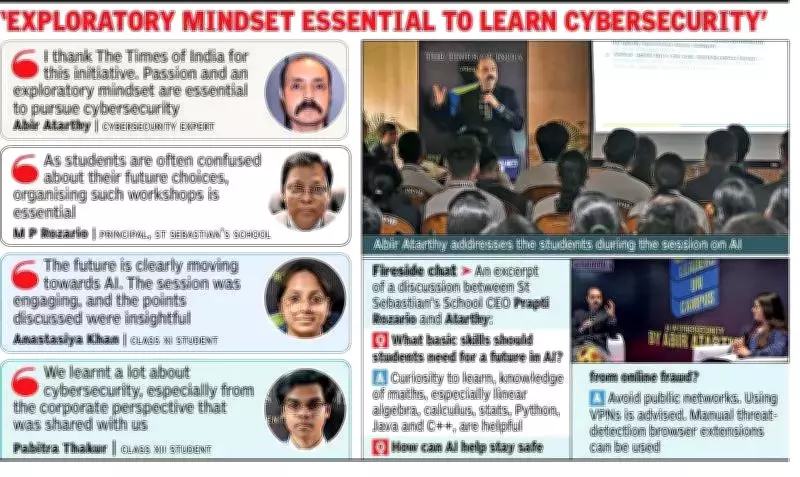
These vital lessons were imparted to students at St Sebastian's School in Kolkata during a recent educational session titled 'Artificial Intelligence in Cybersecurity,' held at the Tangra institution. The program aimed to increase awareness, educate about emerging opportunities, and foster readiness among young digital citizens. Approximately 200 students from classes XI and XII participated in the session, which focused on how AI-driven systems are transforming cyber defense mechanisms and how individuals can adopt safer digital practices.
Industry Expert Leads Educational Initiative
Organized as part of The Times of India's 'Leaders on Campus' initiative, the program was led by Abir Atarthy, Director of Cyber Security Practices at TCG Digital Solutions Private Limited. Atarthy introduced students to the evolving nature of AI-based cybersecurity, describing artificial intelligence as a "digital body" that continuously learns and adapts, unlike traditional systems that rely more heavily on fixed rules and signatures to detect threats.

Transition From Signature-Based to Behavior-Based Detection
Atarthy explained that conventional cybersecurity systems were largely signature-based, requiring known threat patterns to identify malicious activity. With significant advancements in artificial intelligence, modern detection systems have shifted to behavior-based analysis, enabling real-time identification of anomalies and suspicious patterns. This crucial transition, he emphasized, has dramatically improved both the efficiency and speed of threat detection across digital networks.
AI Systems in Action: Filtering and Prevention
The cybersecurity expert detailed how AI systems silently filter phishing emails and prevent fraudulent activities through rapid pattern recognition and high-speed data processing. One of the key highlights of the session was a demonstration of a 'live cyber threat model,' which visually showed AI systems tracking cyber threats across different countries in real time, providing students with tangible understanding of how these technologies operate globally.
Student Engagement and Future Concerns
The deliberation concluded with an interactive discussion where students asked insightful questions about emerging risks, including the vulnerability of AI systems to hacking and the evolving nature of careers involving artificial intelligence in cybersecurity. These concerns reflected a growing awareness among students about both the opportunities and uncertainties presented by AI-driven technology in the digital security landscape.

