Rajkot Cyber Police Expose Sophisticated WhatsApp 'GhostPairing' Fraud Scheme
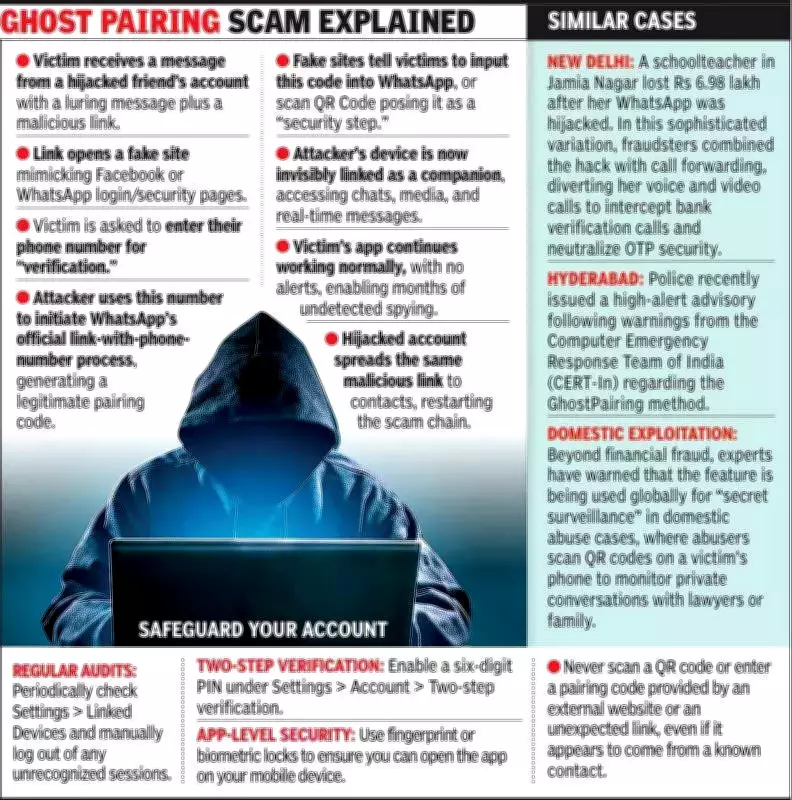
Cybercrime police in Rajkot have uncovered a highly sophisticated new scam operation where fraudsters are exploiting the "link device" or "companion mode" feature on WhatsApp accounts to commit cyberfraud without requiring physical SIM cards. This emerging threat, which cybersecurity experts have dubbed GhostPairing, primarily targets elderly individuals and represents a significant evolution in digital crime techniques.
How the GhostPairing Scam Operates
According to police investigations, fraudsters first identify vulnerable targets who are less tech-savvy, particularly senior citizens who use WhatsApp infrequently. The criminals then contact these individuals through various means, luring them with attractive schemes or false promises. Once they establish contact, they convince victims to scan a malicious QR code or click on a compromised file.
"By doing this, they successfully link the victim's WhatsApp account with their own device," explained J M Kaila, Police Inspector of the Rajkot Cybercrime Police Station. This process essentially grants fraudsters unauthorized access to the victim's WhatsApp account through WhatsApp's legitimate companion mode feature, which normally allows a single account to be accessed across up to five devices simultaneously.

High-Profile Case Reveals Significant Financial Impact
In one particularly alarming case investigated by Rajkot authorities, an accountant transferred a staggering Rs 25 lakh to an unknown bank account after receiving messages from a hijacked WhatsApp account that appeared to belong to his employer. The fraudulent communication seemed completely legitimate because it originated from a familiar contact's account that had been compromised through the GhostPairing technique.
"The inquiry revealed that a fraudster had used this modus operandi to access someone's WhatsApp account and then contacted the accountant using it," Inspector Kaila confirmed, highlighting how the scam leverages trusted relationships to maximize its effectiveness.
Social Engineering at the Core of the Threat
This new cybercrime methodology represents a dangerous evolution from traditional fraud techniques. Previously, committing such cyberfraud typically required obtaining physical SIM cards through forged documents or identity theft. GhostPairing completely bypasses this requirement by abusing WhatsApp's legitimate multi-device functionality.
The scam relies heavily on social engineering tactics, which cybersecurity experts define as the manipulation of human psychology and natural errors to trick individuals into compromising their own security. Fraudsters exploit victims' trust, lack of technical knowledge, and willingness to help or participate in what seems like legitimate activities.
The Invisible Nature of GhostPairing Surveillance
Perhaps the most dangerous characteristic of GhostPairing is its complete invisibility to victims. Because the account linking occurs without logging the victim out of their WhatsApp, and because normal phone functions continue without any login alerts or OTP notifications, the unauthorized surveillance can continue undetected for months.
Criminals using this technique often monitor account activity silently, studying communication patterns and waiting for optimal moments to strike. They frequently choose periods of inactivity—such as late at night when victims are asleep—to initiate fraudulent communications that appear to come from trusted contacts.
A Growing Threat Requiring Increased Awareness
The Rajkot cybercrime police's discovery of this sophisticated scam operation highlights the evolving nature of digital fraud in India. As technology becomes more integrated into daily life, criminals are developing increasingly clever methods to exploit both technical features and human vulnerabilities.
This case serves as a critical warning for all WhatsApp users, particularly elderly individuals and those less familiar with digital security practices. Authorities emphasize the importance of never scanning unknown QR codes, avoiding suspicious links, and being cautious about any unexpected requests to link devices or share account access.

The police investigation continues as authorities work to identify and apprehend those responsible for these sophisticated cybercrimes while developing strategies to prevent similar scams from affecting more vulnerable populations.