

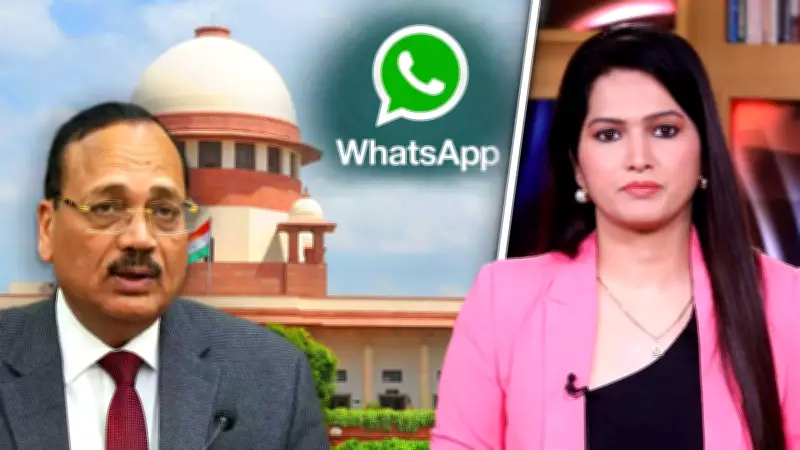
'Exit India If...': Supreme Court's Sharp Rebuke To Meta Over WhatsApp Data Policy
In a landmark hearing that sent shockwaves through the tech industry, the Supreme Court of India delivered a stern warning to Meta, the parent company of WhatsApp, regarding its data privacy policies and treatment of Indian users. The court's sharp message underscored that global technology giants cannot operate in India while exploiting users through complex and opaque privacy agreements.
Court Questions WhatsApp's Data-Sharing Practices
The bench, led by the Chief Justice, rigorously examined WhatsApp's data-sharing mechanisms and expressed serious concerns about how user information is handled. The judges pointedly questioned whether poor and rural users, who constitute a significant portion of India's digital population, could genuinely comprehend the implications of the consent they provide through lengthy privacy policies.
The court characterized these opaque policies as a form of data theft, emphasizing that incomprehensible terms and conditions effectively prevent users from making informed decisions about their personal information.

Upholding Competition Commission's Concerns
The Supreme Court validated the concerns previously raised by the Competition Commission of India, which had fined WhatsApp Rs 213 crore for abusing its dominant market position. The judicial scrutiny reinforced the regulatory body's findings that the company's practices potentially violate fair competition principles while compromising user privacy.
During the proceedings, Meta's representatives argued that WhatsApp messages benefit from end-to-end encryption, suggesting robust security measures. However, the court remained unconvinced about the broader data ecosystem, particularly questioning the use of metadata and targeted advertising practices that might circumvent these encryption protections.
Constitutional Privacy Rights Take Center Stage
The broader judicial message was unmistakable and unequivocal: India's Constitution and the fundamental right to privacy of its citizens must take precedence over corporate interests. The court emphasized that compliance with Indian laws and respect for user data protection are not optional considerations for multinational companies operating within the country's borders.
This ruling represents a significant moment in India's ongoing digital sovereignty journey, where judicial authorities are actively defining the boundaries within which global tech platforms must operate. The Supreme Court's intervention signals a growing judicial assertiveness in protecting digital rights and ensuring that technological advancement doesn't come at the cost of fundamental privacy protections.
Implications for Tech Giants in India
The court's strong stance has several important implications:
- Global technology companies must ensure their privacy policies are transparent and comprehensible to all user segments
- Data protection practices must align with Indian constitutional values and legal frameworks
- Companies cannot hide behind complex technical jargon to justify data collection and sharing practices
- User consent must be genuinely informed and meaningful, not merely a procedural formality
This judicial intervention comes at a crucial time when India is strengthening its digital governance frameworks and asserting greater control over how user data is managed within its jurisdiction. The Supreme Court's message serves as a clear reminder that operating in the world's largest democracy requires respecting its legal and constitutional foundations.

