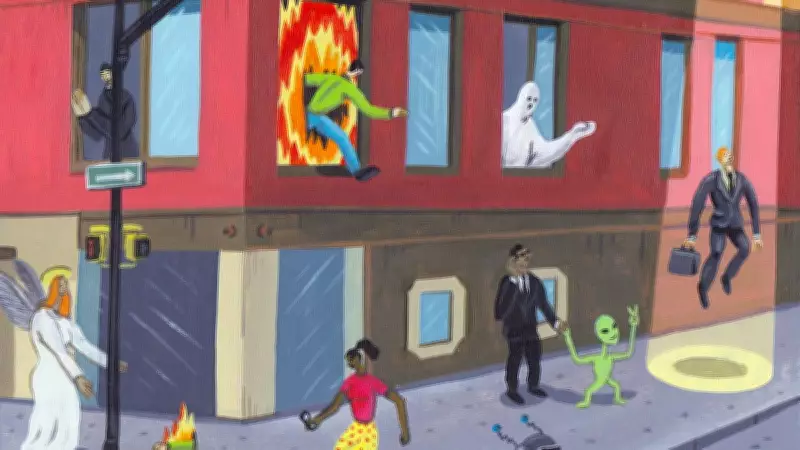
You aren’t crazy. The world is actually getting weirder. This is not a lament about political polarization or climate change, but about something more fundamental: the way we understand reality itself. Two profound changes are reshaping our relationship with truth, and they are accelerating.
The Erosion of Evidence
The second change has to do with proof and evidence. Doctored photographs predate AI and even the digital camera. But fabricating proof used to take work. It required darkrooms, airbrushes, or at least some skill in Photoshop. Now, anyone with a smartphone and an app can create convincing fakes in seconds. More importantly, the sheer volume of manipulated media makes it impossible to verify everything. We are drowning in content, and our cognitive filters are overwhelmed.
The Collapse of Shared Reality
This erosion of evidence leads to a collapse of shared reality. When everyone can produce their own facts, we retreat into echo chambers where only our preferred narratives are validated. The result is a world where conspiracy theories flourish and trust in institutions plummets. It is not that people are irrational; it is that the information environment has become hostile to rational discourse.

What Can Be Done?
Rebuilding a common foundation of truth requires systemic changes. Media literacy education must become a priority. Tech companies need to invest in provenance technologies that track the origin of digital content. And we, as individuals, must cultivate a healthy skepticism without succumbing to cynicism. The world may be getting weirder, but we are not powerless. Understanding the problem is the first step toward solving it.