IIT Madras Develops Integrated Road Safety Dashboard for Enhanced Governance
Chennai witnessed a significant advancement in data-driven governance and road safety management. The Indian Institute of Technology Madras (IIT-M) has created an integrated road safety dashboard. This scalable digital platform integrates data from multiple departments. It translates this information into real-time analytics and actionable insights for policymakers.
Collaborative Development and Implementation
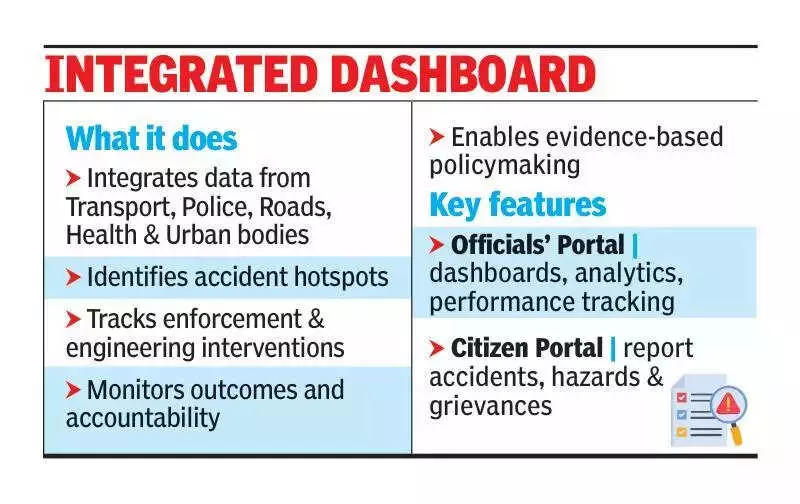
RBG Labs at IIT-M developed the dashboard in collaboration with NICSI for implementation. The platform brings together data from various stakeholders. These include transport authorities, police departments, road owning agencies, health services, and urban development bodies. This integration enables leadership to identify accident hotspots effectively. It also helps assign responsibility for road safety issues. Authorities can track interventions and measure their impact with greater precision.
Building on Existing Infrastructure
The dashboard builds upon the foundation of the integrated road accidents database (iRAD). This system is now called eDAR (electronic detailed accident report) under the ministry of road transport and highways. The new platform shifts governance from a simple 'data-only' model to a comprehensive 'data + action' paradigm. While eDAR focused on robust data capture, the dashboard emphasizes continuous monitoring. It promotes inter-departmental accountability and outcome-oriented implementation.

Key Features and Public Access
The dashboard includes several important features designed for different users:
- An 'officials' portal' provides executive summaries and location intelligence.
- Visual analytics and performance monitoring tools help officials make informed decisions.
- A 'citizen portal' allows the public to report accidents, hazards, and grievances directly.
This dual approach strengthens transparency and encourages participatory governance. Citizens become active contributors to road safety efforts.
Customization and State Adoption
Conceptualized as a standardized yet flexible digital public infrastructure, the dashboard allows for customization. States and Union Territories can adapt it to their specific needs while adhering to a national framework. The government of Odisha has already adopted this platform. Its modular architecture supports customized workflows, indicators, and reporting structures. This flexibility ensures the tool meets diverse governance requirements across different regions.
Official Endorsements and Impact
Amitabh Thakur, transport commissioner-cum-chairman of the state transport authority in Odisha, praised the dashboard. He stated, "The dashboard provides the analytical backbone and monitoring we need for sustained enforcement and interventions. Officers can access modern technology to address road safety challenges. This data-driven, human factors-based approach helps us save lives and make roads safer for everyone."
V Kamakoti, director of IIT Madras, highlighted the platform's national relevance. He explained, "Road safety presents a complex public challenge that demands coordinated action. Institutional accountability and intelligent use of data are crucial. This platform has the potential to significantly strengthen road safety management across India."
Professor Venkatesh Balasubramanian, head of RBG Labs, added a broader perspective. He noted, "The dashboard represents more than just a technology platform. It serves as a governance reform tool where technology directly contributes to saving lives."
The development marks a proactive step toward reducing road accidents through technological innovation and collaborative governance.