A Times of India ground investigation has uncovered a sprawling, decentralised network of illegal reverse osmosis (RO) plants operating across Gurgaon, extracting groundwater through borewells and distributing water with little oversight. Operators in Basai, Sector 9-10, Dhankot, Sector 95 and Sector 86 each supply nearly 700 to 800 water jars every day, yet no agency maintains a clear count of how many such units exist in the city.
Operations and scale
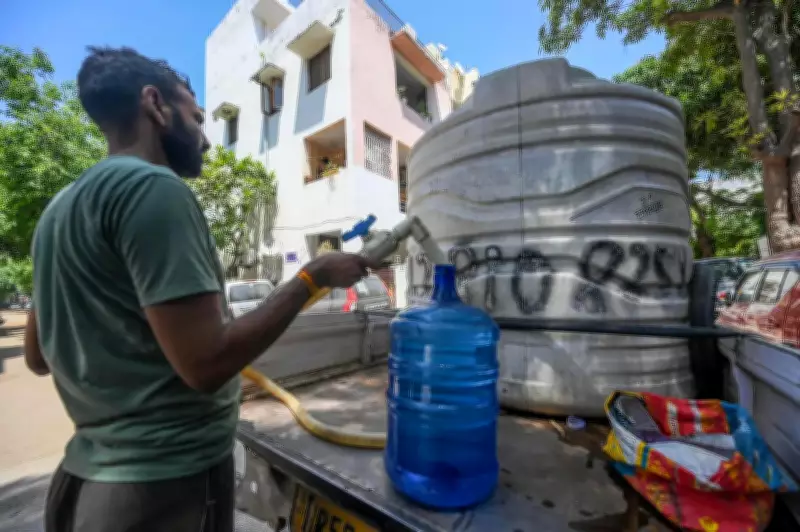
These units operate from residential plots, warehouses and small sheds tucked behind closed gates. They supply 20-litre jars and bottled water to homes, offices, shops, roadside stalls and local events. Inside a unit in Basai, blue storage tanks lined damp walls as pipes carried groundwater directly from a borewell into filtration systems. Workers moved rapidly between rinsing, refilling and stacking jars for dispatch. Outside, a small goods vehicle waited in a narrow lane for deliveries.
“On an average day, we send out 600-700 jars. In summer, the number goes higher,” said one operator. A similar setup was visible at a unit in Sector 10, where open wiring, waterlogged floors and stacks of jars marked a continuous cycle of filling and dispatch. In Dhankot, pickup vans and tankers moved in and out of clusters of such units throughout the day.

Supply chain and delivery
Delivery workers described a tightly organised supply chain operating across the city. “We start early in the morning. First supply goes to houses, then shops and offices. By afternoon, we refill again,” said Mahesh, a delivery worker in Dhankot. “We cover different sectors across the city.” The network extends beyond water jars. At roadside stalls and kiosks, bottles labelled as packaged drinking water brands such as “Bilseri” and other lookalike labels were openly sold without clear traceability. Vendors said crates arrive through local distributors and customers rarely question authenticity, particularly during peak summer demand. In several cases, bottles appeared loosely sealed or refilled, raising concerns over the circulation of potentially fake packaged drinking water through Gurgaon’s informal supply chain.
“We also supply small bottles. These go to local shops, roadside vendors and events,” said Kamlesh Singh, pointing to stacks of crates inside one of the units. Most operations function without visible approvals or signage. At several sites, groundwater appeared to be pumped directly into storage tanks before undergoing basic RO filtration. “Water comes from borewells. We filter and send it out. That’s how it works everywhere here,” said Sanjay Lal, another operator.
Price and demand
Price remains the biggest factor driving demand. Operators said branded water jars cost significantly more, while their supply ranges between Rs 60 and Rs 90 per jar. “People prefer cheaper supply,” said Vikas Chabra, a supplier. Another worker added, “Customers mostly want regular delivery. They don’t ask many questions.” At the retail end too, traceability remains weak. “We get crates from suppliers. Customers don’t really check, especially during summer,” said Mohan Sahay, who runs a roadside stall.
Enforcement and challenges
Officials acknowledged that enforcement exists but said action is largely complaint-driven. “Action against illegal RO and bottling units is a continuous exercise. In our Manesar area, we had around five such units earlier, all of which have been sealed. At present, we have not received any fresh complaints nor found any such unit during regular inspections,” said Siddharth Bhargava, regional officer (Gurgaon South), Haryana State Pollution Control Board. Bhargava said authorities are also conducting a wider crackdown on illegal groundwater extraction. “Only borewells with valid permission from the state water authority are allowed, and others are being sealed through joint enforcement involving multiple departments,” he said. However, officials admitted there is no consolidated data on how many illegal RO units are operating or how many are shut every year, as enforcement responsibilities are divided across multiple agencies.

Groundwater impact
The scale of groundwater extraction linked to such operations is substantial. A TERI assessment estimated the city has around 9,140 registered borewells, but over 15,000 illegal ones, with the actual number likely much higher. The city is already categorised as overexploited in terms of groundwater use. “This is not just about a few illegal units. It is a parallel water economy built on unregulated groundwater extraction,” said environmental activist Varun Gulati. “When multiple units are each supplying hundreds of jars daily across the city, the cumulative impact is far greater than it appears.”