

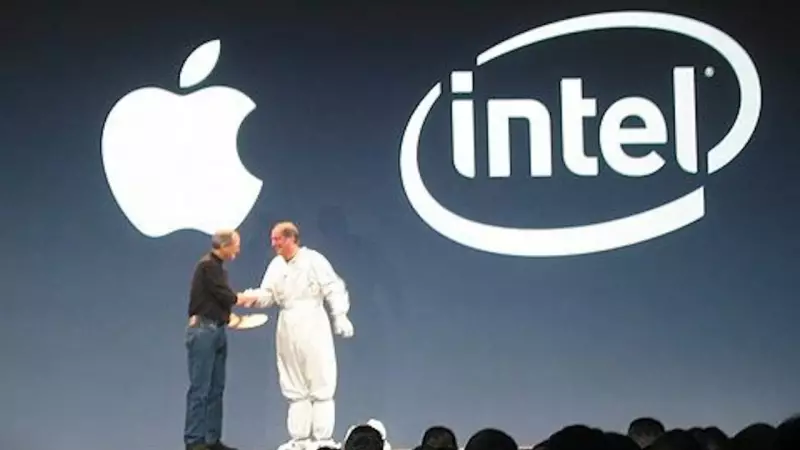
Apple is reportedly considering reviving its chipmaking partnership with Intel for some upcoming iPhone models, according to new analyst reports. This potential collaboration would mark a significant shift in Apple's semiconductor strategy, though it would be limited strictly to manufacturing rather than chip design.
Intel's Expected Role in Future iPhone Production
According to a research note from GF Securities analyst Jeff Pu obtained by MacRumors, Intel could begin supplying Apple with chips using its future 14A process technology. This advanced manufacturing node is expected to be ready for mass production by 2028, potentially positioning Intel to manufacture at least a portion of Apple's future A21 or A22 chips destined for iPhones.
It's important to note that TSMC is expected to remain Apple's primary chipmaking partner, with Intel potentially serving as a secondary supplier. This arrangement would differ significantly from Apple's previous relationship with Intel during the era of Intel Macs, where Intel both designed and manufactured x86 processors for Apple computers.

Strategic Supply Chain Diversification
This potential partnership comes at a critical time for Apple's supply chain strategy. Intel would help Apple spread its semiconductor manufacturing across multiple foundries, which has become increasingly important as competition for chip production capacity intensifies. Reports indicate that Nvidia has reportedly become TSMC's biggest customer, surpassing Apple in recent allocations.
The growing demand for AI server chips has created additional pressure on semiconductor manufacturing capacity, making supply chain diversification a strategic priority for major technology companies like Apple.
Beyond iPhones: Mac and iPad Chips
Apple's potential collaboration with Intel may extend beyond iPhone processors. According to separate analyst reports, Intel could also manufacture chips for some Mac and iPad models. In 2025, Tianfeng Securities analyst Ming-Chi Kuo suggested that Intel might begin producing Apple's bare M-series chips for Mac and iPad devices as early as mid-2027 using Intel's 18A process technology.
This expansion of manufacturing partnerships aligns with Apple's broader strategy to diversify its semiconductor supply chain and reduce dependency on single suppliers.
Historical Context: The Intel-Apple Relationship
Apple's relationship with Intel has evolved significantly over the years. During WWDC 2020, Apple CEO Tim Cook announced that the company would transition away from Intel processors for Mac computers, moving instead to custom ARM-based processors. This transition was completed over several years, marking a major shift in Apple's computing architecture.
Former Intel employee Francois Piednoel provided insight into what may have prompted Apple's initial move away from Intel. In an interview with PC Gamer, Piednoel suggested that Apple began reconsidering its partnership with Intel following significant quality assurance issues with Intel's Skylake architecture launched in 2015.
"The quality assurance of Skylake was more than a problem. It was abnormally bad," Piednoel stated. "When your customer starts finding almost as many bugs as you found yourself, you're not leading into the right place."
Piednoel believes these quality issues served as an inflection point that accelerated Apple's decision to develop its own processor architecture.
Geopolitical and Manufacturing Considerations
Apple's potential renewed partnership with Intel also aligns with broader geopolitical trends in semiconductor manufacturing. The company is expected to expand its chip production in the United States, in line with government initiatives emphasizing domestic manufacturing capabilities.
This geographic diversification of manufacturing locations could provide Apple with additional supply chain resilience and potentially favorable positioning in an increasingly complex global semiconductor landscape.

Apple's transition to its own silicon architecture has enabled greater integration across its product ecosystem. As the company stated in a 2020 press release, "This transition will also establish a common architecture across all Apple products, making it far easier for developers to write and optimize their apps for the entire ecosystem."
While Intel previously supplied Apple with cellular modems for iPhone 7 through iPhone 11 models, the potential new partnership would focus exclusively on chip manufacturing rather than design or modem technology.





