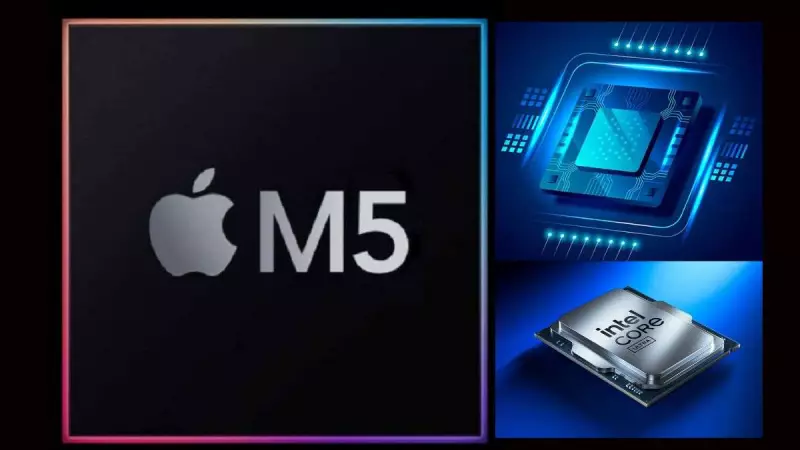
In a surprising turn of events that could reshape the semiconductor industry, Apple is reportedly considering a return to Intel for manufacturing its entry-level M-series chips. According to recent leaks, the tech giant might tap Intel's foundry services for producing some of its less powerful Apple Silicon processors starting as early as 2025.
Intel's Manufacturing Comeback
The potential partnership represents a significant shift in Apple's chip strategy. Apple completely transitioned away from Intel processors to its own custom-designed silicon in 2020, marking one of the most substantial architectural changes in the company's history. Now, just a few years later, Apple might be bringing Intel back into the fold, though in a different capacity.
Industry insiders suggest that Intel Foundry Services could be tasked with manufacturing the entry-level variants of Apple's M-series chips. These would likely power Apple's more affordable devices, including the standard iPad, MacBook Air, and potentially the lower-end MacBook Pro models. The move would represent a major victory for Intel's foundry business, which has been aggressively pursuing external customers.

TSMC Continues Premium Chip Production
While Intel might handle the entry-level chips, TSMC will reportedly continue manufacturing Apple's high-performance processors. The Taiwanese semiconductor giant will remain responsible for producing the Pro, Max, and Ultra variants of the M-series chips that power Apple's most demanding devices.
This dual-supplier approach would give Apple several strategic advantages. First, it would diversify Apple's supply chain, reducing dependency on a single manufacturer. Second, it could potentially lower production costs for Apple's more affordable products. Third, it would provide Apple with additional manufacturing capacity during periods of high demand.
The decision also reflects Intel's progress in advancing its manufacturing technology. Under CEO Pat Gelsinger's leadership, Intel has been working to regain its manufacturing edge through the "Intel 20A" and "Intel 18A" processes. These advanced nodes could potentially match or exceed the capabilities that Apple currently receives from TSMC.
Market Implications and Timeline
If the partnership materializes, it could have far-reaching consequences for the global semiconductor industry. Apple becoming an Intel Foundry Services customer would validate Intel's manufacturing capabilities and potentially attract other major clients to Intel's foundry business.
The reported timeline suggests that Apple could begin this transition with chips launching in 2025. This would likely correspond with the M5 series or potentially a refreshed M4 lineup. The specific models and manufacturing nodes haven't been confirmed, but industry watchers are closely monitoring the situation.
This potential shift comes at a time when Apple is facing increasing competition in the ARM processor space. Qualcomm's recent Snapdragon X Elite processors have shown impressive performance, while AMD and Intel continue to advance their x86 architectures. Diversifying manufacturing partners could help Apple maintain its competitive edge while managing costs.
Neither Apple nor Intel has officially commented on these reports. However, if the leaks prove accurate, 2025 could mark the beginning of a new chapter in Apple's silicon journey—one that brings its relationship with Intel full circle in an unexpected way.