

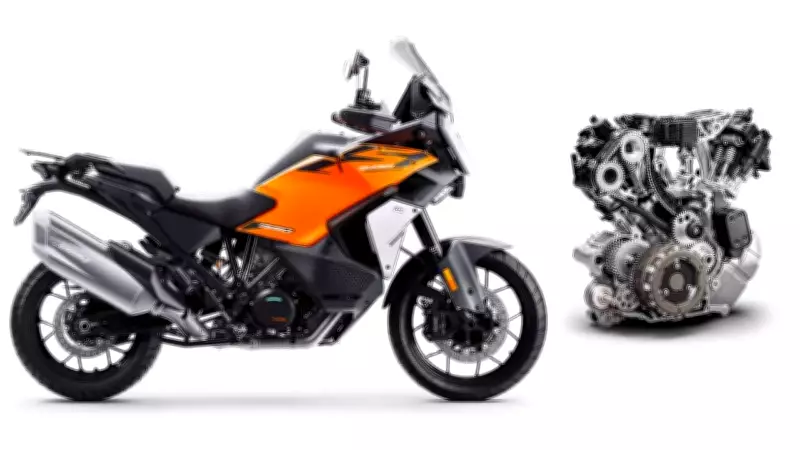
KTM Joins Automatic Transmission Race with Innovative AMT System
KTM has officially entered the competitive arena of automatic motorcycle transmissions with the launch of its proprietary Automated Manual Transmission, commonly referred to as AMT. This groundbreaking technology recently marked its production debut on the high-performance KTM 1390 Super Adventure S Evo, positioning the Austrian manufacturer alongside other leading brands developing similar systems.
How KTM's AMT Technology Functions
Unlike conventional scooter-style automatic transmissions, KTM's AMT system builds upon a traditional manual gearbox foundation while eliminating the need for a clutch lever. The innovative design replaces the standard clutch mechanism with a centrifugal clutch that automatically engages when the rider opens the throttle after selecting first gear. This engineering solution enables smooth acceleration from a standstill while significantly reducing the risk of stalling, making it particularly advantageous for both novice and experienced riders.
Dual Operating Modes: Manual and Automatic
KTM's AMT transmission provides riders with two distinct operational choices to suit varying riding preferences and conditions:

- Manual Mode: In this configuration, riders retain full control over gear changes without operating a clutch. Shifts can be executed using either the conventional foot gear lever or through paddle shifters mounted on the handlebars. When utilizing the foot lever, sophisticated sensors communicate with the electronic control systems, allowing the ECU and Transmission Control Unit to manage shifts with precision comparable to advanced quickshifter technology.
- Auto Mode: This fully automatic setting delegates gear change decisions to the motorcycle's intelligent systems. The transmission automatically determines optimal shift points based on multiple parameters including engine speed, throttle input, vehicle velocity, acceleration patterns, lean angle, and prevailing riding conditions. Even in Auto mode, riders maintain override capability through the paddle shifters, with the system resuming automatic operation after a brief predetermined interval.
Unique Gear Sequence and Parking Mechanism
One of the most distinctive features of KTM's AMT system is its unconventional gear sequence arrangement. Departing from traditional motorcycle layouts that typically follow 1, neutral, then ascending gears, the AMT employs a P-N-1-2-3-4-5-6 sequence. The inclusion of Park (P) mode represents a significant innovation, similar to automatic automobile transmissions, addressing the centrifugal clutch's limitation in securing the rear wheel on inclined surfaces.
To overcome this challenge, KTM engineers have integrated a mechanical locking pawl within the gearbox assembly. This component effectively prevents unintended movement when Park mode is activated. Both Park and neutral positions can only be engaged using the handlebar-mounted shift paddles, ensuring deliberate and secure selection.
Advanced Features and Current Availability
The AMT system incorporates several intelligent functions designed to enhance riding dynamics and safety:
- Kick-Down Function: This feature automatically initiates a downshift when the rider aggressively opens the throttle, providing immediate power delivery for overtaking maneuvers.
- Deceleration Downshifts: Rapid throttle closure triggers automatic downshifts to maintain optimal engine performance within the ideal power band.
- Electromechanical Actuation: All gear changes are precisely executed through an advanced electromechanical actuator system.
Currently, KTM's AMT technology is exclusively available on the company's larger displacement models, with the 1390 Super Adventure S Evo serving as the inaugural platform. The potential extension of this transmission system to smaller capacity motorcycles within KTM's lineup remains uncertain, though industry observers anticipate possible future applications as the technology matures and market demand evolves.

