

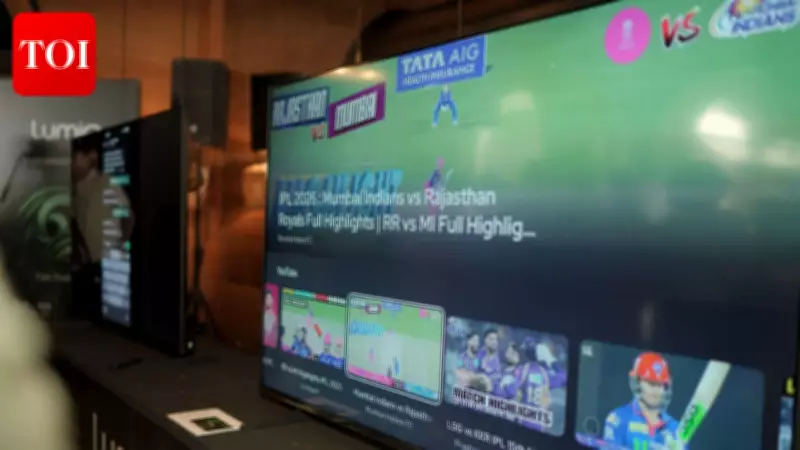
Open Netflix on the Vision 9 and there's none of that small held breath where you check if the click registered. Scroll the home rail and the thumbnails keep pace with your thumb. Switch from YouTube to JioHotstar and neither app asks the other to step aside first. These aren't things you'd think to praise a Rs 54,999 TV for. On most TVs at any price, they still are.
This is the argument Lumio has been making since the Vision TVs first landed last year. The Arc projectors that followed carried the same line. The 2026 lineup keeps it going. The Vision 9 is the new product doing the work this round, the Vision 7 picks up a minor refresh, and the speed-first framing all three share remains the loudest sentence the brand has on the page.
The Chip Is Doing the Talking
The 55-inch Vision 9 I've been using is Rs 54,999. QD mini-LED panel, Google TV on Android 14, the usual mid-range checklist ticked. And the chip behind it all is the BOSS, name and all—which is where this stops being a mid-range checklist. A few days in, here's where the TV stands.

What Lumio dresses up as the BOSS processor is a MediaTek Pentonic 700 paired with 3GB of DDR4 RAM, which is a class above what most TVs at this price ship with. The benefit shows up in the absence of moments you'd otherwise notice. Apps open without that half-second of nothing where your brain starts to wonder. The home screen rebuilds quickly after a cold start. Voice search responds when called, not three beats later when you've already given up. Hopping between apps doesn't feel like a task.
The Panel Doesn't Cut Corners
The display is what Lumio calls an EVA panel, an enhanced VA setup with a quantum dot film over a mini-LED backlight running more than 1,900 LEDs. The numbers on the box are ambitious. 900 nits peak. 600 nits full screen. 110% DCI-P3. 81% Rec 2020. A Movie-preset delta E of 1.71. All of that goes on the bench for the full review.
What's already obvious is that the highlights have weight, the blacks hold in a dim room, and the default tuning leans warm and measured rather than the loud, saturated face most TVs at this price arrive wearing. The DOPE Display pipeline, Lumio's name for the colour stack, has real craft in it. Standard runs bright and slightly cool. Movie pulls back and the skin tones settle where they should. Switching between presets changes the picture, not just the white point, which is more than I can say for most of this segment.
Audio Trade-Offs
Audio is the one place the 55-inch parts ways with its 65-inch sibling. The bigger model ships with a hexa-driver, dual-subwoofer arrangement. This one drops the subs for a quad-driver setup, and that's the only meaningful spec difference between the two sizes. Dialogue is clean and the mids hold up for everyday viewing. Anything that leans on a low end exposes the trade. Action films and music will want a soundbar before too long.
Google TV, Kept Honest, Plus TLDR
The TV runs Android 14 with no third-party launcher in the way and no carousel of in-line ads stitched onto the home rail. The remote, which Lumio still calls the Minion, is a stocky little brick with clicky keys and a dedicated TLDR shortcut sitting where the brand wants your thumb to find it.
TLDR is the piece of software Lumio has clearly thought hardest about, and it's grown up since the version that shipped on the first Vision TVs. It pools trending titles across OTT apps into one feed, filters by language and genre, and keeps tabs on live sports scores from the leagues that actually pull viewers in this market. Not transformative. Useful. The kind of feature most competitors would bolt on, mention in a press deck, and forget about. This one loads fast and looks coherent enough to suggest someone's still tending to it.
Connectivity and Warranty
Connectivity ticks the basics: three HDMI 2.1 ports, eARC, ALLM and VRR for the inevitable PS5 or Series X. The two-year warranty and 300-plus service centres are the sort of thing every new brand promises on launch day. Lumio is now a year into honouring it, which counts for more than the launch deck did.

Same Argument, One Product On
The Vision 9 isn't asking you to rethink what a Rs 54,999 TV looks like. The panel is good. The audio is fine for what it is. The software is clean Google TV with one well-built proprietary app sitting on top. What sets it apart from the shelf around it is what set the original Vision TVs and the Arc projectors apart before it: the absence of the small daily friction that's come to define the category.
The question a hands-on can't answer is whether any of that still holds a few weeks from now, when the home screen is loaded with every OTT app you actually use and the TV has settled into a daily rhythm. A few days really isn't the test. The test is whether the BOSS processor and the 3GB of DDR4 still feel a class above the segment once the segment has had a real workout against it. That conversation is for the full review. For now, the Vision 9 makes its case the same way Lumio has been making it since the first one shipped, by not making you wait for it.
About the Author: TOI Tech Desk
The TOI Tech Desk is a dedicated team of journalists committed to delivering the latest and most relevant news from the world of technology to readers of The Times of India. TOI Tech Desk's news coverage spans a wide spectrum across gadget launches, gadget reviews, trends, in-depth analysis, exclusive reports and breaking stories that impact technology and the digital universe. Be it how-tos or the latest happenings in AI, cybersecurity, personal gadgets, platforms like WhatsApp, Instagram, Facebook and more; TOI Tech Desk brings the news with accuracy and authenticity.





