

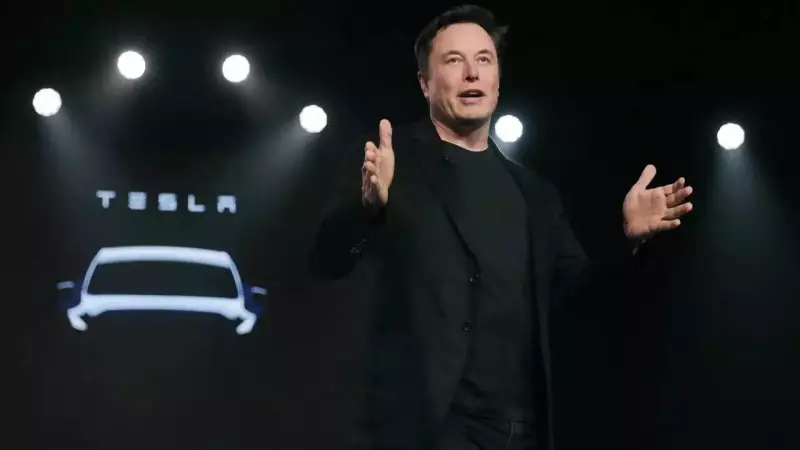
Elon Musk, the visionary CEO of Tesla, has provided a candid update regarding the production capabilities for two of the company's most anticipated future products: the Cybercab robotaxi and the Optimus humanoid robot. In a recent post on the social media platform X, Musk issued a sobering warning, indicating that the initial manufacturing phase for both innovations will be "agonisingly slow". This statement suggests Tesla is preparing for significant production hurdles as it gears up to commence manufacturing within the current year.
Production Timelines and Ambitious Goals
Tesla is scheduled to initiate production of the sleek, two-seater Cybercab robotaxi in April. This futuristic vehicle, as described by Musk, will ship without a traditional steering wheel or pedals, embodying a fully autonomous design. Despite the anticipated slow start, Musk has set an eventual production target of 2 million units per year for the Cybercab.
Concurrently, Optimus—Tesla's humanoid robot engineered to assist with everyday tasks—is slated to enter production by the end of 2026. For this robotic assistant, Musk envisions Tesla potentially manufacturing up to one million units annually in the long run.

Musk's Detailed Explanation on Manufacturing Challenges
Elaborating on his X post, Musk wrote: "With the important caveat that initial production is always very slow and follows an S-curve. The speed of the production ramp is inversely proportionate to how many new parts and steps there are. For Cybercab and Optimus, almost everything is new, so the early production rate will be agonisingly slow but eventually end up being insanely fast."
This commentary was in response to a user's post highlighting that Cybercab production would commence in under 100 days, utilizing Tesla's revolutionary unboxed manufacturing process for the first time. The user noted a projected production line speed of one Cybercab every under 10 seconds, compared to 34 seconds for the Model Y, with an ultimate cycle time goal of approximately 5 seconds.
Internal Warnings and Historical Context
Musk's public remarks align with internal communications at Tesla. According to a report by Business Insider, the company's Vice President of AI software informed employees on the Autopilot and Optimus teams during an October 2025 all-hands meeting that 2026 would be the "hardest year" of their professional lives.
Furthermore, Musk has explained to investors that achieving these production goals will require considerable time, as Tesla must essentially construct an entire new supply chain from the ground up. He analogized the process to moving at the pace of the "slowest, dumbest, least lucky thing out of 10,000 unique items."
Past Production Challenges at Tesla
This is not Tesla's first encounter with formidable production obstacles while launching ambitious new products. The company endured a notoriously difficult period, famously dubbed "production hell" by Musk himself, during the ramp-up of the Model 3 electric vehicle in 2017. At that time, Musk and other key employees resorted to sleeping on the factory floor to overcome production bottlenecks for the mass-market model.
More recently, Tesla faced significant manufacturing challenges with the Cybertruck, its latest new vehicle. The electric pickup's unique design and stainless steel exoskeleton proved exceptionally difficult to produce at scale. Musk acknowledged in 2023 that Tesla had "dug its own grave" with the Cybertruck's complex design. This experience serves as a cautionary tale for Musk's lofty production aspirations; his initial prediction of manufacturing 250,000 Cybertrucks annually fell short, with industry data indicating just over 20,000 units sold in the US last year.
Current Autonomous Initiatives and Broader Implications
In a related development, Tesla launched an autonomous ride-hailing service in Austin in June 2025. However, this fleet currently operates with only a limited number of Model Y robotaxis on the city's roads and has not yet fully eliminated human safety monitors from its vehicles.

The updates on Cybercab and Optimus production underscore the immense technical and logistical challenges inherent in bringing groundbreaking technologies to market. While Tesla sets audacious long-term targets, Musk's tempered expectations for the initial rollout highlight the intricate balance between innovation and scalable manufacturing in the competitive electric vehicle and robotics sectors.





