

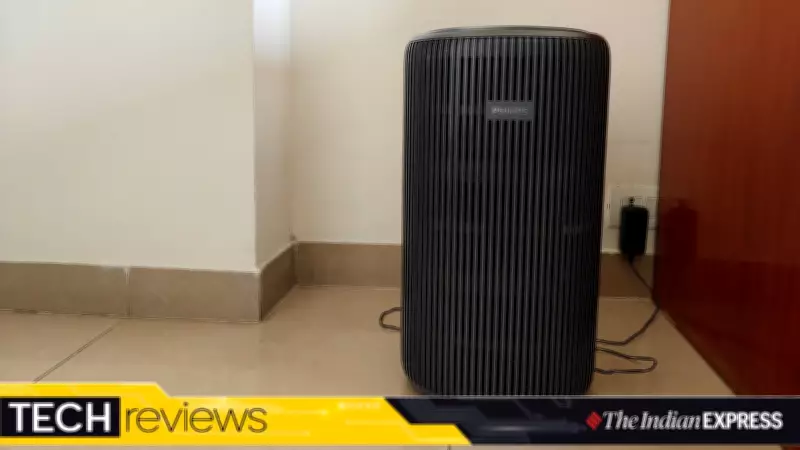
Philips AC4221 Air Purifier: A Delhi-NCR Winter Essential
As Delhi-NCR grappled with another brutal pollution season, with AQI levels soaring into the Severe category well into January, the need for effective indoor air purification became more critical than ever. Having relocated to Noida, I vowed to be better prepared this time, diving deep into research on CADR, filter types, and marketing myths. Amidst countless comparisons, the Philips AC4221 from the PureProtect Pro 4200 Series consistently emerged as a top contender. This mid-range smart air purifier not only looks impressive on paper but has proven to tick all the boxes for enduring Delhi's worst months indoors. After two months of rigorous usage, here is my comprehensive review.
Design and Display: Sleek Yet Stationary
The Philips AC4221 sports a clean, metallic black finish that seamlessly blends into both home and office environments without drawing undue attention. However, portability is not its forte. Weighing 6.5 kilograms, this unit is not designed for casual movement between rooms. While it can be relocated when necessary, it is clearly intended to stay put once you've chosen its permanent spot.
The real-time PM2.5 display panel is fully touch-based, eliminating physical buttons and lending a modern, minimalist aesthetic. The numbers are large and easily readable, allowing for quick air quality checks at a glance. A colour ring around the top display provides an additional visual cue, with gradations indicating the cleanliness or pollution levels of indoor air. Although the lighting can be customized to ambient colours, it can also be completely turned off to avoid sleep disturbances.

Setting up the device, however, can be a bit fiddly. Inserting the filters in the correct orientation required close reference to the diagrams in the user manual, which might pose a minor challenge for some users.
Air Flow and Purification: High Performance for Larger Spaces
Beyond its appealing design, the AC4221 excels in performance. It comes equipped with two Nano Protect filters, each comprising a pre-filter, HEPA layer, and double activated carbon layer to tackle gases and unpleasant odours. One filter is positioned at the top and the other at the bottom, enhancing its filtration efficiency.
While HEPA filters are now common in many devices, the key specification to consider is the clean air delivery rate (CADR). The Philips AC4221 boasts an impressive 600 m3/h CADR, significantly higher than the 400 m3/h typically found in budget models. This makes it particularly suitable for larger spaces, such as living rooms or combined living-dining areas.
Philips claims that its Nano Protect filters capture 99.97 per cent of particles as small as 0.3 microns. However, placement is crucial for optimal performance. Air purifiers function best when not confined to corners, as they require unobstructed airflow to efficiently pull in polluted air and release clean air. Unlike models that vent clean air from the top, the AC4221 features a 360-degree air intake but releases clean air only from the mid-section. This design may benefit from slight elevation or placement in more open areas to facilitate faster and more efficient air circulation across the room.
App Connectivity and Maintenance: Smart Features That Justify the Cost
During my research, I noticed that app-controlled models often commanded higher prices than non-connected units, despite similar technical specs. Initially skeptical, I wondered if app connectivity was truly necessary. The Philips AC4221 convincingly argues that it is. The Philips Air+ app, available for both Android and iOS, offers smooth and intuitive control over the device.
The AC4221 supports 5GHz WiFi and pairs relatively easily. Through the app, users can switch between five fan speeds, with Turbo mode being the loudest at 51.5 dB. In auto or sleep mode, when the air is clean, the device operates almost silently. Another valuable in-app feature is the filter status indicator, which helps users decide when to clean or replace filters. Philips recommends filter replacement after nine months, but the harsh reality of Delhi-NCR pollution might necessitate more frequent changes.

Amid concerns about filter availability, I found replacement filters for the AC4221 readily available on Amazon. Cleaning the air filters with a soft brush is straightforward, thanks to their mesh design. However, it's important to reset the filter status in the app after cleaning. Additionally, the particle sensor at the back requires regular cleaning with a swab to maintain accuracy.
Verdict: A Worthy Investment for Polluted Cities
Priced at Rs. 27,995, the Philips AC4221 air purifier represents a solid investment for residents of Delhi-NCR and other high-pollution cities. It combines a high CADR, reliable filtration, sensible app features, and an aesthetic design at a mid-range price point. If you seek an air purifier that performs quietly and effectively even on the murkiest days, the AC4221 makes a compelling case.
- Pros: Good app connectivity, reliable performance, perfect for living rooms, easy-to-clean filters.
- Cons: Bulky profile, air outflow design may require strategic placement.
In summary, the Philips AC4221 stands out as a dependable ally against indoor air pollution, offering peace of mind during Delhi's toxic winters.
