At the CES 2026 tech show in Las Vegas, a new contender stepped into the ring of high-end mixed reality: the Samsung Galaxy XR. After a hands-on demo, the immediate takeaway was clear—this AI-powered device, born from a collaboration between Samsung, Google, and Qualcomm, presents a formidable and, in key aspects, superior alternative to the Apple Vision Pro.
A Familiar Yet Refined Hardware Experience
Removing the headset after the demo evoked a strange duality. While the sensation of wearing a mixed-reality device remains distinctive, the user interface felt instantly familiar to any Android smartphone user. This intuitive design is a core highlight, contrasting with the steeper learning curve often associated with other platforms.
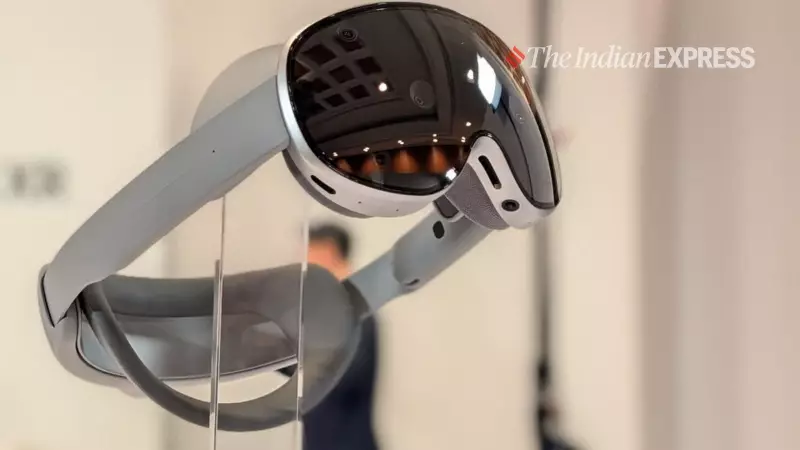
The most immediate physical advantage is comfort. Weighing in at 545 grams, the Galaxy XR is significantly lighter than the 750-gram Apple Vision Pro. This makes a tangible difference during wear, though like all such headsets, extended use beyond 30 minutes can lead to forehead pressure and heating as internal fans activate.

Visually, the design echoes the Vision Pro, but the build feels more plastic-heavy and includes a tethered battery pack to reduce front-heaviness. Battery life is estimated at around two hours, extending to two and a half for video playback. The headset comes with 16GB of RAM and 256GB of storage in its base configuration.
Powering the Experience: Android XR and Stunning Displays
Under the hood, the Galaxy XR runs on Google's new Android XR operating system and is powered by Qualcomm's Snapdragon XR2 Plus Gen 2 chip. While not as outright powerful as Apple's M5 chip, performance was smooth with no stuttering, and it supports 4K video playback.
Where the Galaxy XR arguably pulls ahead is in its display. The micro-OLED panels offer a combined resolution of around 29 million pixels (3,552x3,840 per eye), surpassing the Vision Pro's reported 23 million. The field of view and passthrough video quality from its dual high-res cameras also felt impressively sharp and responsive. The headset is equipped with a full suite of tracking cameras for movement, eye, and even iris scanning for security.
Gemini AI: The Integrated Game-Changer
The interaction paradigm is gesture-based, using pinches and palm-facing gestures to navigate, which becomes intuitive quickly. However, the true standout feature is the deep integration of Google Gemini AI.
Summoned with a button press, Gemini acts as a powerful assistant within the mixed-reality space. In a demo, asking it to locate the Empire State Building on Google Maps resulted in the view instantly snapping to the location. This seamless AI integration, absent on other major headsets, positions the Galaxy XR as a testbed for intelligent spatial computing.
The device excels as an entertainment companion, offering immersive 3D maps and a virtual theatre for movies. It can run multiple apps in floating windows and supports the Google Play Store, with apps marked "Made for XR." While it can connect to Bluetooth peripherals for work, Samsung highlighted enterprise applications like shipbuilding training with Samsung Heavy Industries.
Early Verdict: Refinement Over Reinvention
Priced at $1,799, the Samsung Galaxy XR does not seek to reinvent the mixed-reality wheel. Instead, it refines the formula by leveraging Samsung's hardware, Google's software and AI, and Qualcomm's silicon. The result is a more accessible, comfortable, and for Android users, a more intuitive headset than the Vision Pro.
Its success will hinge on developer support and market reception in a category still seeking mainstream footing, especially as sleeker smart glasses emerge. But for now, the Galaxy XR sets a compelling new benchmark in the high-stakes race for your face.