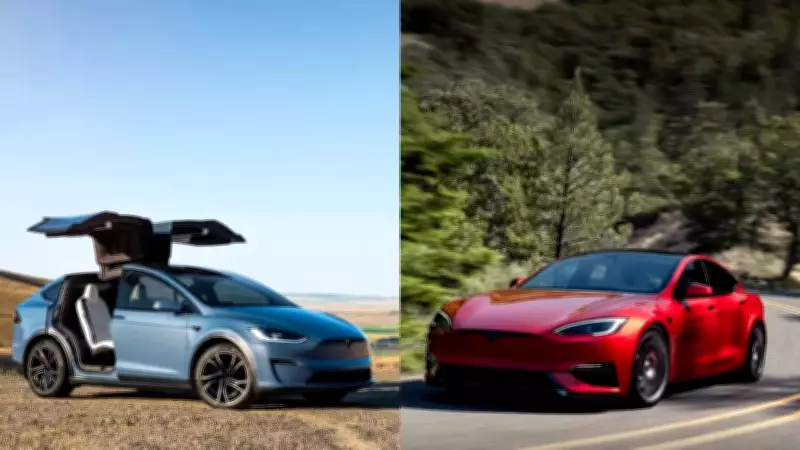
Tesla has officially confirmed its decision to discontinue the production of its Model S and Model X vehicles, bringing an end to the company's longest-serving nameplates that played a pivotal role in establishing the electric vehicle brand globally. The announcement was made through Tesla's official X account and subsequently reshared by CEO Elon Musk, signaling a significant shift in the company's product strategy.
Phased Production Wind-Down Begins Next Quarter
Production of both the Model S and Model X will be wound down in a phased manner starting from the next quarter, with availability already being reduced in select markets. Tesla has advised customers interested in owning either of these models to place their orders soon, as production will gradually cease over the coming months.
Historical Significance of the Discontinued Models
The Model S, first introduced in 2012, represented Tesla's first mass-appeal electric car and was instrumental in establishing the brand's presence across key markets including the United States, Europe, and parts of Asia. This luxury sedan demonstrated that electric vehicles could compete with traditional internal combustion engine cars in terms of performance, range, and desirability.

The Model X followed as Tesla's first SUV, gaining recognition for its distinctive falcon-wing doors and innovative features that set new standards in the electric vehicle segment. Both models served as flagship products that helped Tesla build its reputation as a premium electric vehicle manufacturer during the company's formative years.
Strategic Shift Toward Future Technologies
Tesla has indicated that this move is largely driven by its long-term strategic direction. As the company pivots toward autonomous vehicles and next-generation technologies, legacy products that no longer align with this vision are being systematically phased out. The Model S and Model X currently account for only a small share of Tesla's overall global sales, especially when compared to the far more popular Model 3 and Model Y, which have become the volume drivers for the company.
Changing Product Focus and Facility Repurposing
Looking ahead, Tesla's product focus will center on the Model 3 and Model Y, which continue to form the backbone of its business and represent the company's most successful mass-market offerings. Alongside these existing models, Tesla is expected to push harder on upcoming electric vehicles as well as technology-led initiatives tied to autonomy, robotics, and artificial intelligence.
The California manufacturing facility where the Model S and Model X are currently built is likely to be repurposed to support these future projects, reflecting Tesla's commitment to evolving its manufacturing capabilities in line with its technological ambitions. This transition marks a significant moment in Tesla's evolution from a niche electric vehicle manufacturer to a broader technology company focused on sustainable transportation solutions.
Sales Performance and Market Context
While the Model S and Model X were groundbreaking when introduced, sales of both models have plateaued in recent years as consumer preferences have shifted toward more affordable electric vehicles and crossovers. The Model 3 and Model Y have dramatically outsold their predecessors, demonstrating the changing dynamics of the electric vehicle market where accessibility and practicality have become increasingly important factors for consumers.
This strategic decision to discontinue the Model S and Model X represents Tesla's acknowledgment that even successful products must eventually make way for newer innovations as the company continues to evolve in the rapidly changing automotive landscape.