

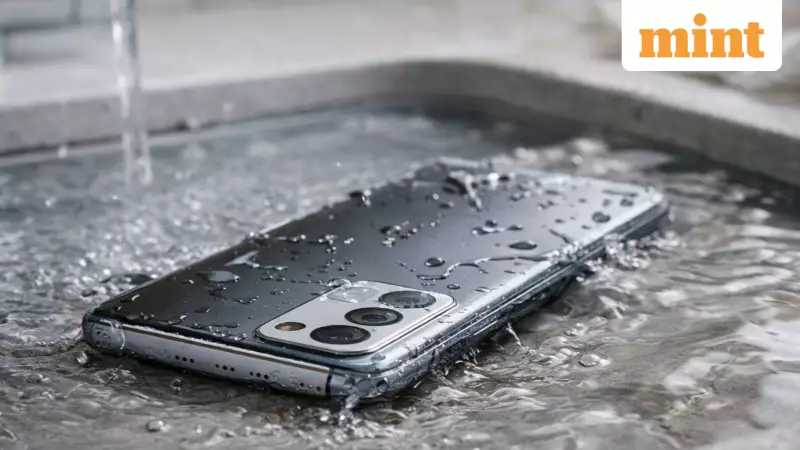
That heart-stopping moment when your smartphone slips from your grip and plunges towards a sink or puddle is all too familiar. In that instant, you desperately recall the IP67 or IP68 rating advertised with the device, hoping it's enough. However, the harsh reality is that these reassuring certifications, born in sterile labs, offer far less protection in our messy, unpredictable lives than we believe.
The Illusion of Invincibility: Lab Tests vs. Real-World Chaos
We treat IP (Ingress Protection) ratings like an impenetrable shield for our gadgets. In truth, they function more like a seatbelt—a crucial safety feature for an accident, but not something to test daily. The official tests that grant these ratings are conducted under highly controlled, specific conditions. They involve static, pure freshwater at certain depths and pressures.
These controlled scenarios starkly contrast with the chaos of daily life. The laboratory does not account for chlorinated pool water, the salty spray of a beach, the sticky residue of a sugary drink, or the soapy foam from a shower sliding into speaker grilles. As journalist Bharat Sharma noted on January 9, 2026, the predictable lab environment is one that consumers almost never replicate.

The Silent Killer: Corrosion and Long-Term Damage
A phone might emerge from a quick dip seemingly unscathed, only to fail mysteriously days or weeks later. This is the insidious work of corrosion. Moisture that seeps into internal connectors works slowly and quietly, degrading them until components like speakers turn faint, charging ports become finicky, or ghostly patches appear on the display. One day, the device simply refuses to turn on, and the initial spill is a distant memory.
Saltwater is particularly destructive. It can creep into microscopic seams, dry into crystalline structures that act like wedges, and accelerate corrosion. A single afternoon near the ocean can inflict more long-term harm than several accidental drops in a freshwater sink.
Treat Water-Resistance as Insurance, Not a Feature
Even "surviving" phones are often permanently altered. You might notice wireless charging becoming unreliable, touchscreens responding erratically at the edges, or microphones muffling your voice. These are all telltale signs that moisture found a path inside and lingered.
So, what is the true capacity of a modern water-resistant smartphone? It is enough to forgive an occasional accident—maybe two if you're lucky. It is not designed to support habits like using the phone in a steamy bathroom, taking it poolside regularly, or handling it with wet hands while cooking. The key takeaway for every user is this: water-resistance is a form of emergency insurance. It must be treated strictly as a backup plan, not an invitation for risky behavior. Adopting this mindset is the surest way to extend the lifespan of your valuable device.
Ultimately, while IP ratings provide a standardized benchmark, they are not a comprehensive guarantee against the diverse liquid hazards of everyday life. Protecting your phone requires proactive caution, not just reliance on a certification.






