

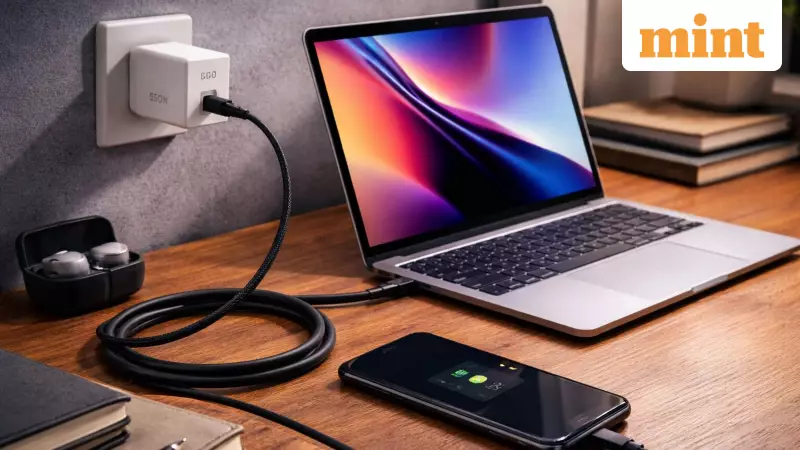
Have you ever found your phone battery critically low, your dedicated charger nowhere in sight, but your laptop's power adapter sitting right on the desk? The identical USB-C port on both devices seems to invite a simple solution. For many tech users in India, this scenario is a common test of convenience versus caution. The good news is that, thanks to modern standards, using a laptop charger for your phone is not only possible but often uneventful. However, understanding the underlying technology is key to ensuring it's both effective and safe.
The Magic Behind the Port: USB-C and Power Delivery
This interoperability isn't luck; it's the result of deliberate global standardisation. The USB-C connector is just the physical interface. The real hero is the protocol working behind the scenes: USB Power Delivery (PD). This intelligent system facilitates a conversation between your phone and the charger before any significant power flows.
When you connect your smartphone to a capable laptop charger, the phone communicates its power requirements. The charger then responds by offering the closest matching, safe voltage and current profile from its supported range. As documented by the USB Implementers Forum, this negotiation is why a powerful 65W laptop adapter doesn't overwhelm a phone designed for 18W or 25W charging. The charger simply scales down its output to a level the phone can safely accept, protecting the device's battery and circuitry.

Where Charging with a Laptop Adapter Can Stumble
While the technology is designed for compatibility, the user experience isn't always uniformly fast or perfect. Several factors can create a messy charging situation. First, not every USB-C charger supports the full USB Power Delivery protocol correctly, and crucially, not every USB-C cable is created equal. Leading accessory manufacturers like Anker and Belkin emphasise that a cheap, damaged, or non-compliant cable can severely limit charging speed and even pose a risk by causing excessive heat buildup.
Secondly, phone manufacturers often add their own proprietary fast-charging layers on top of the universal USB-C standard. Brands like Xiaomi, Oppo, and Vivo have their own protocols. When you connect such a phone to a standard laptop PD charger, the proprietary fast charging won't activate. The system will default to a slower, basic USB Power Delivery speed or even standard USB charging, which can feel disappointingly slow compared to the phone's original charger.
Design philosophy also plays a major role. Apple deliberately caps iPhone charging speeds to prioritise long-term battery health. Samsung devices may allow faster PD charging but implement aggressive thermal management. These are intentional choices by the brands, not accidents, and they directly impact how your phone behaves with a third-party, high-wattage adapter.
Key Takeaways for Safe and Effective Charging
So, can you use your laptop's USB-C charger for your smartphone? The answer is a qualified yes, and it's a practice already common in many Indian households and offices. The quality of the experience hinges on three pillars:
- Power Delivery Support: Ensure both your charger and phone support USB PD for intelligent negotiation.
- Cable Quality: Invest in a certified, high-quality USB-C cable that can handle the power.
- Manufacturer Limits: Be aware that your phone's brand may intentionally limit speed for battery longevity.
By keeping these factors in mind, the once-mysterious act of cross-charging becomes a predictable and useful part of your tech routine. The dream of one universal charger is closer than ever, but as with all technology, it pays to read the fine print written in volts, amps, and protocols.






