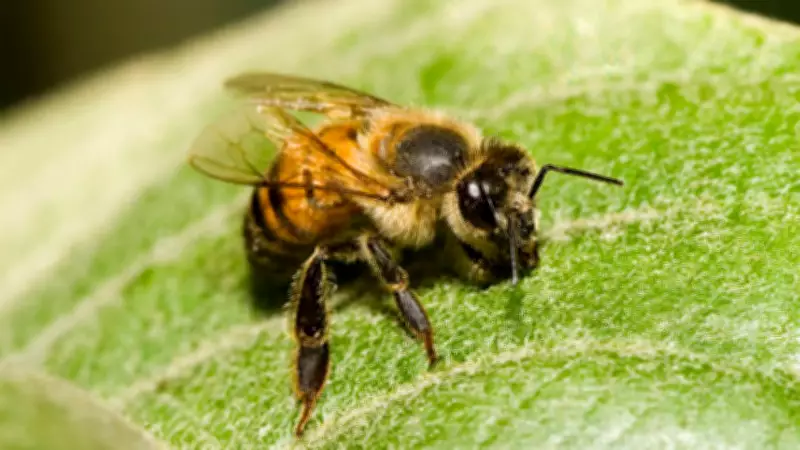
In 1957, a small oversight in a Brazilian laboratory led to the creation of the world's most feared honey bees, altering the ecology of two continents. What started as a well-intentioned scientific experiment turned into a cautionary tale about unintended consequences.
The Problem Scientists Were Trying to Solve
In 1956, Brazilian geneticist Dr. Warwick E Kerr imported queens of the East African lowland honey bee, Apis mellifera scutellata, from South Africa and Tanzania. His goal was to crossbreed them with European honey bees already present in Brazil. The African bee was highly productive in tropical climates, producing more honey and foraging efficiently in heat. Kerr aimed to combine the docile nature of European bees with the high honey production of African bees, creating a superior hybrid. On paper, it was an elegant genetic plan.
The Laboratory Setup
Kerr acquired 63 live queens from South African beekeepers, which were placed in a quarantine area at an agricultural research station near Rio Claro. Of these, 48 queens survived into the following year. The facility was carefully controlled. Through selective breeding with European drones, first-generation hybrids were formed. After several months, natural attrition reduced the stock to 29 colonies, maintained in hive boxes equipped with queen excluders. These are mesh screens with gaps large enough for worker bees but too small for queens, preventing them from leaving with swarms.

The Fateful Afternoon in 1957
On an unremarkable afternoon in 1957, someone removed a screen from a beehive, allowing 26 Africanised honey bee queens with small swarms to escape into the nearby forest. By the time scientists discovered the mistake, the bees were gone. There was no way to track or retrieve them. Scientists hoped the escaped bees would die or mate with European drones, losing their African traits. They did not die, and they did not lose their characteristics.
The Spread and Impact
Within a few years, reports emerged from surrounding rural areas of wild bees attacking farm animals and humans. Poor Brazilian farmers suffered livestock losses, and human fatalities occurred. The hybrid bees inherited the African bee's extreme defensiveness, mobilising large numbers of workers at the slightest threat and pursuing it over long distances. Africanised honey bees react faster to disturbances and chase people up to 400 metres. They have killed an estimated 1,000 humans, with victims receiving ten times more stings than from European honey bees. The bees spread northward through South and Central America, reaching the United States in 1990 and spreading to southern and western states.
The Scientist Behind the Experiment
Dr. Warwick E Kerr, who led the research, passed away on September 15, 2018. The Africanised honey bee outlasted him by decades and continues to thrive. It remains one of the most consequential accidental releases in the history of genetics, a stark reminder of how a single mistake can have far-reaching consequences.
Reference: Center for Invasive Species Research, Oklahoma State University.