

The years 2025 and 2026 are poised to be landmark periods for global science and technology, with missions ranging from the depths of our planet to the surface of the Sun and beyond. From a historic attempt to drill into Earth's mantle to a new era of private spaceflight in India, here are six major scientific endeavours set to capture the world's attention.
Reaching for the Earth's Mantle and the Sun's Fury
In an unprecedented geological mission, a 600-foot Chinese research vessel is scheduled to set sail next year. Its ambitious goal is to locate the perfect site to drill down to the Mohorovicic Discontinuity (Moho), the boundary separating Earth's crust from its mantle. Scientists have pursued this objective since 1961 to better understand tectonic forces. While the Moho lies 30-50 km beneath continents, it is only 5-10 km under the ocean floor. The specially designed Chinese ship aims to drill to a staggering depth of 11,000 metres below the sea surface.
Meanwhile, our Sun is approaching a period of intense activity. The solar maximum is predicted to peak in 2026, bringing increased coronal mass ejections (CMEs). These powerful solar blasts can disrupt satellites and infrastructure on Earth, as seen in 2022 when a single CME knocked out 38 satellites. Positioned strategically for this event is India's Aditya L1 solar observatory. It carries a special scope that can isolate the Sun's outer edge to image and analyse CMEs. The data will be crucial for providing early warnings to protect critical infrastructure from solar storms.

Medical Breakthroughs: Gene Editing and Early Cancer Detection
The medical field is witnessing revolutionary advances. In early 2025, KJ Muldoon, a baby from Philadelphia, made history by becoming the first person to receive a personalised CRISPR gene-editing therapy for a rare metabolic disorder that prevented him from processing dietary protein. Following this success, the treatment team may seek approval next year to trial similar gene-editing therapies in more children with rare metabolic conditions. Concurrently, another research group is preparing to request permission to test these therapies on patients with serious immune disorders.
In cancer diagnostics, a major development is on the horizon. Results from a large UK clinical trial for a multi-cancer early detection blood test are expected in 2026. The trial involved over 140,000 participants. The test works by scanning blood samples for fragments of damaged DNA shed by tumours, potentially detecting nearly 50 cancer types. An earlier US trial of 25,000 people showed the test gave a "positive" result to 1 in 100 individuals, with cancer later confirmed in 62% of those cases.
A New Space Era: Private Rockets and Lunar Return
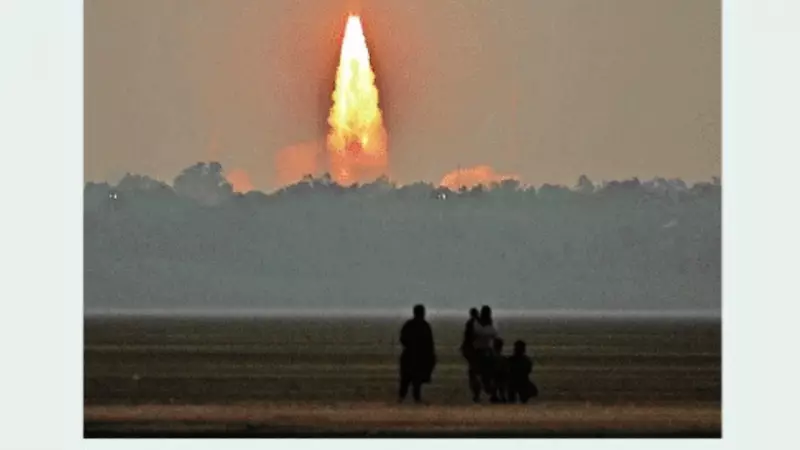
India's space sector is entering a transformative phase. Early next year, the PSLV-N1 rocket is scheduled for its maiden flight. This is significant as it will be the first Polar Satellite Launch Vehicle (PSLV) developed by the private sector, built by a consortium led by Hindustan Aeronautics Limited (HAL) and Larsen & Toubro (L&T). Its primary payload will be the earth-observation satellite EOS-10. This launch is viewed as a critical step towards building a robust domestic commercial space industry.
Not to be outdone, NASA is preparing for a monumental human spaceflight mission. The Artemis II mission will send four astronauts on a 10-day journey around the Moon. This marks the first time humans will travel beyond low-Earth orbit since the end of the Apollo programme in 1972. The crew's mission will be to thoroughly test spacecraft systems, paving the way for future long-term human stays on the lunar surface.
Together, these six projects highlight a period of intense exploration and innovation, pushing the boundaries of human knowledge in geology, heliophysics, medicine, and space technology.






