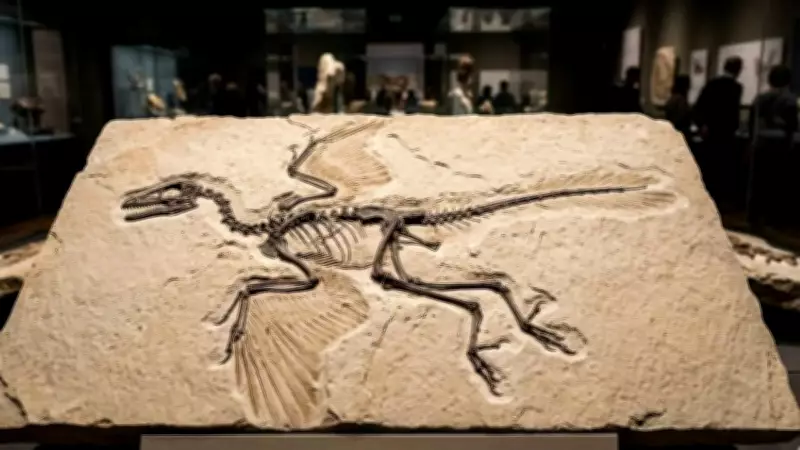
An ancient Archaeopteryx fossil is offering new insight into the early evolution of birds from dinosaurs. Dating back around 150 million years, this remarkable discovery is helping scientists understand how some dinosaurs gradually developed the ability to fly.
By studying the fossil in detail, researchers have identified features that link ground-dwelling dinosaurs to early bird species, bridging a long-standing gap in evolutionary history. The findings suggest that the transition from dinosaurs to birds was more complex and gradual than previously thought. This research not only sheds light on when flight may have first emerged but also deepens our understanding of how modern birds evolved from their prehistoric ancestors.
Archaeopteryx: The Fossil Connecting Dinosaurs to Modern Birds
For years, scientists have known that birds evolved from small, feathered dinosaurs. But fossils like Archaeopteryx provide the clearest evidence of this connection. According to the Natural History Museum of Utah report, this fossil represents a crucial 'transition between birds and dinosaurs,' helping researchers understand how modern birds came to exist. What makes it unique is its mix of features: feathers and wings like a bird, and teeth, claws, and a long tail like a dinosaur. This remarkable specimen acted as a bridge, capturing the exact moment evolution took flight. By blending reptilian biology with the first whispers of avian grace, it proves that the soaring birds we see today share a profound, ancient lineage with the formidable predators of the Jurassic past.

Archaeopteryx Feathers Show How Early Birds Developed Flight Ability
The discovery of these wing-body transition feathers shifts our perspective on Archaeopteryx. For years, it was dismissed as a clumsy glider, but this evidence suggests a much more sophisticated 'biological design' for actual flight. These specialised feathers acted like an aircraft fairing, filling the gap between the wing and the torso to prevent turbulent drag. By smoothing the airflow, the bird could maintain lift more efficiently, suggesting it was capable of powered flight rather than just passive gliding. Because Archaeopteryx lived roughly 150 million years ago, this find proves that complex flight mechanics evolved much earlier than we once thought. The 'modern' bird silhouette wasn't a late evolutionary addition; it was already being perfected during the Jurassic period. Essentially, Archaeopteryx wasn't just 'falling with style'; it was likely a capable, active pilot.
What the Fossil Suggests About Feeding and Survival
The fossil is also revealing surprising details beyond flight. According to research published in The Royal Society, titled 'The origin and early evolution of feathers: implications, uncertainties and prospects,' researchers identified features in Archaeopteryx that resemble modern birds, such as a more complex mouth structure and feeding adaptations. These traits suggest that early birds were already evolving advanced survival strategies, and flight and feeding adaptations may have developed together. This fossil isn't just another prehistoric find; it helps confirm a major scientific idea that birds are living descendants of dinosaurs.