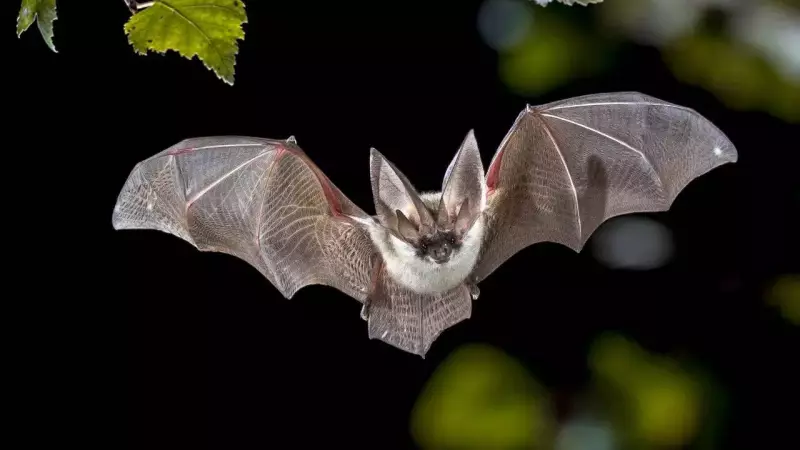
For decades, scientists have studied bat perception primarily as a feat of sensory range. However, recent research is shifting the focus towards understanding the remarkable intelligence behind how these creatures interpret their world. Bats operate effortlessly in environments that baffle human senses—pitch-black caves, dense forests, and even bustling urban skies filled with artificial light and noise. Their ability to thrive in such varied settings, from natural landscapes to rapidly evolving cities, offers crucial insights into animal cognition and adaptation.
The Science of Sound: How Bats Map Their World
Echolocation is the active process where bats emit high-frequency ultrasonic calls and listen to the returning echoes. These calls, produced by the larynx or nose and shaped by facial structures, form narrow sound beams. By analyzing the timing and delay of echoes, bats calculate distances with phenomenal accuracy, distinguishing differences of just a few millimetres. They also detect frequency shifts in echoes to gauge the speed and direction of moving prey, like insects, shortening call intervals as they close in.
A detailed review in PLOS One explains the neurophysiology behind this. Specialized auditory neurons in bat brains are tuned to specific echo delays and frequency combinations. These neurons effectively convert auditory information into organized spatial maps, allowing bats to 'see' with sound.

Vision in the Dark: An Underestimated Sense
Contrary to popular belief, vision plays a significant role for many bat species. Their eyes are specialized for low-light conditions, with retinas packed with rod photoreceptors for superior sensitivity at dusk, dawn, and under starlight. Behavioural studies show bats use visual cues for long-distance navigation between roosts and feeding grounds.
Some fruit bats can differentiate shapes and spatial arrangements in near-total darkness, relying on contrast rather than colour. Importantly, spectral sensitivity tests reveal several species can detect ultraviolet light. This allows them to see patterns on flowers and foliage that are invisible to humans, aiding in food gathering and navigation when visual landmarks are faint.
From Echo to Action: The Brain's Role
The bat auditory system prioritizes temporal precision over volume. Their inner ear components are exquisitely tuned to the main frequencies of their own calls, amplifying crucial sounds. Neurons along their auditory pathways fire only when echoes arrive within precise time windows, corresponding to specific distances. Other neurons react to frequency changes caused by a target's movement.
These neural responses are dynamic, adjusting based on whether the bat is searching, approaching, or capturing prey. Cortical regions organize these properties into orderly maps of acoustic space. This sophisticated system enables bats to track multiple objects at once and filter echoes from background clutter, a task far beyond unaided human hearing.
A Multi-Sensory Flight Strategy
Bats don't rely on a single sense; they masterfully integrate multiple inputs. In flight, they combine echolocation with vision and tactile feedback from sensitive wing membranes. Experiments show that if acoustic signals are disrupted, bats immediately rely more on visual cues, adjusting their flight height and speed accordingly.
While they can navigate and hunt using echolocation alone in complete darkness, having visual input helps conserve energy. Stretch receptors in their wings provide data on airflow and body position, enabling exquisite manoeuvrability in tight spaces. This multi-sensory integration allows safe flight through rapidly changing environments where human perception would fail.
Reading Surfaces with Sound
Bats can discern far more than an object's mere presence; they detect its texture, shape, and material. Research using artificial targets shows that surface texture and shape create distinct spectral signatures in echoes. Trained bats can distinguish smooth from rough surfaces and detect mesh variations smaller than their call's wavelength.

Echo modulations from insect wingbeats provide data on prey identity and behaviour. Bats also recognize the characteristic acoustic reflection of water surfaces, allowing them to drink mid-flight without visual confirmation. These abilities stem from complex physical interactions between sound waves and materials, granting bats access to a layer of environmental information humans need technology to perceive.
This growing body of research is particularly vital as bat populations face rapid environmental change. Understanding their sensory systems is key to addressing challenges like habitat disturbance, noise pollution, and ensuring species persistence in an increasingly human-dominated world.