

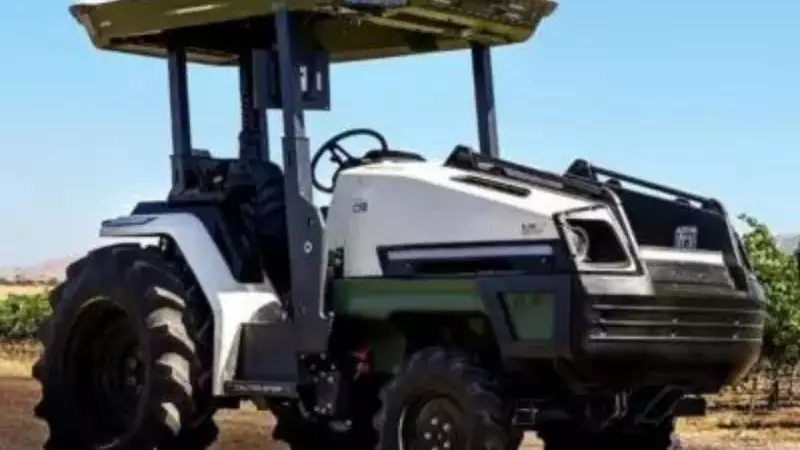
In a significant push for greener farming practices, India has officially introduced its first-ever testing standard for electric agricultural tractors. The Bureau of Indian Standards (BIS) unveiled the new benchmark, marking a pivotal step in the country's journey towards sustainable and cost-effective farm mechanisation.
A New Benchmark for Clean Farming
The new standard, designated IS 19262:2025 and titled 'Electric Agricultural Tractors – Test Code', was formally released by Union Minister for Consumer Affairs, Food and Public Distribution, Pralhad Joshi, on December 24. The launch took place at the Bharat Mandapam in New Delhi, coinciding with National Consumer Day celebrations. This development answers a long-standing need for uniform evaluation protocols in the emerging sector of battery-powered farm machinery.
Developed by the BIS, the standard establishes comprehensive testing procedures to assess the safety, reliability, and overall performance of electric tractors. It is seen as a crucial tool for a segment poised to drastically cut down greenhouse gas emissions and operational expenses in agriculture. The test code meticulously covers various performance aspects, including:

- Evaluation of power take-off (PTO) capability.
- Measurement of drawbar power.
- Assessment of belt and pulley performance.
- Analysis of vibration levels.
- Inspection of critical components and assemblies.
Building on Existing Frameworks
The standard does not start from scratch but intelligently adapts existing norms. It draws from the well-established testing protocols for conventional diesel tractors and the evolving standards for electric vehicles, tailoring them specifically for the demanding conditions of agricultural use. This hybrid approach ensures robustness and relevance.
The initiative was set in motion following a formal request from the Mechanisation and Technology Division of the Ministry of Agriculture. Its creation was a collaborative effort, incorporating vital inputs from a wide range of stakeholders. Key contributors included tractor manufacturers, independent testing agencies, research bodies, and technical experts.
Notable institutions that played a part in framing the standard were the ICAR-Central Institute of Agricultural Engineering, the Central Farm Machinery Training and Testing Institute, the Tractor and Mechanisation Association, and the Automotive Research Association of India.
Implications for Farmers and the Industry
An official statement highlighted the expected impact, noting, "The implementation of this standard through authorised testing institutes would facilitate wider adoption of electric agricultural tractors, promote innovation in clean technologies, and contribute to reduced emissions."
Electric tractors, which operate on rechargeable battery packs instead of diesel engines, offer a suite of advantages. These include significantly lower operating and maintenance costs, reduced noise pollution, and improved energy efficiency. A major environmental benefit is the complete elimination of tailpipe emissions at the farm level, contributing to cleaner air. Their simpler design with fewer moving parts also promises enhanced reliability.
Although compliance with the IS 19262:2025 standard is currently voluntary, it provides an essential scientific framework for manufacturers and regulators. It is anticipated to form the foundation for future mandatory acceptance criteria and conformity assessment schemes. Most importantly, it aims to build greater confidence among farmers, encouraging them to adopt electric tractors as these machines become more prevalent across the Indian countryside.
This landmark standard is more than a technical document; it is a signal of India's commitment to modernising its agricultural backbone with sustainable technology. By setting clear performance and safety benchmarks, it paves the way for innovation, protects consumer interests, and supports the national goals of energy security and environmental stewardship.






