Blue Origin Teams with NASA and Caltech for Groundbreaking Asteroid Defense Mission
In a significant advancement for planetary defense, Jeff Bezos' aerospace company, Blue Origin, has announced a collaborative mission with NASA's Jet Propulsion Laboratory and the California Institute of Technology. This initiative, named the Near Earth Objects (NEO) Hunter mission, is specifically designed to enhance asteroid detection and deflection capabilities, leveraging Blue Origin's innovative 'Blue Ring' spacecraft platform.
NEO Hunter Mission: A Two-Phase Approach to Asteroid Threats
The primary objective of the NEO Hunter mission is to identify and assess potentially hazardous asteroids that could pose risks to Earth. The mission will operate in two distinct phases, tailored to the size, speed, and composition of the target asteroids.
In the initial phase, the mission will deploy cubesats to rendezvous with selected asteroids. These small satellites will gather comprehensive data, including details on composition, mass, density, and structural characteristics. This information is crucial for determining the most effective deflection strategies.

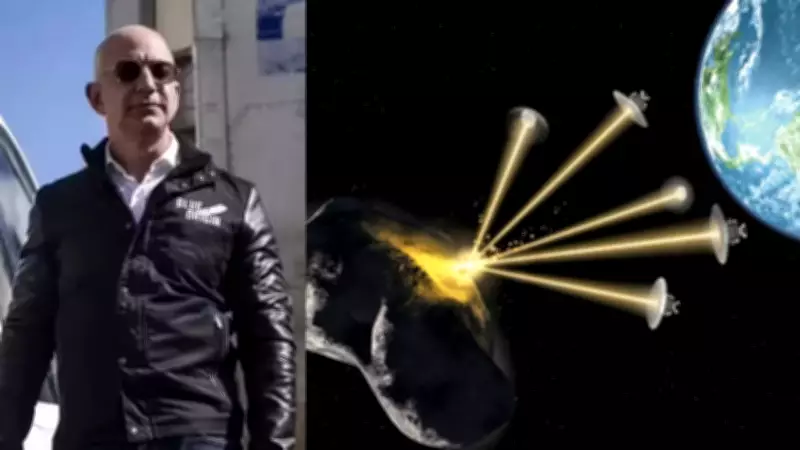
One promising technique under consideration involves an ion beam emitter. This device projects a stream of charged particles onto an asteroid, gradually altering its orbit over time to prevent potential collisions with Earth.
Blue Ring: A Versatile Platform for Space Exploration
Central to this mission is the Blue Ring spacecraft platform, a modular satellite bus engineered for flexibility and high performance. According to Blue Origin's official press release, Blue Ring can support payloads of up to 4,000 kilograms across 13 connection ports, making it suitable for a wide range of missions.
The platform is designed to operate in various environments, including low Earth orbit, geostationary orbit, cislunar space, and even deep-space destinations like Mars. Its modularity allows it to support both government and commercial missions that require precision and adaptability.
Blue Ring has already demonstrated its capabilities in 2025 through a partnership with Scout Space, where it deployed an orbital domain awareness sensor, showcasing its readiness for advanced space operations.
Strengthening Planetary Defense Through Collaboration
Planetary defense has become a critical focus due to the potential threats posed by near-Earth objects. Astronomers maintain extensive databases of known asteroids large enough to cause significant damage if they were to impact Earth, with monitoring efforts led by NASA and other international agencies.
The collaboration between Blue Origin, NASA, and Caltech represents a strategic integration of commercial spacecraft into global planetary defense research and planning. This partnership aims to enhance our ability to detect, track, and mitigate asteroid hazards, ensuring greater safety for our planet.
By combining cutting-edge technology with scientific expertise, the NEO Hunter mission marks a proactive step toward safeguarding Earth from cosmic dangers, highlighting the importance of innovation and cooperation in space exploration and defense.