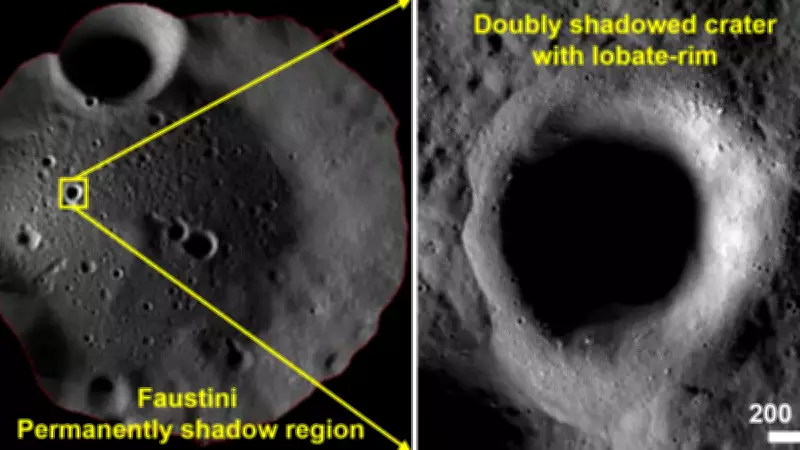
India's Chandrayaan-2 mission has provided new evidence suggesting the presence of water ice beneath the Moon's south pole. The findings, based on data from the mission's radar instrument, indicate that ice may exist in permanently shadowed regions of the lunar surface. This discovery adds to the growing body of evidence that water is more abundant on the Moon than previously thought.
Radar Data Reveals Subsurface Ice
The Chandrayaan-2 orbiter, equipped with a synthetic aperture radar, detected signatures consistent with water ice in several craters near the south pole. The radar signals suggest that the ice is present at depths of a few meters below the surface, where temperatures are extremely low and sunlight never reaches. This subsurface ice could be a valuable resource for future lunar missions, providing water for drinking, oxygen, and rocket fuel.
Implications for Lunar Exploration
The presence of water ice on the Moon has significant implications for human exploration. If accessible, it could reduce the need to transport water from Earth, making long-term missions more feasible. The south pole is considered a prime location for future lunar bases due to its potential water resources and near-constant sunlight for solar power.

Chandrayaan-2's Continuing Contributions
Launched in 2019, Chandrayaan-2 includes an orbiter, a lander, and a rover. While the lander and rover were lost during the landing attempt, the orbiter continues to send valuable data. This latest finding underscores the mission's scientific importance and demonstrates India's growing capabilities in space exploration.
Scientists are now analyzing the radar data further to determine the extent and purity of the ice. Future missions, including NASA's Artemis program, plan to explore the lunar south pole and may use this data to identify landing sites. The discovery also strengthens international cooperation in space exploration, as countries share data and resources to unlock the Moon's secrets.
How Water Ice Survives on the Moon
The Moon's surface is exposed to extreme temperatures and vacuum, but water ice can persist in permanently shadowed regions where temperatures never rise above minus 200 degrees Celsius. These areas are found in deep craters at the poles, where sunlight never reaches. The ice may have been delivered by comets or formed by solar wind interactions with lunar minerals.
Future Research Directions
Researchers plan to combine Chandrayaan-2 data with observations from other lunar missions to create a comprehensive map of water ice distribution. This will help identify the best locations for future landings and resource extraction. The findings also raise questions about the Moon's geological history and the role of water in its evolution.
In conclusion, Chandrayaan-2's radar evidence of possible ice under the lunar south pole marks a significant step in understanding the Moon's water resources. As space agencies prepare for crewed missions to the Moon, such discoveries pave the way for sustainable exploration and potential colonization.