

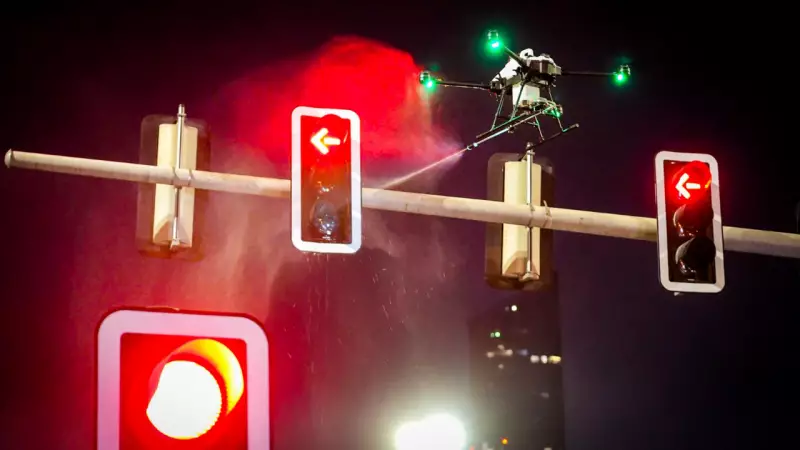
In a move that blends high-tech innovation with everyday urban upkeep, Dubai's Roads and Transport Authority (RTA) has taken to the skies for a cleaner city. The authority has launched a pioneering pilot program that employs drone technology to clean traffic signals, aiming to make the process faster, safer, and more environmentally friendly.
Soaring Efficiency: How Drones Are Changing Maintenance
The initiative marks a significant shift from traditional methods that relied on manlifts and heavy machinery. According to Abdulla Ali Lootah, Director of Roads and Facilities Maintenance at RTA, the first trial runs were conducted at the Marrakech Street–Rebat Street junction. To ensure safety, the area underwent a temporary traffic closure during these initial tests.
The early results have been striking. The drones managed to clean one side of a traffic signal in a mere three to four minutes. This impressive speed has led to a 25 to 50 percent reduction in operational time compared to conventional techniques. On the financial front, the project has already yielded initial cost savings of up to 15 percent. Projections indicate that with further advancements in drone capabilities, these savings could potentially rise to 25 percent.

Beyond Speed: A Trio of Core Benefits
The program is designed to deliver a triple win for Dubai's urban ecosystem.
- Enhanced Safety: By removing workers from the dangers of working at height near live traffic, the risk of accidents is substantially lowered.
- Operational & Cost Efficiency: The drastic reduction in cleaning time translates to less manpower and equipment deployment, streamlining overall operations.
- Environmental Sustainability: The drone-based method supports green goals by significantly cutting down on fuel consumption, water usage, and associated emissions from traditional equipment.
Building on a Legacy of Aerial Innovation
This traffic signal project is not the RTA's first venture into drone-assisted cleaning. The authority has previously successfully utilized similar technology to maintain the facades of Dubai Metro and tram stations, a move that reduced manpower needs while ensuring high-quality results.
Lootah emphasized that the pilot is ongoing. The next phase will concentrate on refining the cleaning techniques and methodologies to ensure they cause minimal disruption to the daily flow of traffic. Throughout this development, safety and operational efficiency remain the paramount priorities for the RTA team.
By integrating drones into routine infrastructure maintenance, the RTA is not just streamlining its own operations but also fortifying the performance and reliability of Dubai's extensive road network. This project stands as a clear testament to the city's commitment to adopting smart, innovative solutions that seamlessly combine efficiency, worker safety, and environmental sustainability, demonstrating how cutting-edge technology can reshape and improve the fundamental aspects of urban living.






