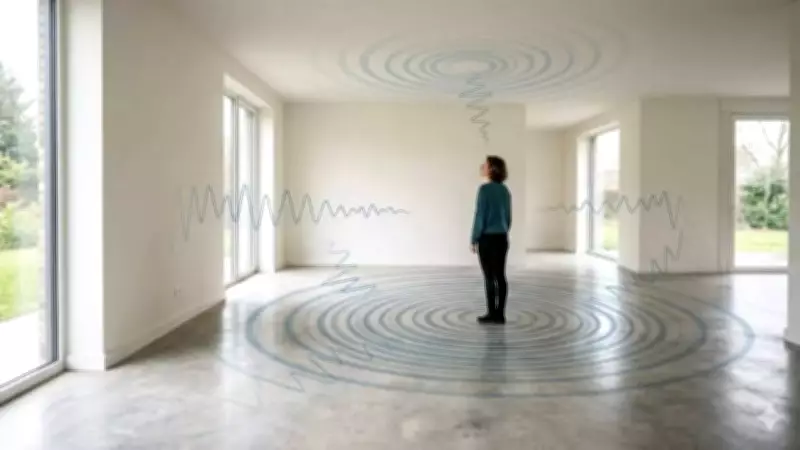
The Science Behind Echoes in Empty Spaces
Reverberant sounds in empty environments occur when sound waves bounce off hard, flat surfaces, following fundamental principles of physical acoustics. When sound energy travels through space, it continues until encountering a boundary surface. In furnished settings like living rooms, soft materials such as carpets and drapes act as porous absorbers, soaking up even the smallest sound waves and preventing reflections back to their origin.
Why Empty Rooms Lack Sound Absorption
In contrast, unfurnished or empty environments lack these porous absorption materials. Without items like furniture or textiles to absorb sound waves, reflections become more pronounced. A true, distinct echo is typically perceived only when the reflecting surface is at least 17.2 meters away. In smaller empty rooms, reflections overlap rapidly—often in less than 0.1 seconds—leading to what is technically classified as reverberation rather than a clear echo.
NASA explains that sound behaves similarly to light; when either strikes a hard, level surface such as concrete, the energy reflects toward its source. This results in a rapid accumulation of reflective sound waves, creating a reverberating effect. If the reflective surface is farther from the sound's origin, the reflection produces a distinct, delayed echo, highlighting how distance impacts acoustic perception.

How Empty Rooms Trap Sound Energy
Sound, like light, reflects when it meets a boundary, as noted by NASA. In rooms without soft, porous materials like carpets or furniture, sound waves have no means to lose energy due to a lack of absorbent properties. Consequently, most of the energy continues to reflect at various angles from hard surfaces such as concrete, glass, or tile. These surfaces function as acoustic mirrors, reflecting up to 95-99% of sound energy back into the room, trapping it and amplifying the auditory experience.
Why Hard Walls Cause Your Voice to Bounce
To assess how empty a room is, one must measure the sound energy a wall reflects versus absorbs. According to the Whole Building Design Guide (WBDG), each material has a specific absorption coefficient, indicating the amount of sound energy it absorbs upon contact. Generally, hard, non-porous materials like unpainted brick or concrete reflect over 95% of the sound energy that strikes them.
This leads to sound waves repeatedly hitting surfaces and bouncing around until they gradually dissipate. To prevent this ping-pong effect in spaces, acoustic treatments—such as special panels or typical home furniture—are essential to control sound behavior and reduce unwanted reflections.
Why Empty Rooms Sound Louder: The Physics of Sound Travel
Sound travels longer distances in unoccupied rooms compared to furnished ones because empty spaces lack elements that absorb sound energy, a process known as attenuation. Items like upholstered furniture or carpets would otherwise soften sound. The National Institute for Occupational Safety and Health (NIOSH) notes that reflective enclosed rooms can experience increased sound levels due to constructive interference between reflected and direct sound waves.
Thus, standing in an empty apartment results in much louder sounds with a more pronounced echo effect than in a furnished one, demonstrating how room contents directly influence acoustic intensity.
The 'Ringing' Effect: How Parallel Walls Create Metallic Echoes
The absence of furniture allows for long, uninterrupted reflective paths, enabling sound waves to bounce continuously between parallel walls. NIOSH explains that this dynamic creates an empty room with not only an echo but also a specific ringing characteristic or booming noise level in its acoustic performance. Adding furniture disrupts these flat, reflective paths, diminishing or eliminating such effects.
Since sound travels significantly slower than light, the human ear can perceive the distinct time delay of a reflection hitting a distant wall, resulting in an audible echo. This interplay of physics and perception underscores why empty spaces often feel acoustically vibrant and why proper room design is crucial for sound management.