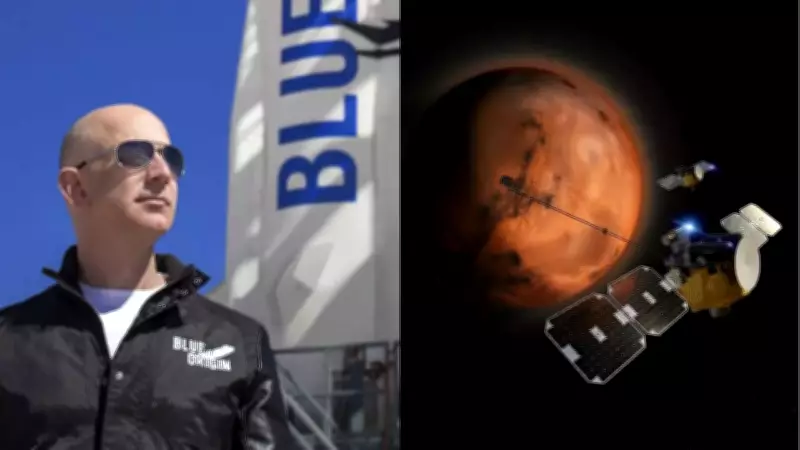
FAA Declares Blue Origin Launch a "Mishap," Grounds New Glenn Rocket
The Federal Aviation Administration (FAA) has officially classified Blue Origin's recent New Glenn launch as a "mishap" and has grounded the rocket company owned by Amazon founder Jeff Bezos. The US regulatory agency has directed Blue Origin to conduct a comprehensive investigation before any flights can resume.
Launch Incident Details and FAA Response
This decisive action follows a launch from Cape Canaveral Space Force Station where, despite a successful liftoff, the rocket's upper stage failed to place its satellite payload into the intended orbit. In a statement obtained by Orlando Sentinel, the FAA confirmed: "The FAA is aware that Blue Origin New Glenn 3 experienced a mishap during the second-stage flight sequence following a successful launch."
The FAA has notified multiple agencies about this classification, including NASA, the National Transportation Safety Board (NTSB), and the U.S. Space Force. According to the FAA, a mishap investigation serves three primary purposes:

- Enhance public safety
- Determine the root cause of the event
- Identify corrective actions to prevent recurrence
The agency emphasized that return to flight authorization will only be granted after determining that any system, process, or procedure related to the mishap does not compromise public safety.
Technical Breakdown of the Failed Mission
Last week's mission marked the third flight for the New Glenn rocket, which launched from Cape Canaveral Space Force Station's Launch Complex 36. This mission was particularly significant as it utilized a previously flown booster for the first time. While the booster's launch and subsequent landing were successful, Blue Origin confirmed that the BlueBird 7 satellite payload for AST SpaceMobile was "placed into an off-nominal orbit."
The mission plan had included a critical second-stage engine relight after reaching orbit to raise altitude before satellite deployment. AST SpaceMobile later confirmed this maneuver did not occur, resulting in the satellite being deployed at an altitude too low to operate effectively. The company further explained that the satellite lacked sufficient onboard thruster capacity to reach its intended orbit.
As a direct consequence, AST SpaceMobile will need to deorbit the satellite, which would have been its eighth operational satellite in orbit. The financial loss from the hardware is expected to be covered by insurance. Additionally, Blue Origin's planned third engine burn of the upper stage to guide it toward a controlled ocean crash landing also failed to occur.
Historical Context and Industry Implications
The FAA has grounded multiple rockets in recent years following similar incidents, including SpaceX's Falcon 9 and its in-development Starship. Blue Origin's suborbital New Shepard rocket has also faced grounding in the past. Such investigations typically take several months before a rocket is cleared to return to flight, though timelines can vary significantly.
For instance, Falcon 9 experienced just a 15-day grounding in 2024 after an upper-stage issue. This marks the second time New Glenn has been grounded; the first occurred after its debut mission in January 2025 when the booster's landing was unsuccessful. The FAA cleared it to fly again approximately 2.5 months later.
Impact on Blue Origin's Launch Schedule and Future Plans
Blue Origin had received approval to conduct up to 12 launches annually, and CEO Dave Limp had previously indicated a target of at least eight New Glenn launches this year. Currently, the company has announced two additional missions, including the MK1 Blue Moon lunar lander expected to launch before the end of summer.
This grounding comes at a critical time for multiple stakeholders. Amazon is particularly invested, as it awaits New Glenn for planned launches related to its ambitious Project Kuiper satellite constellation. The New Glenn rocket made history in January 2025 by becoming the first commercial rocket to reach orbit on its debut flight. A second mission followed in November, carrying satellites toward Mars.

The investigation's duration and findings will significantly influence Blue Origin's operational timeline and the broader commercial space industry's regulatory landscape.