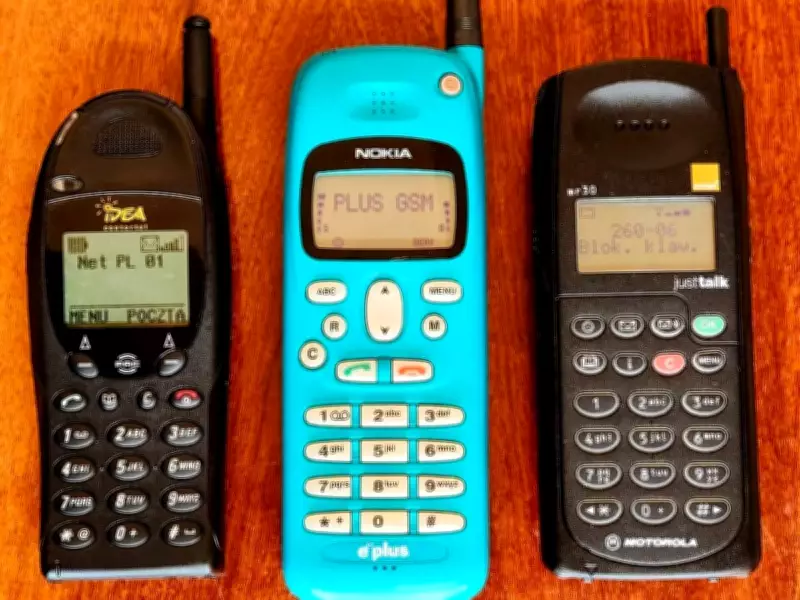
Grandmothers and housewives keeping dusty paper certificates in their kitchen cupboards for decades is not an uncommon phenomenon worldwide. However, families suddenly accumulating more capital than their local bank left many stock market analysts astonished. In the late 1990s, Nokia emerged as one of the fastest-growing technology companies globally. Its success revolutionized the Finnish economy and generated immense fortunes for its investors. Yet, the biggest surprises came not from professional traders or investment firms but from everyday Finnish families.
Unexpected Wealth from Forgotten Shares
As years passed, tales emerged about elderly ladies arriving at local banks holding Nokia shares that had been stored for decades in kitchen drawers or cupboards. Local sources claim many were shocked to discover that their long-forgotten shares had appreciated to astronomical levels of value. Although it may seem hard to believe, this phenomenon is entirely true. Nokia's shares appreciated at an incredibly high rate during the mobile phone revolution of the 1990s.
Nokia's Origins: Far from Mobile Phones
Today, Nokia is almost synonymous with mobile phones and communications. However, the company initially operated as a classic industrial enterprise in Finland. According to the official history of Nokia Corporation, it manufactured everything from paper to cables, rubber boots to tires. The firm had deep roots in the town of Nokia, near Tampere. Over the years, locals frequently bought shares through inheritance, employee schemes, or direct investment. Back then, owning stocks was vastly different from today's electronic stock market systems. Many people kept paper stock certificates at home for years, ignoring their increasing value. These old certificates would later prove priceless beyond expectations.

A Risky Pivot to Mobile Phones
Toward the late 1980s, Nokia faced significant business difficulties. The firm had grown into a diversified and complex organization that was challenging to manage. This situation changed when Jorma Ollila became CEO. Nokia began divesting from its traditional industries and concentrated on telecommunications and the developing GSM mobile phone market. From a historical business perspective, this is considered one of the best strategic decisions ever made in the tech industry. The strategy worked. According to Nokia's 1998 annual report, the company became the world's largest mobile phone producer, and its stock value increased by over 220 percent in 1998. Nokia's stock soared between 1992 and 2000 as mobile phones gained global popularity.
Patience Pays Off for Finnish Families
While traders in London and New York bought and sold Nokia stocks, ordinary Finnish families simply held onto them for decades. Their patience paid off immensely. Some viewed the shares as a contingency fund rather than an investment. Others inherited them from family members associated with the company or the town. Since they felt no compulsion to sell when prices rose slightly, many benefited from the stock's tremendous increase during the latter half of the decade. Stories of elderly women discovering sudden fortunes at banks became legendary in the Finnish business community, as such tales were common across the country. According to Martti Häikiö, a Finnish historian specializing in business and finance, Nokia had a huge impact on Finnish society beyond its economic success.

Nokia: Finland's Greatest Tech Success Story
Although the tale of the grandmother at the bank may be hard to verify through official sources, several accounts can be validated. A notable example is Onni Nurmi, a Finnish entrepreneur who donated Nokia stocks to the city of Pukkila. According to various archival reports, soaring Nokia stock prices caused the value of the contributed shares to rise to tens of millions of Finnish marks. Such cases reinforced the notion that well-timed investments in Nokia could make anyone a millionaire overnight. Nokia's success story became the biggest in Europe. Toward the late 1990s, Nokia emerged as the largest company in Europe and a benchmark for Finland's modernizing economy. Nokia phones like the 3210 and 3310 became worldwide hits. Economic researchers from the Bank of Finland later calculated that Nokia accounted for a significant portion of Finland's economic growth during its peak period. Its effects extended beyond technology, impacting the labor market, exports, financial markets, and the country's national image.
Why Nokia's Story Still Matters
The tales of Nokia millionaires remain popular because they combine multiple appealing notions. They speak to the randomness in the evolution of technologies and highlight the importance of patience in investing. Most notably, they demonstrate that economic revolutions do not necessarily benefit only professionals. Sometimes, regular families make money simply by holding onto what others ignore. The spectacular success of Nokia turned worthless paper certificates into valuable assets for many ordinary Finnish families.