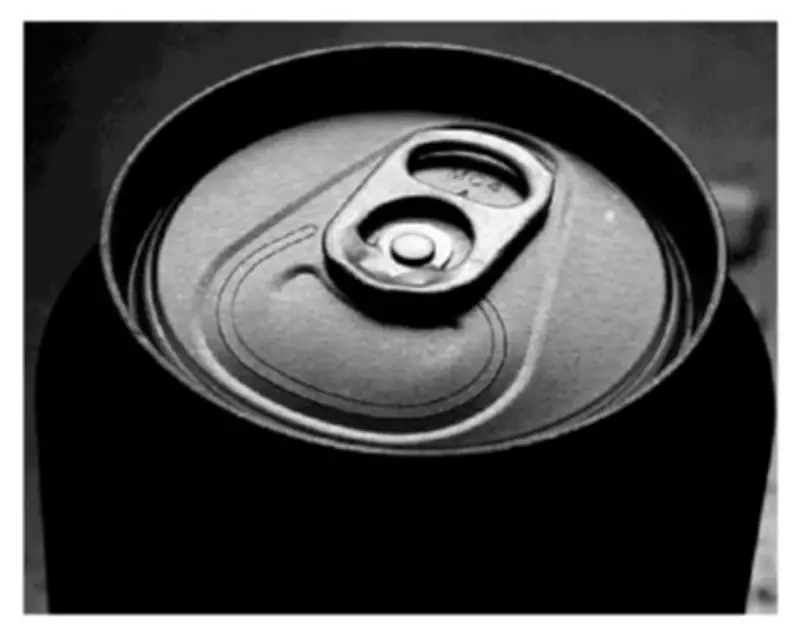
Innovation often begins with an ordinary frustration rather than a laboratory breakthrough. Up until recently, opening a canned drink anywhere but the kitchen counter required preparation and tools. For example, on a hot summer afternoon, if you packed a cooler for a road trip without the right tools, your drinks stayed sealed in their cans. All of this was changed by one single blunder in the middle of a hot summer's day.
By turning a small irritation into a problem-solving task, Ermal C. Fraze's mistake led to an invention that made life easier for many consumers. The development freed canned drinks from a long-standing inconvenience, making them easy to carry. It shows that some of the best innovations begin with a desire to solve a small irritation.
The Problem That Caused a Packaging Revolution
It all started when a businessman named Ermal C. Fraze hosted an outdoor get-together in 1959. However, he soon realized he had forgotten something essential. He brought cold drinks but had not brought a church key for piercing the can tops. After struggling to open the cans with a car bumper and basic tools, he became convinced the industry needed a better approach.

According to an archival retrospective preserved by the Wright State University Libraries under the title America 250 Ohio: Celebrating the Innovative Mind of Ermal C. Fraze, this specific picnic blunder provided the direct inspiration for the self-opening beverage mechanism. Before this, beverage cans had flat tops that had to be pierced manually to create two openings: one for pouring and one for venting. Fraze intended to create a mechanism on his own that would facilitate easy opening with the use of just his finger by the customer without any further need for extra equipment.
As a result, people could drink canned beverages in parks, cars, and stadiums without carrying kitchen tools. While initially convenient, detached tabs posed safety and environmental risks, prompting further innovation to the current stay-on design, showcasing how consumer experience drives product evolution.
Dealing with the New Risks Associated with Convenience
Even though the emergence of pull-tabs made the recreational activities of the 60s easier, the original design became a reason for numerous environmental and health risks that no one had ever expected before. At first, the tabs detached completely when removed, leaving millions of sharp aluminum pieces to pollute the environment and pose a risk to unsuspecting consumers.
The hidden dangers of these detached metal closures became a concern for the medical community in the decades that followed. As detailed in a clinical review under the title Aspiration of Aluminium Beverage Can Tab: Case Report and Literature Review, these small, sharp components were frequently dropped into open cans or left on fields, leading to accidental ingestion and breathing injuries. Because the tabs were hard to detect with traditional scans, doctors sometimes struggled to identify the cause of a patient's distress.
This health concern pushed engineers to rethink the product again. The problem was solved with today's Stay-On tab system, which opens the seal but stays attached to the can. It preserves easy opening while improving safety.
The Legacy of a Simple Mishap
Today, this evolution is the epitome of what happens when consumer products constantly seek to correct themselves through consumer experience. What began as a family outing mishap went on to change how people produced and consumed drinks. The tab on today's cans shows how one forgotten tool helped change the way people drink on the go. In the end, a simple picnic mishap helped inspire a major change in portable packaging.