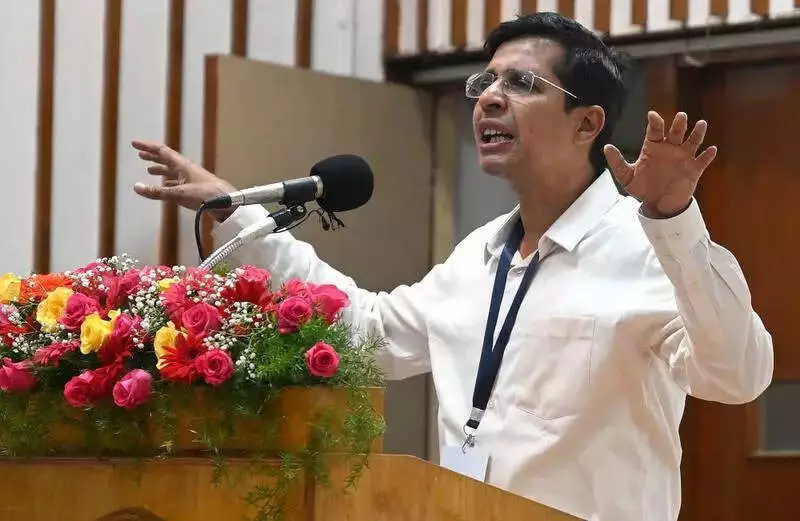
In a significant stride towards technological self-reliance in defence, the Indian Air Force's Software Development Institute (SDI) in Bengaluru has entered a strategic collaboration with the prestigious Indian Institute of Technology Madras (IIT Madras). The two entities formalised their partnership by signing a Memorandum of Understanding (MoU) aimed at the joint creation of a domestically developed digital secure communication system specifically for airborne applications.
Strategic Collaboration for National Security
The core objective of this high-stakes partnership is to design and engineer advanced networking frameworks and robust encryption technologies. These innovations will ensure highly reliable and secure data exchange across various airborne platforms, which is a non-negotiable requirement in contemporary military operations. Officials underscored that high-performance and secure communication is absolutely essential for mission success and national security in today's complex threat landscape.
The pivotal MoU was signed by key representatives from all involved parties: Air Vice Marshal R Guruhari, the Commandant of SDI; Professor V Kamakoti, the Director of IIT Madras; and Mr. M J Shankar Raman, the Chief Executive Officer of the Pravartak Technologies Foundation. This tripartite agreement is a direct embodiment of the central government's Atmanirbhar Bharat (Self-Reliant India) initiative, seeking to drastically reduce the defence sector's dependency on imported communication systems and fortify the nation's own technological capabilities.

Focus Areas and Technological Goals
According to the Indian Air Force, this collaboration synergises the operational and domain expertise of the SDI with the world-class research and development prowess of IIT Madras. The goal is to create bespoke indigenous solutions that perfectly address the unique and demanding needs of India's airborne forces. The joint project will concentrate on several critical technological frontiers:
- Developing advanced, quantum-resistant encryption protocols.
- Engineering secure and high-speed data transmission channels.
- Building resilience against sophisticated cyber-attacks and electronic warfare threats.
- Ensuring the scalability of airborne communication networks.
- Facilitating seamless integration with the Indian Armed Forces' existing and future defence systems.
Boosting Operational Capabilities and Self-Reliance
Commenting on the partnership, Air Vice Marshal R Guruhari highlighted its profound strategic importance. He stated that this collaboration is instrumental in building self-reliance in critical defence communication technologies, a vital component of national sovereignty. Furthermore, the indigenous system will significantly enhance the operational capabilities and effectiveness of India's airborne platforms, including fighter jets, transport aircraft, and airborne early warning systems.
This initiative marks a concrete step in moving from being a buyer of foreign defence technology to becoming a creator of cutting-edge solutions. By leveraging domestic academic excellence and military operational knowledge, India aims to secure its skies with homegrown, secure, and state-of-the-art communication infrastructure.