

IISc Bengaluru Breakthrough: Toxic Martian Chemical Could Enable Soil Bricks for Space Missions
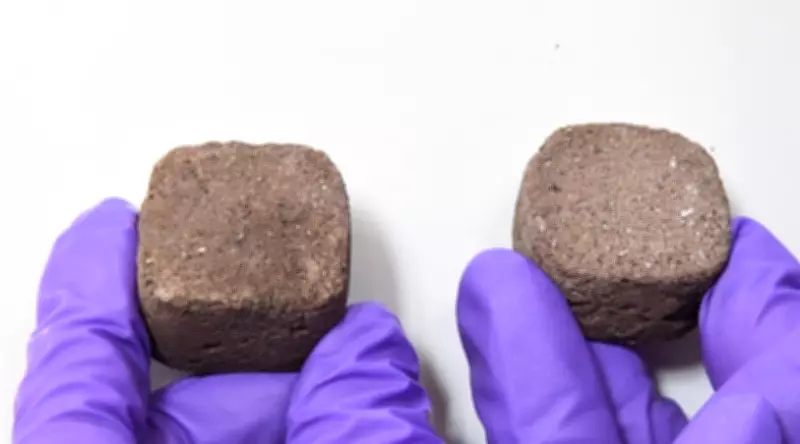
In a groundbreaking development, recent research at the Indian Institute of Science (IISc) in Bengaluru has revealed that a toxic chemical found in Martian soil could play a crucial role in enabling bacteria to create bricks from the soil. This discovery marks a significant advancement in the ongoing efforts to develop sustainable building materials for potential space missions to Mars, with implications for both extraterrestrial and terrestrial applications.
Background: IISc's Long-Standing Research on Extraterrestrial Soil Bricks
IISc has been at the forefront of research into brick analogues made from lunar and Martian soil for several years. As previously reported, earlier methods involved mixing a slurry of simulated Martian soil with guar gum, nickel chloride, urea, and the bacterium Sporosarcina pasteurii. This approach represented an improvement over prior techniques tested on lunar soil, which could only produce cylindrical bricks. The bacteria, by consuming urea, formed crystals that acted as a "cement," aided by biopolymers they secreted, resulting in less porous bricks. Nickel chloride was added to support bacterial growth, which was initially hindered by the high iron content in Martian soil.
New Discovery: Perchlorate's Role in Enhancing Brick Formation
In the latest study, a team led by Associate Professor Aloke Kumar, including IISER professor P Bhadury, former astronaut Shubhanshu Shukla, University of Florida PhD student Swati Dubey, and R Dixit, investigated the application of perchlorate—a toxic and flammable chemical present in Martian soil. Typically excluded from synthetic Martian soil due to its hazardous nature, perchlorate was found to have a surprising effect when combined with guar gum and nickel chloride. Under stress from perchlorate, the bacteria released an "extracellular matrix" into the environment, forming "bridges" between the bacteria and chemical precipitates.

Swati Dubey explained in a press statement: "When the effect of perchlorate on just the bacteria is studied in isolation, it is a stressful factor... but in the bricks, with the right ingredients in the mixture, perchlorate is helping." The team plans to further study this effect in a high-CO2 environment to better mimic Martian conditions, aiming to refine the process for real-world applications.
Potential Applications: Sustainable Building for Mars and Earth
IISc highlighted in a statement that the research aims to develop a sustainable, low-carbon building strategy applicable both on Mars and Earth. For Martian missions, these bricks could be used to construct roads, launch pads, and landing sites for rovers and landers, preventing them from toppling on uneven terrain and facilitating longer, more stable missions.
Shubhanshu Shukla emphasized: "The idea is to do in situ resource utilization as much as possible... we don't have to carry anything from Earth; in situ, we can use those resources and make those structures, which will make it a lot easier to navigate and do sustained missions over a period of time." This approach aligns with global efforts to reduce the environmental impact of construction by leveraging local materials and biological processes.
Overall, this research not only advances space exploration capabilities but also offers innovative solutions for eco-friendly building practices on our planet, showcasing the interdisciplinary potential of scientific inquiry.






