The Indian Institute of Science (IISc) in Bengaluru is poised to formally inaugurate a major upgrade to its historic Open Circuit Wind Tunnel (OCWT) on Monday. This event highlights a crucial advancement for one of India's oldest and most vital experimental aerodynamics facilities, setting the stage for cutting-edge research.
A Legacy of Excellence Reimagined
The wind tunnel's story began in the 1950s, conceived by Professor OG Tietjens and completed in 1959 under the guidance of the legendary Professor Satish Dhawan. Its original inauguration was performed by Jaya Chamaraja Wadiyar, the then Maharaja of Mysore. For over 66 years, this facility has been a foundational pillar of India's aerospace research, remaining the largest of its kind in the nation.
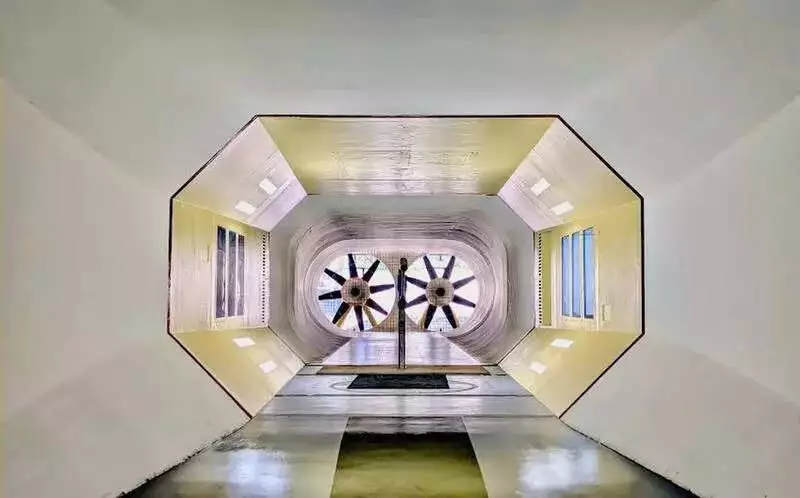
The recent modernization, finalized in 2025 with backing from TVS and IISc, focused on a core component: replacing the obsolete fan and motor drive system. The installation of a modern, high-performance setup has yielded dramatic improvements. The maximum wind speed in the test section has surged from 45 meters per second to an impressive 70 meters per second. This leap forward is accompanied by enhanced speed control and greater automation, significantly broadening the tunnel's testing capabilities for today's demanding aerospace, automobile, naval, and industrial aerodynamics needs.

Technical Prowess and Expanded Research Horizons
IISc detailed the tunnel's formidable specifications, which include an octagonal test section measuring 4.2 metres by 2.7 metres with a 6-metre length. This spacious design allows for testing large-scale models, such as full-sized automobile setups and intricate aerospace assemblies. The quality of airflow is exceptional, with turbulence intensity at roughly 0.1% and flow uniformity better than 0.5%—critical parameters for obtaining highly accurate aerodynamic data.
Over its illustrious lifetime, the OCWT has been the site for more than 370 test campaigns across diverse sectors, making substantial contributions to national aerospace projects and industrial research. Its relevance continues unabated with contemporary studies. Ongoing projects feature a pioneering helicopter aerodynamics study in partnership with RWRDC-HAL, investigating rotor downwash interactions, and space-vehicle vibro-acoustic research supported by the Vikram Sarabhai Space Centre.
Powering the Future of Indian Aerospace
Supporting this physical facility is a dedicated high-performance computing cluster located within the OCWT complex. Expanded in December 2025, this cluster integrates older Intel Xeon-based nodes with newer AMD EPYC processors. It is extensively employed for computational fluid dynamics (CFD) simulations that complement and enhance the wind tunnel experiments.
With this comprehensive upgrade, IISc anticipates the OCWT will play a central role in nurturing next-generation aerospace platforms. As India's demand for sophisticated aerodynamic testing infrastructure grows rapidly, this revitalized facility is expected to be instrumental in the development of advanced helicopters, launch vehicles, and space systems, securing the country's position at the forefront of aerodynamic research and innovation.