IIT Kharagpur's Lunar Research Paves Way for Chandrayaan-4 Mission
Indian lunar research is undergoing a significant transformation, shifting focus from surface-level studies to deeper geological exploration of the Moon's interior. A groundbreaking study conducted by the Indian Institute of Technology Kharagpur, in collaboration with the Physical Research Laboratory, delves into the formation of ancient lunar rocks and their implications for understanding the Moon's internal structure.
Unveiling the Moon's Ancient Geological Processes
Published in the CSR Journal, this research centers on ilmenite-bearing cumulates, commonly known as IBC rocks. These geological formations originated approximately 4.3 to 4.4 billion years ago during a period when the Moon was enveloped by a global magma ocean. As this molten material gradually cooled, denser minerals sank into the interior, creating distinct layers over immense timescales. These subsurface layers represent crucial early stages of lunar evolution and remain preserved beneath the surface today.
To simulate these ancient conditions, researchers meticulously recreated extreme environments in laboratory settings. Rock samples were subjected to pressures nearing 3 gigapascals and temperatures exceeding 1,500 degrees Celsius. Under these simulated conditions, partial melting occurred, producing materials strikingly similar to the titanium-rich basalts previously identified on the Moon through various lunar missions.

Key Findings: Temperature-Dependent Magma Formation
The research reveals that magma formation on the Moon is fundamentally temperature-dependent. When temperatures increase, moderately titanium-rich melts develop, which subsequently transform into intermediate-titanium basalts through a relatively direct geological process.
Conversely, when temperatures decrease, the formation pathway diverges significantly. High-titanium melts continue to evolve, becoming progressively richer in titanium while decreasing in magnesium content. These specialized melts then combine with other ascending magmas before ultimately reaching the lunar surface. This complex process explains the observed variations in titanium-rich basalt samples collected during previous lunar exploration missions.
Revealing a Dynamic Lunar Interior
The study provides compelling evidence for ongoing movement within the Moon's interior, challenging previous assumptions about a static lunar structure. Molten material demonstrates both upward and downward mobility depending on pressure conditions. At lower pressures, this material ascends toward the surface, potentially driving volcanic activities. At higher pressures, it descends deeper into the mantle.
This continuous circulation, known as mantle overturn, indicates a redistribution system where molten material moves both upward and downward within the lunar interior. The research suggests a more dynamic and active geological system than previously understood, with implications for our comprehension of lunar evolution and current geological activity.
Strategic Implications for Chandrayaan-4 Mission
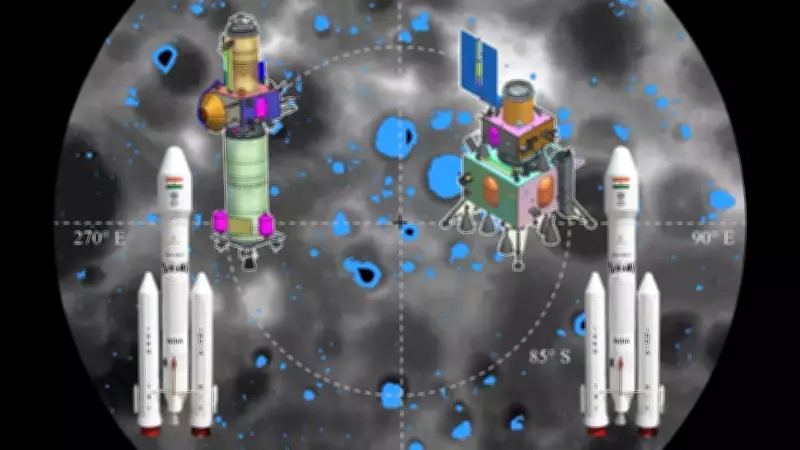
These findings carry substantial importance for the Indian Space Research Organisation's upcoming Chandrayaan-4 mission, which aims to retrieve lunar samples and return them to Earth for detailed analysis. The research directly informs critical mission planning aspects, particularly landing site selection.
Understanding the formation mechanisms and potential distribution patterns of titanium-rich materials enables scientists to identify regions of greater scientific value. Areas near the Moon's south pole are currently under consideration due to their unique surface characteristics and the likely presence of target materials that could provide unprecedented insights into lunar history and composition.
By specifying optimal landing regions and anticipated sample compositions, this research enhances mission planning efficiency and increases the likelihood of obtaining scientifically valuable samples that could revolutionize our understanding of the Moon's geological history and evolution.