

IIT Roorkee Pioneers India's First Ultra-Low Head Hydropower Research Facility
In a groundbreaking move aligned with India's Net Zero 2070 objectives, the Indian Institute of Technology (IIT) Roorkee has established the nation's inaugural dedicated research facility aimed at generating electricity from ultra-low water heads and flowing streams. This segment of hydropower has historically been deemed unviable, but the new setup promises to revolutionise small-scale renewable energy production.
Facility Components and Technological Innovations
The facility, located within the institute's department of hydrology and renewable energy, consists of two key units: the Ultra-Low Head (ULH) Laboratory and the Hydrokinetic Turbine (HKT) facility. These units are specifically engineered to harness energy from water sources that traditional hydropower technologies cannot effectively utilise, thereby unlocking new potentials in clean energy.
- The ULH Laboratory focuses on generating power from minimal height differences, typically ranging from 1 to 4 metres. Such conditions are commonly found in infrastructure like canal drops, barrages, and treatment outfalls. This lab will test advanced turbine designs, including propeller and screw turbines, to optimise efficiency in low-head scenarios.
- The HKT facility produces electricity directly from the natural flow of rivers and canals, eliminating the need for height differences or extensive infrastructure. This approach offers a low-impact, decentralised energy solution ideal for remote and rural areas.
Inauguration and Government Support
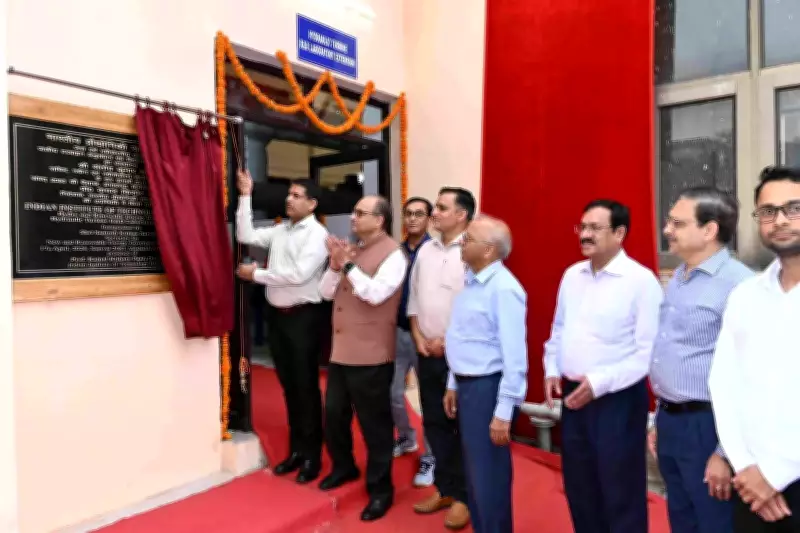
The facility was officially inaugurated on Tuesday by Santosh Kumar Sarangi, Secretary of the Ministry of New and Renewable Energy. During the ceremony, Sarangi emphasised the critical role of small hydropower in electrifying remote regions and generating employment opportunities. He stated, "This initiative reflects the government's push to accelerate small hydro deployment and advance our clean energy goals."

Officials highlighted that these twin facilities could unlock significant small hydro potential by enabling power generation in both low-head and free-flowing water systems, thereby contributing to India's renewable energy targets.
Broader Research and Future Implications
During his visit, Sarangi reviewed ongoing research projects in various renewable energy domains, including hydro, solar, biomass, hydrogen, and grid integration. He also visited key local sites such as the Mohammadpur Power House and the Chilla hydropower project on the Ganga River.
Prof Kamal Kishore Pant, Director of IIT Roorkee, underscored the initiative's importance, noting that it will help tap into underutilised water resources to provide "clean, reliable, and decentralised energy." This research facility is expected to drive innovation in small hydropower, making it more accessible and efficient for communities across India.






