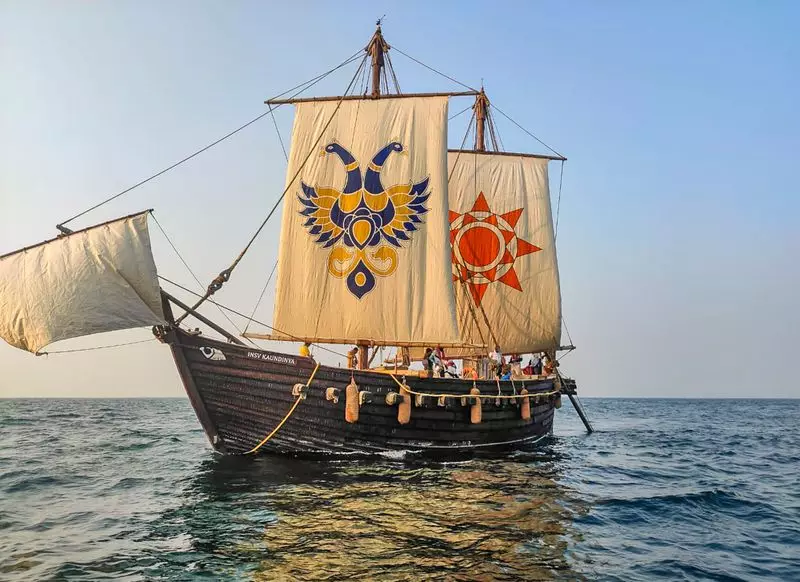
The Indian Navy has embarked on a remarkable journey through time, bringing a piece of ancient maritime history back to life. In a unique project that blends heritage with modern seamanship, the navy has launched the INSV Kaundinya, a sailing vessel that is a faithful recreation of a ship depicted in a 5th-century painting from the famed Ajanta Caves in Maharashtra.
From Cave Walls to the Open Sea
The inspiration for this extraordinary vessel comes directly from history. A detailed painting on the walls of Cave No. 1 at the Ajanta Caves, a UNESCO World Heritage Site, shows a vibrant, double-masted sailing ship. This ancient artwork, believed to be from the 5th century, served as the sole blueprint for the modern construction of the INSV Kaundinya.
The project was executed by the Indian Navy's Sail Training School (STS) in Kochi, Kerala. With no existing engineering drawings, the team faced the challenge of interpreting a static, two-dimensional image into a fully functional, seaworthy vessel. The construction process itself was a nod to traditional methods, utilizing wood-on-wood joinery without relying on modern metal fastenings, staying true to the shipbuilding techniques that would have been used in the era it represents.

Specifications and Purpose of the New Vessel
The newly launched INSV Kaundinya is not merely a museum piece but a fully operational training vessel. Key specifications of the ship include:
- Length: Approximately 17 meters
- Construction Material: Primarily wood, using traditional techniques
- Sail Configuration: Features two masts, replicating the design from the Ajanta painting
- Primary Role: Training platform for naval personnel in basic and advanced sailing
The vessel was formally inaugurated by Vice Admiral Upal Kundu, Flag Officer Commanding-in-Chief of the Southern Naval Command. Its primary mission is to serve as a hands-on training tool for sailors, offering them practical experience in sailing fundamentals, seamanship, and navigation. By learning on a ship whose design is centuries old, trainees gain a profound appreciation for wind patterns, sea conditions, and the raw skills required before the advent of engine-powered vessels.
Connecting India to Its Glorious Maritime Past
The launch of INSV Kaundinya is significant far beyond its immediate training utility. It stands as a powerful, tangible symbol of India's rich and often understated maritime legacy. The Ajanta painting itself is evidence of advanced shipbuilding and extensive maritime trade networks that existed in ancient India.
This initiative by the Indian Navy actively promotes awareness of this glorious past. It visually and physically connects today's naval forces with the seafarers of antiquity, highlighting a continuity of maritime tradition. The project underscores the importance of preserving intangible cultural heritage and draws inspiration from historical art for contemporary applications.
By naming the vessel INSV Kaundinya, the navy also honors the legacy of the original INSV Kaundinya and its sister vessel, INSV Mhadei, which have trained numerous officers and undertaken epic ocean voyages, including circumnavigations of the globe. The new Kaundinya, with its ancient design, is now poised to create its own legacy, training a new generation of sailors while reminding them of the deep roots of Indian seafaring.
The vessel is expected to begin its training duties from its base in Kochi, sailing along the Indian coast and providing a unique, living link between India's ancient artistic heritage and its modern naval prowess.