

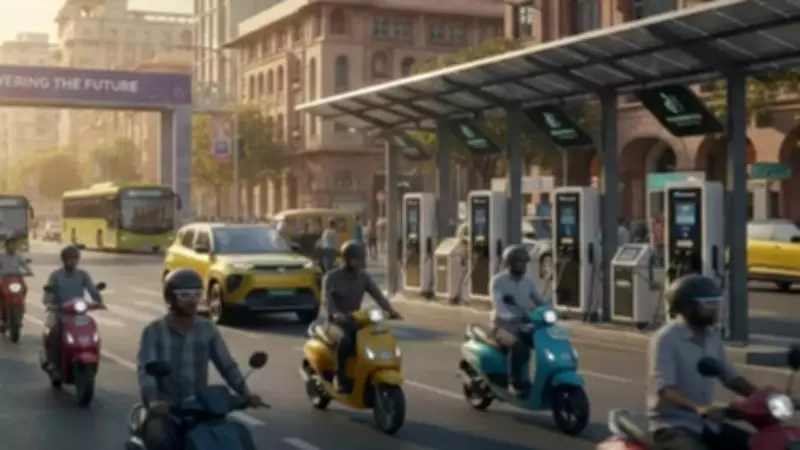
India's Electric Vehicle Revolution: A Paradigm Shift in Mobility
Authored by Abhinav Kalia, Co-Founder and CEO of ARC Electric, this analysis highlights a transformative change sweeping across India's mobility landscape. Electric vehicles, once perceived as niche and experimental products, are now steadily transitioning into a category of trust among Indian consumers. This evolution marks a significant paradigm shift in both personal and corporate transportation preferences.
Key Drivers Behind the Growing Trust in EVs
Several factors are fueling this increasing confidence in electric vehicles. First and foremost, there has been a noticeable improvement in technology and infrastructure. Initial concerns regarding driving range, availability of charging stations, and battery longevity have been progressively addressed through substantial investments by companies and government agencies. The deployment of more fast-charging networks and the proven reliability of high-capacity, long-range batteries have transformed range anxiety from a major barrier into a manageable issue.
Government Policies and Economic Incentives
Government initiatives have played a pivotal role in accelerating EV adoption. Schemes such as the Faster Adoption and Manufacturing of Hybrid and Electric Vehicles (FAME), along with recent budgetary incentives for EV and battery production, have significantly reduced the overall cost of ownership. Lower operational expenses, tax benefits, and subsidies have made electric vehicles not only environmentally friendly but also economically viable options. This convergence of ecological and economic motivations has been instrumental in facilitating the transition from trial to trust.

Practical Benefits for Urban Commuters and Businesses
Electric vehicles are becoming increasingly tangible for urban commuters, who are experiencing firsthand the advantages of EV technology. For ride-hailing services, corporate fleets, and rental companies, EVs offer compelling benefits such as reduced maintenance costs, lower noise levels, and predictable electricity expenses. Moreover, corporations are embracing electric vehicles as strategic opportunities to cut costs and demonstrate a commitment to sustainability. Collaborations between businesses are optimizing the integration of electric fleets through operational insights, charging infrastructure, and predictive analytics, streamlining the adoption process.
Changing Consumer Mindset and Experiential Learning
Beyond economics and infrastructure, the consumer mindset is undergoing a radical transformation. Early adopters, including technology enthusiasts and eco-conscious individuals, have played a crucial role in demonstrating the feasibility of electric mobility. Their experiences, shared via social media, reviews, and word-of-mouth, have cultivated a trust ecosystem that subsequent adopters rely upon. Consumers are no longer approaching EVs with skepticism but are making informed decisions backed by factual data and real-life experiences.
The importance of experiential learning cannot be overstated. Pilot fleets, test drives, and EV rental subscription schemes have provided consumers with the confidence to explore electric cars without long-term commitments. This try-before-you-buy approach has been key in eliminating hesitation and allowing individuals to personally experience the reliability, performance, and convenience of electric mobility.
Advancements in Vehicle Design and Technology
Rapid developments in vehicle design and technology have further enhanced user experience and comfort. Electric two-wheelers and four-wheelers are now competing directly with their internal combustion counterparts in terms of power, performance, and safety. The outdated perception of EVs as a compromise is fading, replaced by a view of them as advanced, intelligent alternatives.

Expanding Ecosystem and Financial Support
As trust in electric vehicles grows, so does the supporting ecosystem. Charging infrastructure and battery-swapping solutions are expanding in response to rising demand. Financial institutions are increasingly recognizing EVs as viable assets, offering tailored leasing options, loans, and flexible financing specifically designed for electric vehicles. This integrated ecosystem reduces friction at every stage, ensuring a smooth adoption process for both consumers and businesses.
A Symbol of Broader Societal Change
The journey from trial to trust in India's EV sector symbolizes a larger societal shift. It reflects not only evolving consumer behavior but also a growing collective awareness of the need to transition towards cleaner, smarter, and more sustainable mobility solutions. Electric mobility is no longer a distant dream; it is rapidly gaining traction as a mass-market reality in urban and semi-urban India.
Disclaimer: The views and opinions expressed in this article are solely those of the original author and do not represent any of The Times Group or its employees.





