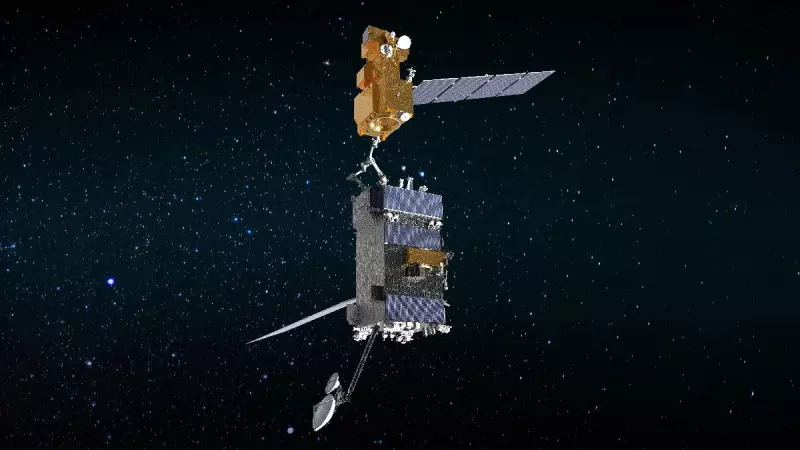
In a significant leap for its space capabilities, India is gearing up to launch its first-ever in-orbit refuelling mission by the year 2026. This ambitious project, a collaboration between two key spacecraft, aims to demonstrate technology that could dramatically extend the operational life of satellites in space.
The Pioneering Mission: Orbitaid and Ayulsat
The Indian Space Research Organisation (ISRO) is developing a unique two-spacecraft system for this historic demonstration. The mission will involve a "servicer" satellite named Orbitaid and a "client" satellite named Ayulsat. The core objective is for Orbitaid to locate, rendezvous with, and transfer fuel to the Ayulsat spacecraft while both are orbiting Earth. This complex manoeuvre, akin to a mid-air refuelling for aircraft but in the vacuum of space, represents a major technological frontier.
This initiative is a cornerstone of ISRO's broader Spadex programme (Space Docking Experiment), which focuses on mastering critical technologies for in-orbit servicing. The successful execution of this mission would place India among a select group of nations pioneering such advanced space logistics and sustainability operations.

Why In-Orbit Refuelling is a Game-Changer
The ability to refuel satellites in space addresses a fundamental limitation of current space technology. Most satellites are rendered useless once they exhaust their onboard propellant, even if their instruments and systems are fully functional. This propellant is primarily used for maintaining correct orbital position (station-keeping) and attitude control.
An operational in-orbit refuelling capability promises several transformative benefits:
- Extended Satellite Lifespan: Missions can be prolonged for many years, offering a much higher return on investment.
- Enhanced Space Sustainability: It can help reduce space debris by allowing satellites to be actively de-orbited at end-of-life, rather than becoming defunct, uncontrollable objects.
- New Mission Architectures: It enables more ambitious deep-space missions and the potential for constructing larger structures in orbit.
- Orbital Logistics: Paves the way for future space tugs and repair missions, creating a new ecosystem in space.
The Roadmap to 2026 and Beyond
The 2026 target date sets a clear timeline for ISRO's engineers and scientists. The mission will test a suite of complex technologies including autonomous rendezvous and docking (ARD), precise robotic operations, and the transfer of liquid propellant in microgravity conditions. The data and experience gained from Orbitaid and Ayulsat will be invaluable for future commercial and strategic applications.
This project underscores India's growing prowess in developing cost-effective and innovative space technologies. By mastering in-orbit servicing, ISRO is not only future-proofing its own satellite fleet but also positioning itself as a potential key player in the emerging global market for space maintenance and life-extension services. The success of this mission will mark another giant stride for India's space program, following the triumphs of Chandrayaan and Mangalyaan.